
Best Passive Income Ideas for Beginners (2026 Guide)
Passive income is money earned with minimal ongoing effort after an initial setup of time, skill, or investment. It allows beginners to build income streams that continue working even when they are not actively working. Unlike traditional jobs where income depends on hours worked, passive income focuses on creating systems that generate earnings over time. Today, digital platforms, investments, and online tools have made it easier than ever for beginners to start small and scale gradually. However, it still requires patience, learning, and consistency before real results appear.
Why Passive Income Matters
Passive income is important because it helps reduce financial dependency on a single income source. It creates financial stability and allows individuals to build wealth over time. In uncertain economic conditions, having multiple income streams can provide safety and flexibility. It also supports financial freedom by gradually replacing active income. Whether small or large, passive income helps beginners move toward long-term financial independence while reducing stress linked to job-only earnings.
What Passive Income Is and How It Works
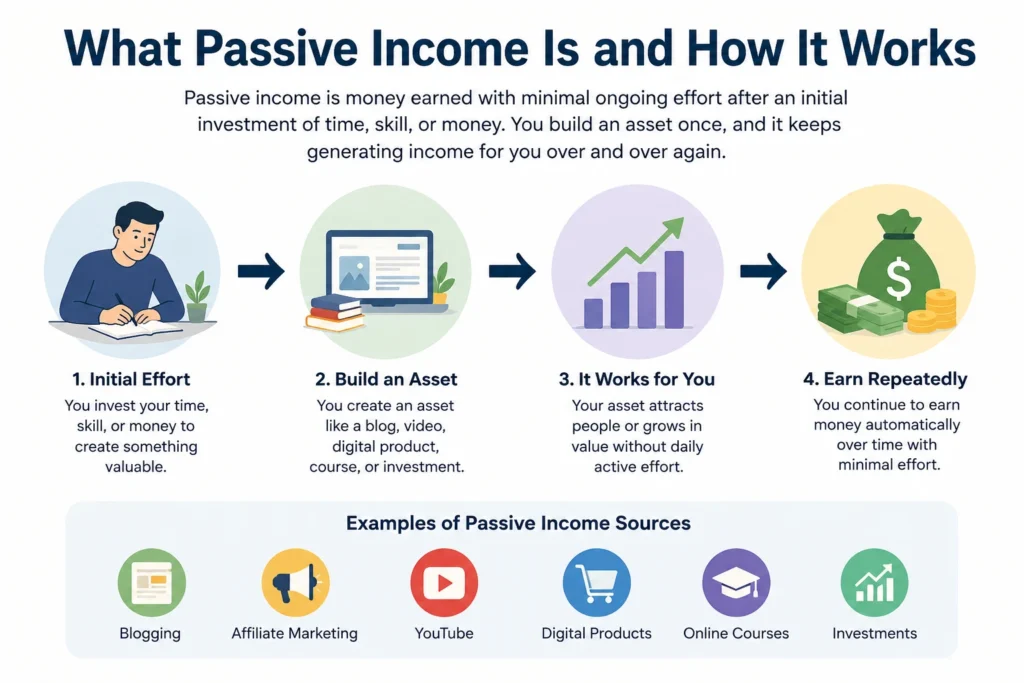
Passive income works by building assets that continue to generate revenue after the initial work is completed. These assets can include blogs, YouTube channels, digital products, investments, or online courses. The key idea is to invest time or money up front and earn repeatedly from the same effort. For example, a blog post can bring traffic for years, or a stock investment can generate dividends regularly. While it sounds simple, most passive income streams require setup, strategy, and consistent improvement before they become truly stable income sources.
💚 You might also like: Schedow 2026: A Practical Guide to Modern Scheduling
Active Income vs Passive Income
Active income is earned when you directly exchange your time for money, such as a job salary or freelancing. Passive income is different because it comes from systems or assets that continue earning without constant work. The main difference is time dependency. Active income stops when you stop working, while passive income can continue generating earnings even when you are not actively involved. This makes passive income more scalable and suitable for long-term financial growth.
Why Passive Income Takes Time to Build
Passive income is not instant because every system needs time to grow. Whether it is SEO traffic, audience building, or investment growth, results usually appear slowly in the beginning. Beginners often underestimate this phase and quit too early. Real success comes from consistency, learning, and improving over time. The longer you stay committed, the stronger your income streams become.
Common Misconceptions Beginners Have
Many beginners believe passive income is “easy money” or requires no effort. In reality, most income streams need strong upfront work and ongoing optimization. Another misconception is expecting fast results, while most methods take months to show income. Some also think only experts can start, but today’s digital tools allow anyone to begin with low investment and grow step by step.
Best Passive Income Ideas You Should Start With
If you are a beginner, the best passive income ideas are the ones that require low investment but have long-term growth potential. Blogging is one of the strongest options because it allows you to earn through ads, affiliate links, and organic traffic. Affiliate marketing is another great choice where you earn commissions by promoting products. YouTube also offers long-term earning potential through ads and sponsorships. Digital products like templates, eBooks, and printables can generate sales repeatedly after creation. Online courses and investment-based methods like stocks and ETFs also provide stable long-term income if done correctly.
Passive Income Ideas Comparison Table
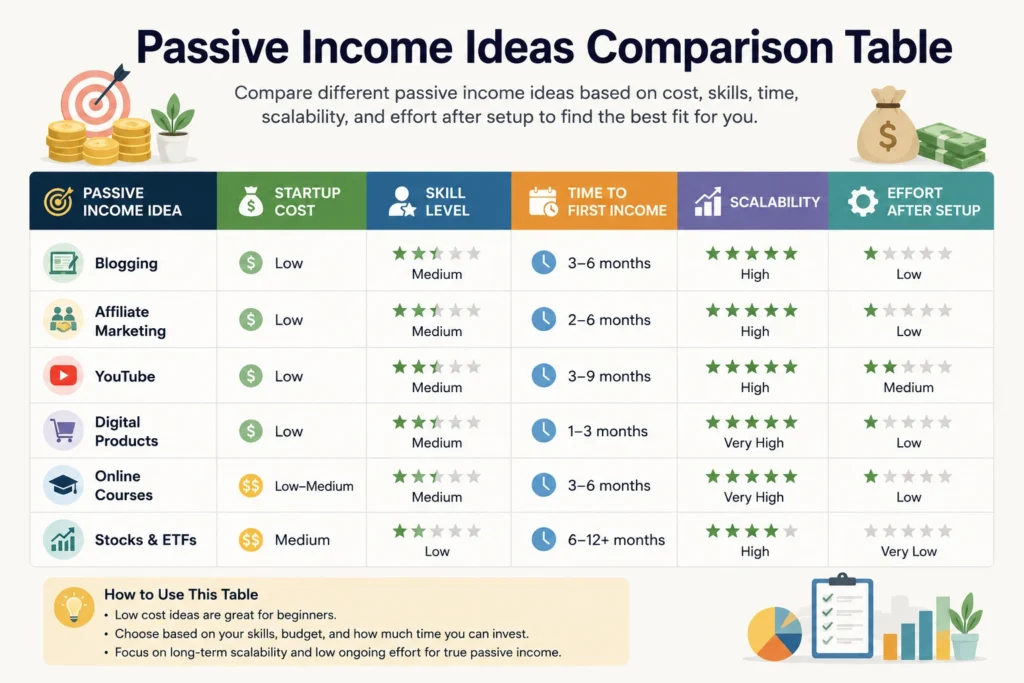
This comparison helps you understand which passive income method fits your budget, skills, and time commitment. Some methods require more effort at the start, while others require financial investment. Beginners should focus on balancing effort, cost, and long-term potential before choosing a direction.
💚 You might also like: Best Free AI Tools for Image Generation (2026)
| Passive Income Idea | Startup Cost | Skill Level | Time to First Income | Scalability | Effort After Setup |
| Blogging | Low | Medium | 3–6 months | High | Low |
| Affiliate Marketing | Low | Medium | 2–6 months | High | Low |
| YouTube | Low | Medium | 3–9 months | High | Medium |
| Digital Products | Low | Medium | 1–3 months | Very High | Low |
| Online Courses | Low–Medium | Medium | 3–6 months | Very High | Low |
| Stocks & ETFs | Medium | Low | 6–12+ months | High | Very Low |
Which Passive Income Method Is Best for You?
The best passive income method depends on your skills, budget, and long-term goals. If you have time but limited money, blogging, affiliate marketing, and YouTube are ideal starting points. If you are creative, digital products or online courses may suit you better. If you prefer low effort and long-term stability, investment-based options like ETFs or dividend stocks are better. Beginners should avoid trying multiple methods at once and instead focus on mastering one system before expanding into others.
Blogging and Content-Based Income
Blogging is one of the most powerful passive income methods because it builds long-term traffic through search engines. You create helpful content around a niche, and over time, that content continues to bring visitors without daily effort. Monetization comes from ads, affiliate marketing, and digital products. While it takes time to grow, blogging becomes a strong digital asset once it gains authority. The key to success is choosing the right niche, targeting keywords, and consistently publishing high-quality content that solves real user problems.
Affiliate Marketing in the Digital World
Affiliate marketing allows beginners to earn commissions by promoting other companies’ products or services. You don’t have to build your own product, manage inventory, or deal with customer support tasks. Instead, you earn when someone purchases through your referral link. This model works best through blogs, YouTube, or social media content. Successful affiliate marketers prioritize building trust and providing value-based recommendations instead of simply pushing sales. With time, even old content can continue generating commissions, making it a scalable passive income strategy.
YouTube as a Passive Income Source
YouTube is a long-term passive income platform where videos can generate revenue for years after being published. Once a channel meets monetization requirements, creators can earn from ads, sponsorships, and affiliate links. Evergreen content like tutorials, reviews, and educational videos performs especially well. Although it takes time to grow an audience, successful channels often turn into semi-automated income systems. Consistency, niche selection, and audience engagement are the key drivers of success on YouTube.
Digital Products and Online Courses
Digital products such as eBooks, templates, and printables are highly scalable because they can be sold repeatedly without additional production costs. Once created, they can generate unlimited income. Online courses work on the same principle but focus on teaching skills or knowledge. Platforms like Gumroad, Udemy, and Teachable make it easy to start. The success of both models depends on solving a real problem and marketing effectively through SEO, email lists, or social media.
Investment-Based Passive Income
Investment-based passive income includes dividend stocks, ETFs, index funds, and REITs. These methods allow beginners to earn money through capital growth and regular dividends. While they require upfront financial investment, they are relatively low-maintenance compared to online business models. Historically, diversified investments like index funds have shown stable long-term returns. These options are ideal for beginners who prefer a more hands-off and financially stable approach to passive income.
Common Mistakes Beginners Make
Many beginners fail because they expect quick results and quit too early. Passive income takes time to build and requires consistency. Another common mistake is trying multiple methods at once instead of focusing on one. Beginners also often ignore marketing and SEO, which are essential for growth in online income models. Without a proper strategy and patience, even good ideas fail. Avoiding these mistakes significantly increases the chances of long-term success.
Frequently Asked Questions
Can beginners really earn passive income?
Yes, beginners can earn passive income, but it requires time, effort, and consistency before results appear.
How long does it take to earn passive income?
Most methods take 3 to 12 months, depending on strategy, effort, and consistency.
Do I need money to start?
Not always. Many methods, like blogging, YouTube, and affiliate marketing, can start with little or no investment.
Which passive income method is easiest?
Blogging, affiliate marketing, and digital products are often considered the easiest for beginners due to low startup costs and scalability.
Conclusion
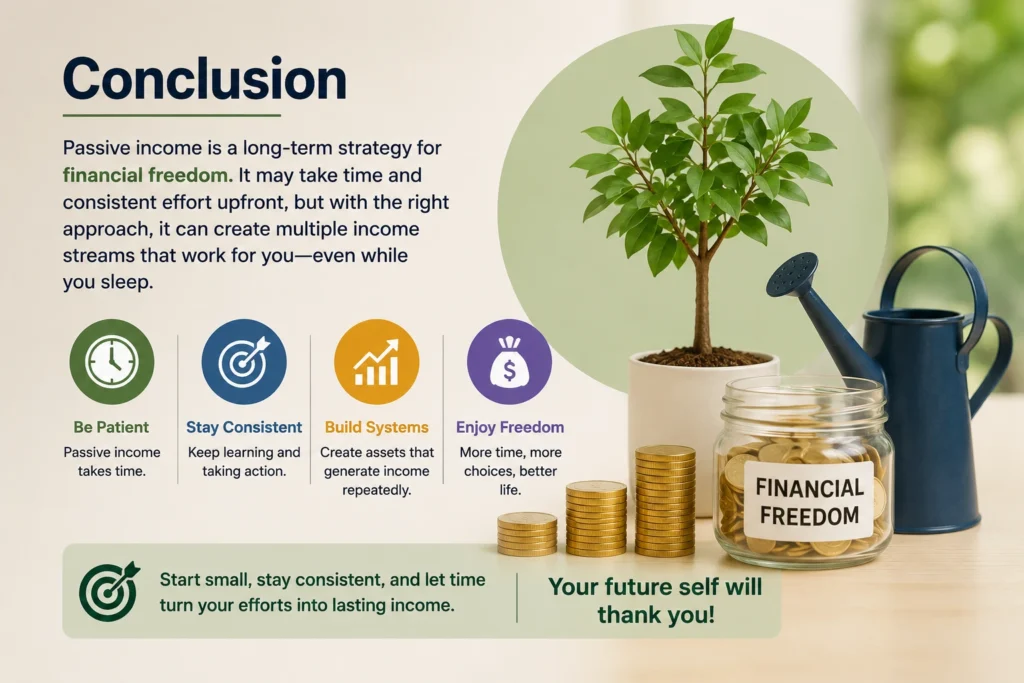
Passive income is not a shortcut to instant wealth but a long-term strategy for financial independence. Beginners who stay consistent, choose the right method, and focus on learning can gradually build strong income streams. Whether through content creation or investments, success depends on patience, execution, and continuous improvement. The key is to start small, stay consistent, and allow time for systems to grow into reliable income sources.
✨ Want bite-sized tech wisdom? Follow Tech Baaz.