


Schedow 2026: A Practical Guide to Modern Scheduling
Schedow is a scheduling and productivity platform designed to help users manage their time, tasks, and commitments more efficiently. Unlike traditional calendar tools that focus only on displaying events, Schedow aims to simplify planning through automation, task coordination, and intelligent scheduling features. It provides a centralized space where users can organize daily activities, monitor deadlines, and maintain better control over their workload. As remote work and digital collaboration continue to expand, platforms like Schedow are becoming increasingly relevant for individuals and organizations seeking practical ways to improve productivity and time management.
How Schedow Works
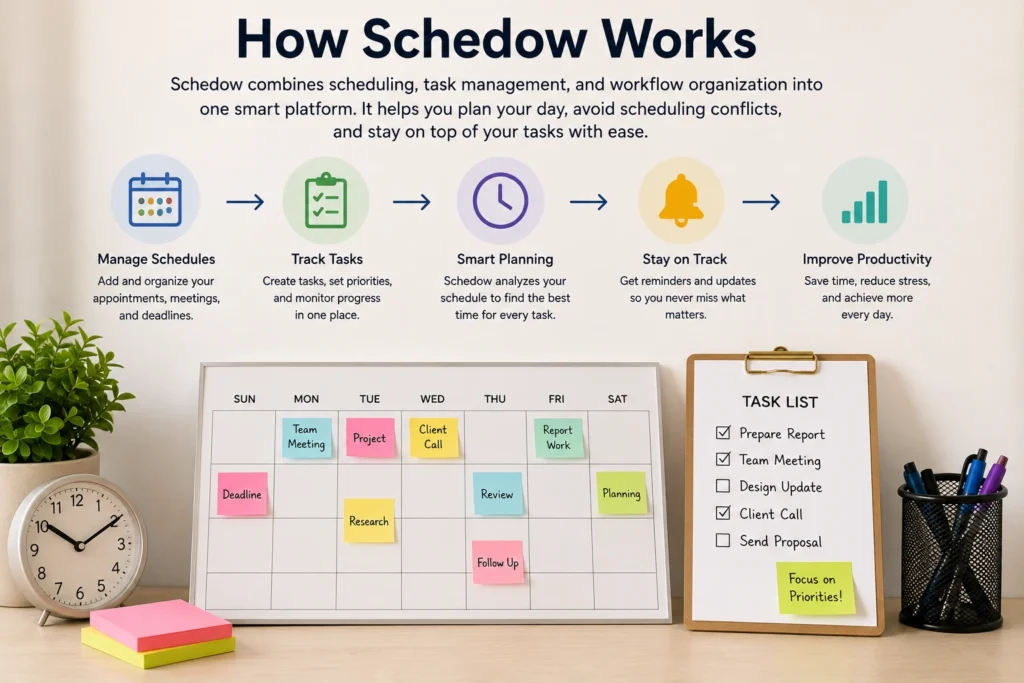
Schedow works by combining scheduling, task management, and workflow organization into a unified platform. Users can manage appointments, deadlines, projects, and daily responsibilities from a single dashboard, making planning more efficient. The system is designed to help identify scheduling conflicts, improve task visibility, and support better time allocation. Rather than requiring constant manual updates, Schedow streamlines routine planning activities and helps users maintain a clear overview of upcoming commitments. This integrated approach makes it easier to balance workloads, stay organized, and adapt to changing priorities without losing productivity.
💚 You might also like: Best Free AI Tools for Image Generation (2026)
Intelligent Scheduling
Intelligent scheduling helps users organize their time more effectively by creating a structured approach to planning. Instead of relying entirely on manual scheduling, the system evaluates existing commitments and available time slots to improve organization. This reduces scheduling conflicts, supports better workload management, and allows users to dedicate more attention to high-priority activities throughout the day.
Calendar and Task Management
Schedow combines calendar management with task tracking to create a more complete productivity experience. Users can view appointments, deadlines, and responsibilities in one place, reducing the need to switch between multiple tools. This centralized approach improves visibility, helps prevent overlooked tasks, and makes it easier to maintain consistent progress on both personal and professional goals.
Workflow Automation
Workflow automation reduces the amount of repetitive work involved in scheduling and task coordination. Instead of handling every update manually, users can set up automation for routine tasks such as reminders, schedule changes, and notifications. This not only saves time but also helps maintain consistency across workflows, allowing individuals and teams to focus on more valuable and strategic tasks.
Key Features of Schedow
Schedow offers a set of modern productivity features designed to simplify how users plan, organize, and manage their time. Instead of relying on multiple separate tools, users get a unified system that brings scheduling, task tracking, and collaboration together in one place. This reduces complexity and improves workflow efficiency. The platform focuses on automation, intelligent planning, and real-time updates, making it easier for individuals and teams to stay aligned. As digital work environments continue to grow, features like these help users maintain clarity, reduce confusion, and improve overall productivity in both personal and professional settings.
AI-Powered Planning
AI-powered planning helps users organize their schedules more intelligently by analyzing tasks, availability, and priorities. Instead of manually deciding what should be done first, the system provides smart suggestions that improve time allocation. This reduces decision fatigue and ensures that important tasks are not overlooked. It also helps users balance workloads more effectively, making daily planning more structured and less stressful.
Smart Reminders
Smart reminders ensure that users never miss important tasks, meetings, or deadlines. Unlike basic notifications, these reminders are designed to adapt to user behavior and timing preferences. They provide alerts at the right moment without overwhelming the user with unnecessary interruptions. This creates a smoother workflow experience and helps maintain focus while still keeping track of essential commitments throughout the day.
Team Collaboration
Team collaboration features in Schedow allow users to coordinate schedules, share availability, and manage group tasks more efficiently. This is especially useful for remote teams working across different locations. By improving visibility and communication, it reduces scheduling conflicts and helps teams work more smoothly. Everyone stays updated, which leads to better coordination and improved productivity across projects.
Benefits of Using Schedow
Schedow provides several benefits that make time management more efficient and less stressful for users. It helps reduce scheduling confusion by organizing all tasks, meetings, and deadlines in one place. This improves clarity and allows users to focus on meaningful work instead of constantly adjusting their calendars. The platform also enhances productivity by automating repetitive tasks and offering intelligent planning support. As a result, users can manage their time more effectively, avoid overbooking, and maintain a better balance between work and personal responsibilities in a structured and consistent way.
Schedow Use Cases
Schedow can be used in multiple scenarios, making it suitable for individuals, students, freelancers, and businesses. Professionals use it to manage meetings, deadlines, and project schedules more efficiently. Students rely on it to organize study plans and assignment deadlines. Freelancers gain advantages in managing clients and tracking tasks more efficiently, whereas businesses rely on it to organize team schedules and enhance workflow planning. Its flexibility allows it to adapt to different productivity needs, making it a practical solution for anyone looking to improve organization and time management in their daily routine.
Schedow and Productivity
Schedow plays an important role in improving productivity by reducing time wasted on manual scheduling and task coordination. When users have a clear structure for their day, they can focus more on completing meaningful work instead of managing logistics. The platform supports better prioritization, helping users identify what matters most and allocate time accordingly. By combining automation with intelligent planning, Schedow creates a smoother workflow experience. This leads to improved focus, reduced stress, and better overall performance in both individual and team environments.
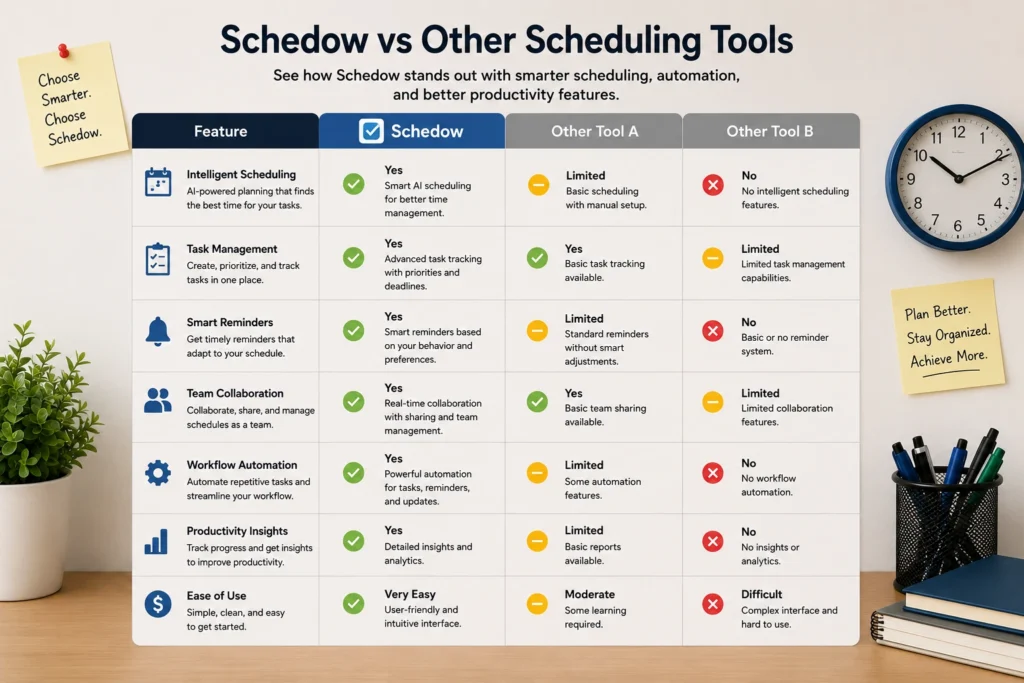
Schedow vs Other Scheduling Tools (Comparison Table)
| Feature | Schedow | Traditional Calendars | AI Productivity Tools |
| Smart Scheduling | Advanced AI-based suggestions | Basic manual scheduling | Limited or partial |
| Task Management | Fully integrated | Not available | Separate tools required |
| Automation | High-level automation | Very limited | Medium |
| Collaboration | Built-in team features | Basic sharing | Advanced but fragmented |
| Notifications | Smart adaptive reminders | Fixed reminders | AI-enhanced alerts |
| Ease of Use | Moderate learning curve | Very easy | Moderate |
| Best For | Professionals, teams, freelancers | Basic users | Advanced productivity users |
This comparison shows that Schedow offers a more balanced and integrated approach compared to traditional calendars and standalone AI tools. It focuses on unifying scheduling, tasks, and collaboration into one system, reducing the need for multiple apps. While traditional tools are simpler and AI tools may offer specialized features, Schedow combines both convenience and intelligence for users who want an all-in-one productivity solution.
💚 You might also like: Top Skills to Learn in 2026 for fastest Career Growth
Challenges and Limitations
Despite its advanced capabilities, Schedow is not without limitations. One of the main challenges is its learning curve, especially for users who are only familiar with basic calendar apps. The AI-driven features may feel complex at first, and some users may prefer more manual control over their schedules. Additionally, full benefits are only realized when users actively engage with the system and properly configure their workflows, which can take time and consistency.
Frequently Asked Questions
Schedow is gaining attention as a modern productivity and scheduling solution, and users often have common questions about how it works and whether it is suitable for their needs. Below are some frequently asked questions that help clarify its purpose, usability, and benefits for different types of users.
Is Schedow suitable for beginners?
Yes, Schedow can be used by beginners, but it may take some time to get familiar with its advanced features. The platform is designed with a clean interface, but its AI-driven scheduling and automation tools may require initial learning. After users become familiar with the system, managing tasks and boosting productivity becomes much more straightforward and effective.
Can Schedow replace traditional calendars?
Schedow can replace traditional calendars for users who need more than basic scheduling. Unlike standard calendar apps, it includes task management, automation, and intelligent planning features. However, users who only need simple event tracking may still prefer traditional tools due to their simplicity and minimal setup requirements.
Does Schedow improve productivity?
Yes, Schedow is designed to improve productivity by reducing time spent on manual scheduling and task organization. It helps users prioritize work, avoid conflicts, and manage time more efficiently. Combining automation with organized planning, it enables users to concentrate more on priority tasks instead of administrative coordination.
Is Schedow safe to use?
Schedow is generally considered safe to use, especially when it follows standard data protection and encryption practices. Like most productivity platforms, users should still ensure they manage permissions carefully and follow best practices for account security. It is designed for both individual and professional use, making it suitable for everyday scheduling needs.
Conclusion
Schedow represents a shift from traditional scheduling toward intelligent productivity management. Instead of simply storing events, it helps users actively organize their time through automation, AI-driven planning, and integrated task management. This makes it especially useful for professionals, teams, freelancers, and students who deal with complex schedules and multiple priorities. While there is a learning curve for new users, the long-term benefits in productivity, clarity, and time efficiency are significant. As digital workflows continue to evolve, tools like Schedow are becoming an important part of modern work systems.
✨ Want bite-sized tech wisdom? Follow Tech Baaz.