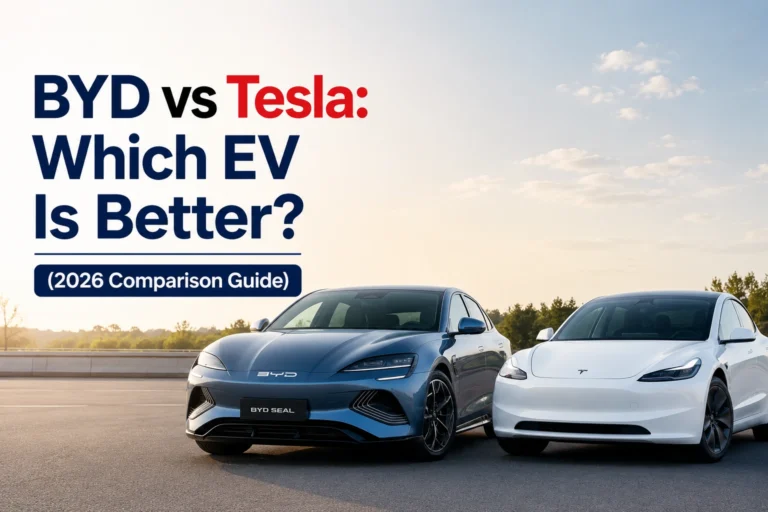
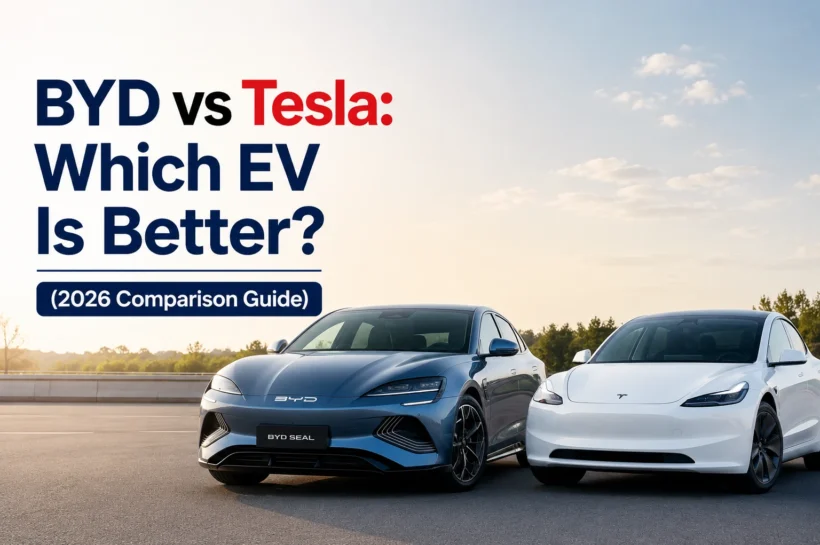

BYD vs Tesla: Which EV Is Better? (2026 Comparison Guide)
Electric vehicles have become the future of transportation, and two brands dominate the global conversation: BYD and Tesla. While Tesla helped popularize modern EVs, BYD has rapidly grown into one of the world’s largest electric vehicle manufacturers by combining affordable pricing with advanced battery technology. Choosing between them depends on your budget, driving habits, and feature preferences. This guide compares both brands in key areas like performance, range, pricing, charging, and ownership costs, helping you understand which EV offers the best value and experience for your needs in 2026.
BYD vs Tesla: Key Differences
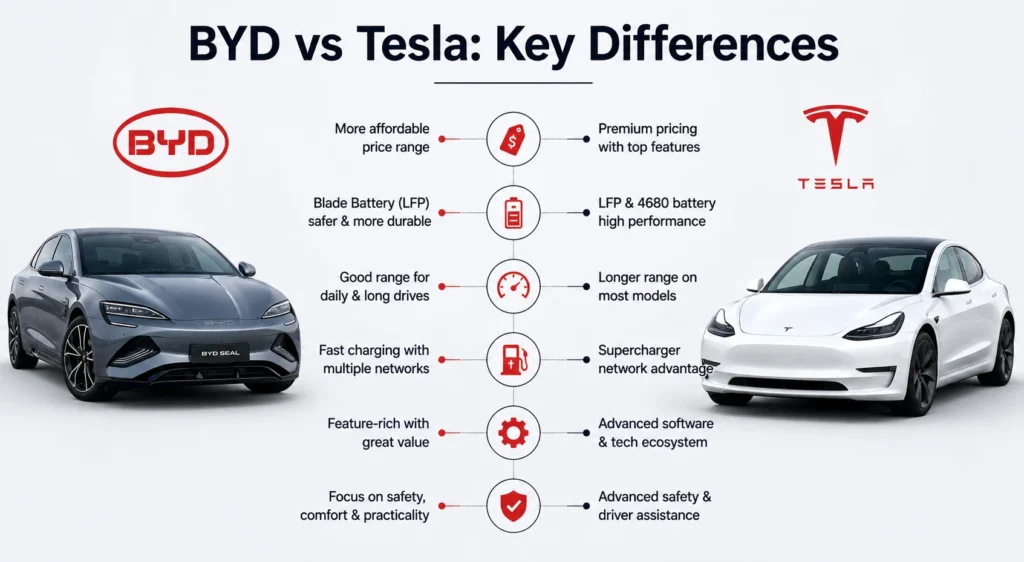
Although both companies build high-quality electric vehicles, they follow different strategies. Tesla focuses on premium software, long driving range, and an advanced charging ecosystem. BYD emphasizes affordability, safety, and practical everyday driving while manufacturing many of its own components, including batteries and semiconductors. According to the International Energy Agency (IEA), global EV sales exceeded 17 million units in 2024, with Tesla and BYD leading worldwide deliveries. Understanding these differences helps buyers choose the brand that best matches their priorities instead of simply following market popularity.
💚 You might also like: Best Chinese Smartphones in 2026: Top 10 Picks Compared
Battery Technology
Battery technology is one of the biggest differences between BYD and Tesla. BYD’s Blade Battery uses lithium iron phosphate (LFP) chemistry, known for excellent safety, durability, and long cycle life. Tesla offers both LFP and lithium-ion battery packs, including its newer 4680 cells designed to improve efficiency and energy density. Both companies continue investing heavily in battery innovation to increase range, reduce charging times, and lower long-term ownership costs.
Driving Range
Tesla generally delivers longer EPA-estimated driving ranges, making it attractive for frequent highway travel. Models like the Model 3 Long Range and Model Y remain among the leaders in efficiency. BYD continues improving its range with newer platforms and efficient battery systems, offering competitive real-world performance for daily commuting and family use. For most drivers, either brand provides more than enough range for everyday transportation.
Charging Speed
Charging speed depends on both the vehicle and the available charging network. Tesla benefits from its well-established Supercharger network, allowing compatible vehicles to recharge quickly during long trips. BYD supports fast DC charging across many global charging providers and continues expanding compatibility in international markets. Home charging remains the most convenient option for owners of either brand, reducing daily charging costs while improving overall convenience.
BYD vs Tesla Price Comparison
Price often becomes the deciding factor when buying an electric vehicle. BYD has built its reputation by offering feature-rich EVs at competitive prices, making electric mobility accessible to a wider audience. Tesla, while more expensive in many markets, justifies its pricing with premium technology, software updates, and strong brand recognition. Actual costs vary depending on the country, trim level, government incentives, and taxes. Buyers should also consider insurance, maintenance, charging expenses, and resale value instead of focusing only on the vehicle’s purchase price.
| Feature | BYD | Tesla |
| Starting Price | Lower, budget-friendly | Higher, premium pricing |
| Average Price Range | $20,000–$50,000 | $35,000–$80,000+ |
| Best Value | Excellent features for the price | Premium technology and performance |
| Maintenance Costs | Generally lower | Moderate to higher, depending on model |
| Charging Costs | Lower with efficient LFP batteries | Competitive, especially with home charging |
| Resale Value | Improving in global markets | Strong resale value in most regions |
| Ideal Buyer | Budget-conscious and family buyers | Tech-focused and performance-oriented buyers |
BYD vs Tesla Features Compared
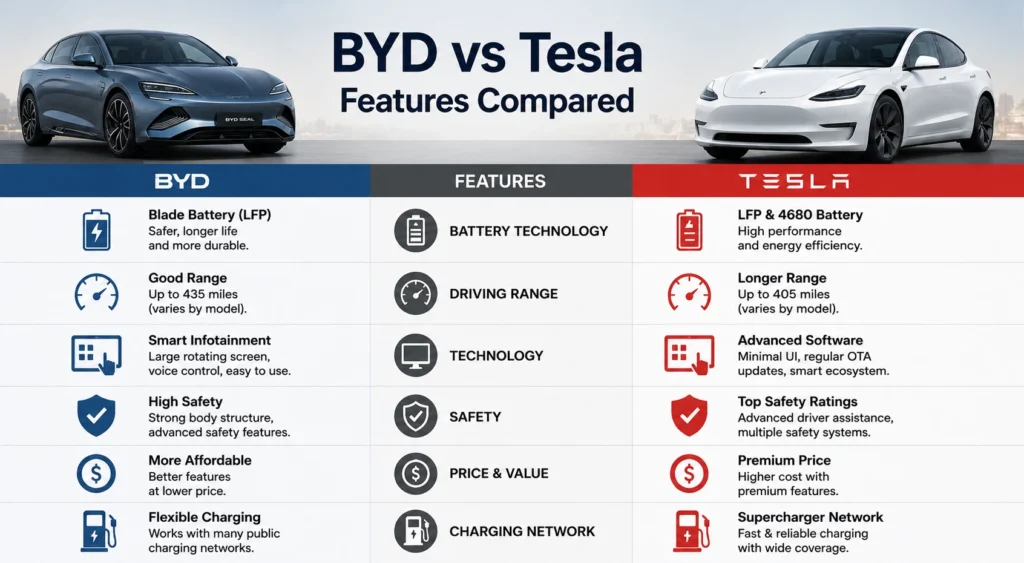
Modern EV buyers expect more than just electric power. They want intelligent software, responsive performance, and advanced safety systems. Both BYD and Tesla offer impressive technology, but their priorities differ. Tesla emphasizes software integration, over-the-air updates, and driver assistance, while BYD focuses on practical comfort, safety, and value-packed features. Independent safety organizations such as Euro NCAP continue awarding high safety ratings to several models from both manufacturers, showing that each brand takes occupant protection seriously while delivering a modern driving experience.
Performance
Tesla vehicles are widely recognized for quick acceleration and responsive electric motors. Even entry-level models deliver impressive speed, while Performance variants rival many sports cars. BYD focuses on balanced driving dynamics, offering smooth acceleration, comfortable handling, and efficient power delivery suitable for daily commuting. Both brands provide instant electric torque, but Tesla generally leads in outright performance and driving excitement.
Technology
Tesla’s technology ecosystem includes over-the-air software updates, a minimalist interface, smartphone integration, and advanced navigation features. BYD counters with a rotating touchscreen, intelligent voice assistant, wireless connectivity, and an easy-to-use infotainment system. While Tesla emphasizes software innovation, BYD delivers practical technology that appeals to drivers seeking simplicity, comfort, and everyday convenience without sacrificing modern functionality.
Safety
Safety remains a major strength for both manufacturers. Tesla equips its vehicles with advanced driver-assistance technologies, multiple airbags, collision avoidance systems, and structural safety improvements. BYD combines its highly durable Blade Battery with modern safety features such as adaptive cruise control, automatic emergency braking, and lane-keeping assistance. Both brands continue earning recognition from respected crash-testing organizations for protecting drivers and passengers.
BYD vs Tesla Comparison Table
Choosing between BYD and Tesla is easier when you compare the most important features side by side. While both brands build high-quality electric vehicles, they target slightly different buyers. Tesla stands out for its software ecosystem, charging network, and performance, whereas BYD focuses on affordability, battery safety, and everyday practicality. The table below provides a quick overview of how the two brands compare across major categories. Keep in mind that specifications may vary by model and market, but these comparisons reflect the overall strengths of each manufacturer.
| Feature | BYD | Tesla |
| Founded | 1995 | 2003 |
| Headquarters | Shenzhen, China | Austin, Texas, USA |
| Starting Price | More affordable | Premium pricing |
| Battery Technology | Blade Battery (LFP) | LFP & 4680 Battery Packs |
| Driving Range | Up to 435 miles* | Up to 405 miles* |
| Charging Network | Public fast chargers | Tesla Supercharger Network |
| Software Updates | Available on select models | Regular OTA updates |
| Performance | Balanced and efficient | Class-leading acceleration |
| Best For | Value-focused buyers | Tech and performance enthusiasts |
Ownership Costs and Maintenance
Buying an EV is only part of the total investment. Long-term ownership costs can significantly impact overall value. BYD generally offers lower maintenance expenses because of its competitive parts pricing and simpler repair costs in many regions. Tesla also requires less routine maintenance than gasoline vehicles but may have higher repair costs depending on parts availability and service locations. According to the U.S. Department of Energy, electric vehicles typically cost less to maintain than traditional internal combustion vehicles because they have fewer moving parts and require no oil changes, making both brands economical over time.
BYD vs Tesla Pros and Cons
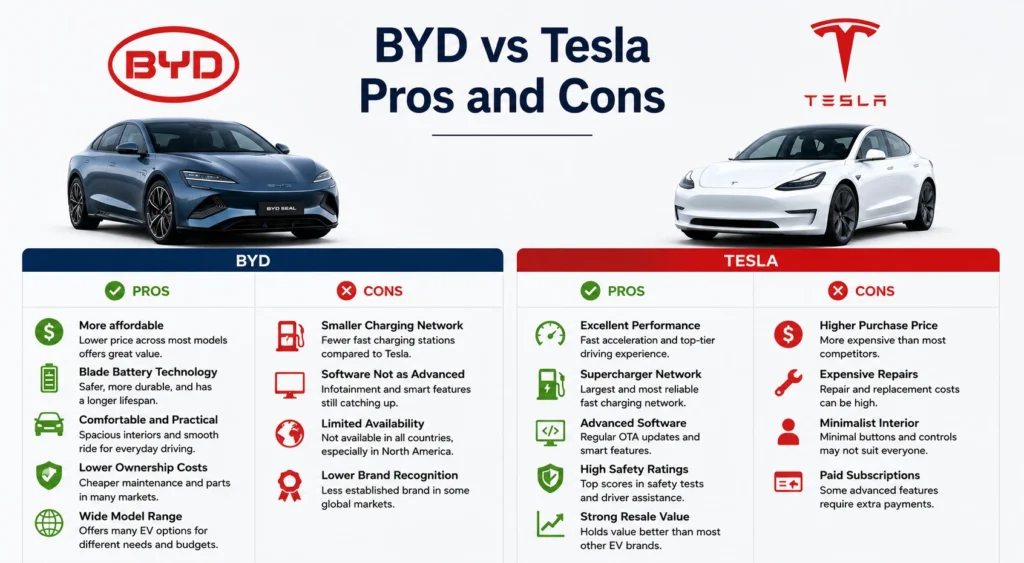
Every electric vehicle brand has strengths and trade-offs. Tesla continues leading in software innovation, charging convenience, and driving performance, making it a favorite among technology enthusiasts. BYD, meanwhile, delivers exceptional value, reliable battery technology, and competitive pricing that appeals to practical buyers. Instead of asking which brand is universally better, consider which advantages matter most for your lifestyle, driving habits, and budget. Comparing both the benefits and limitations provides a balanced perspective before making a long-term purchasing decision.
💚 You might also like: HubSpot CRM Review (2026)
Pros of BYD
- More affordable across most model ranges
- Industry-leading Blade Battery safety
- Comfortable ride quality
- Excellent value for money
- Lower ownership costs in many markets
Cons of BYD
- Smaller charging ecosystem
- Software is less advanced than Tesla
- Limited availability in some countries
- Lower brand recognition in North America
Pros of Tesla
- Excellent driving range
- Fast acceleration and performance
- Industry-leading Supercharger network
- Advanced software with OTA updates
- Strong resale value
Cons of Tesla
- Higher purchase price
- Premium repair costs
- Minimalist interior isn’t for everyone
- Some features require paid subscriptions
Which EV Is Right for You?
The right choice depends on what you expect from your next vehicle. If affordability, battery safety, and practical daily driving are your priorities, BYD offers outstanding value without sacrificing essential features. If you prefer cutting-edge software, long-distance travel, rapid acceleration, and a mature charging ecosystem, Tesla remains a strong option. Consider your budget, local charging infrastructure, commute, and long-term ownership goals before making a final decision. Matching the vehicle to your lifestyle is more important than simply choosing the most popular brand.
Budget Buyers
BYD is the better choice for buyers looking to maximize value. Its competitive pricing, standard safety features, and lower ownership costs make it an attractive option for families and first-time EV owners who want dependable transportation without paying a premium.
Families
Families will appreciate BYD’s spacious interiors, comfortable ride quality, and practical features. However, Tesla’s Model Y also remains a popular family SUV thanks to its safety ratings, cargo space, and access to the extensive Supercharger network for longer road trips.
Performance Drivers
Drivers seeking thrilling acceleration and sporty handling will likely prefer Tesla. Models like the Model 3 Performance and Model S Plaid deliver impressive speed while maintaining everyday usability. BYD offers strong performance, but its focus is more on balanced driving than outright acceleration.
First-Time EV Buyers
For first-time EV owners, both brands offer compelling options. BYD provides an easier entry point with lower pricing and practical features, while Tesla offers a highly connected ownership experience with intuitive software, seamless charging, and frequent feature updates that simplify electric vehicle ownership.
Frequently Asked Questions
Is BYD better than Tesla?
Neither brand is objectively better because they target different buyers. BYD offers excellent value, advanced battery safety, and lower ownership costs, while Tesla leads in software, charging infrastructure, and overall performance. The better choice depends on your budget, driving habits, and feature priorities.
Which EV has the longer driving range?
Tesla generally offers longer EPA-estimated driving ranges across its lineup. However, many BYD models provide more than enough range for daily commuting and weekend trips. Actual range varies based on the model, driving style, weather conditions, and road terrain.
Is BYD’s Blade Battery better than Tesla’s battery?
BYD’s Blade Battery is widely recognized for its safety, durability, and long lifespan due to its lithium iron phosphate (LFP) chemistry. Tesla uses multiple battery technologies, including LFP and 4680 cells, focusing on efficiency, performance, and energy density. Both are highly advanced but designed with different priorities.
Which brand is more affordable?
BYD is generally more affordable than Tesla in most global markets. It offers competitive pricing while including many features as standard. Tesla typically costs more but provides premium software, a stronger charging ecosystem, and higher resale value.
Which EV costs less to maintain?
Both EV brands require less maintenance than gasoline-powered vehicles because they have fewer moving parts. However, BYD often has lower maintenance and repair costs in many regions, while Tesla’s repair expenses can be higher depending on service availability and replacement parts.
Is Tesla still worth buying in 2026?
Yes. Tesla remains one of the most advanced EV manufacturers thanks to its Supercharger network, regular over-the-air software updates, strong performance, and high resale value. It continues to be an excellent option for buyers who prioritize technology and long-distance driving.
Conclusion
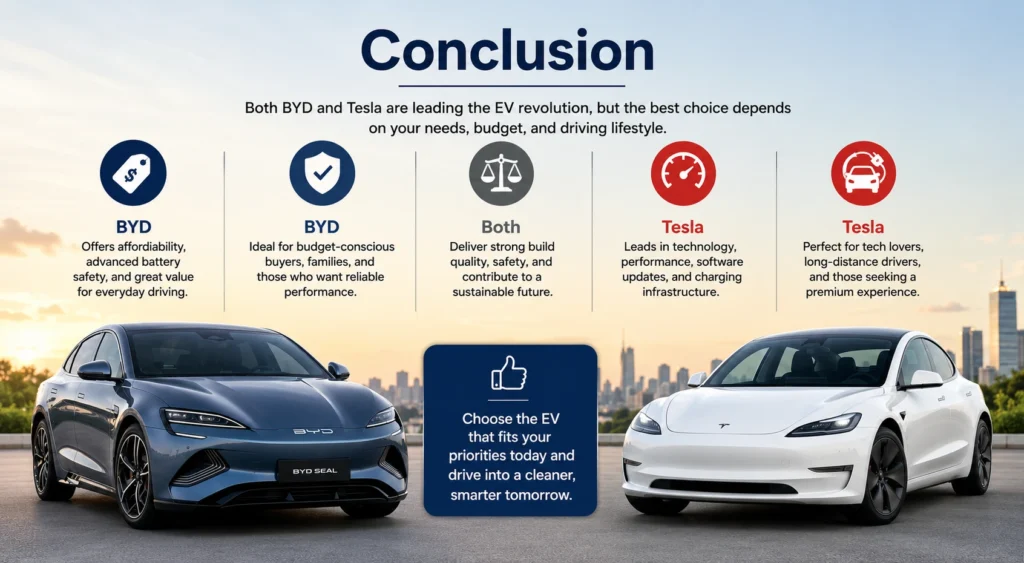
The BYD vs Tesla debate doesn’t have a single winner because both brands excel in different areas. BYD stands out with competitive pricing, reliable Blade Battery technology, and excellent overall value, making it an ideal choice for budget-conscious buyers and families. Tesla continues to lead in software innovation, driving performance, charging convenience, and a premium ownership experience. As global EV adoption continues to grow, both manufacturers are shaping the future of electric mobility. Compare your budget, driving needs, charging access, and preferred features before making a decision. Choosing the EV that best fits your lifestyle will always be the smartest investment.
✨ Want bite-sized tech wisdom? Follow Tech Baaz.