
Best AI Research Tools for Students in 2026
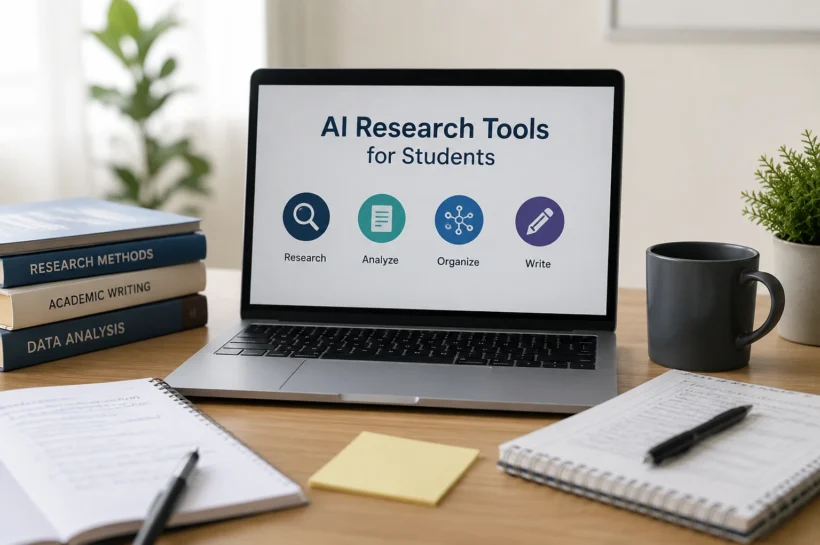
Academic research has changed significantly over the past few years. Students no longer need to spend countless hours searching through databases, reading dozens of papers, and manually organizing references. AI research tools have made these tasks faster and more efficient by helping users discover relevant studies, summarize complex findings, and manage citations with ease. Whether you’re working on a classroom assignment, a dissertation, or a literature review, the right AI tool can improve both productivity and research quality. In this guide, we’ll explore the best AI research tools for students and how they can enhance every stage of the research process.
What Are AI Research Tools?
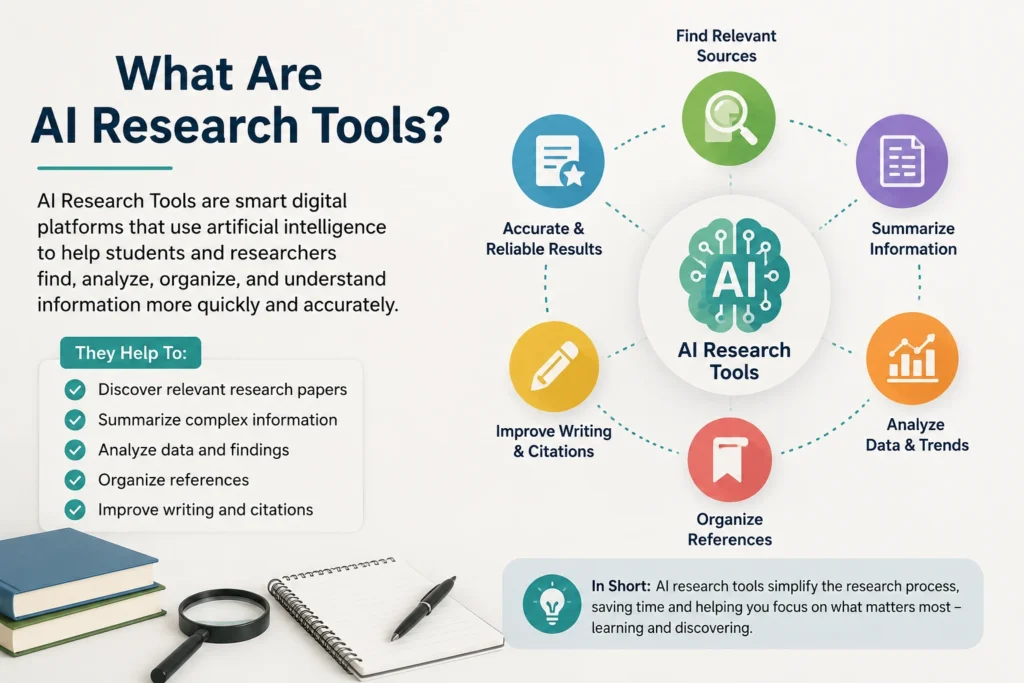
AI research tools are specialized platforms that use artificial intelligence to help students find, analyze, and organize academic information more effectively. Unlike traditional search engines, these tools can understand the meaning behind a query, identify relevant research papers, summarize key findings, and even recommend additional sources. Many platforms also assist with citation management and academic writing. As the volume of scholarly content continues to grow every year, AI research tools help students navigate large amounts of information efficiently. They reduce manual effort, improve research accuracy, and allow users to focus more on learning and critical thinking.
💚 You might also like: Best AI Presentation Makers in 2026: Top Tools Compared
Why Students Are Using AI for Research
Students are increasingly turning to AI research tools because academic workloads continue to become more demanding. Research projects often require reviewing numerous sources, evaluating evidence, and organizing information within strict deadlines. AI-powered platforms simplify these tasks by automating time-consuming processes such as literature discovery, paper summarization, and citation generation. According to recent studies on AI adoption in higher education, a growing number of university students use AI tools to support their learning and research activities. By streamlining routine tasks, these platforms allow students to spend more time analyzing information, developing arguments, and producing higher-quality academic work.
Essential Features of AI Research Tools
The effectiveness of an AI research tool depends largely on the features it provides. While different platforms focus on different aspects of the research process, the best solutions combine intelligent search, paper analysis, citation support, and research organization. These capabilities help students locate reliable academic sources, understand complex studies, and manage information more efficiently. Some tools even provide evidence-based answers and automated insights drawn from scholarly literature. Understanding these core features is important when choosing an AI research tool because the right combination of functions can significantly improve both research productivity and academic performance.
Academic Search and Discovery
One of the most valuable capabilities of AI research tools is their ability to discover relevant academic sources quickly. Instead of relying only on exact keyword matches, AI systems analyze context and intent to recommend studies related to a research topic. This approach helps students uncover important papers, identify emerging trends, and explore connections between different areas of research that might otherwise remain difficult to find.
Citation and Reference Support
Proper citation management is essential for academic integrity and professional research writing. Many AI research tools automatically generate references in widely used formats such as APA, MLA, and Chicago. Some platforms also organize reference libraries, detect citation inconsistencies, and simplify bibliography creation. These features reduce the risk of formatting errors while saving students valuable time during the writing and editing process.
Research Summarization
Reading long academic papers can be challenging, especially when students need to review multiple sources in a short period. AI-powered summarization tools extract the most important findings, methodologies, and conclusions from research papers. This allows students to evaluate the relevance of a study more quickly, prioritize important sources, and gain a clearer understanding of complex topics without immediately reading every document in full.
Top AI Research Tools for Students
The market for AI research tools has expanded rapidly, giving students access to platforms that simplify nearly every aspect of academic research. Some tools specialize in literature reviews, while others focus on academic writing, citation analysis, or paper discovery. Choosing the right platform depends on your specific needs and research goals. The tools below are among the most widely used by students, researchers, and educators because they combine reliable academic data with advanced AI capabilities. Each platform offers unique strengths that can help students save time, improve research quality, and make more informed academic decisions.
Paperpal
Paperpal is designed specifically for academic writing and manuscript improvement. It uses AI to identify grammar issues, improve sentence clarity, and suggest revisions based on academic writing standards. Students can use it to strengthen research papers, essays, and dissertations while ensuring their work maintains a professional and scholarly tone. Its focus on academic communication makes it particularly valuable for higher education.
Elicit
Elicit helps students conduct literature reviews more efficiently by analyzing research papers and extracting key insights. Instead of manually reviewing dozens of studies, users can ask research questions and receive evidence-based summaries from scholarly sources. The platform is especially useful for identifying relevant papers, comparing findings, and accelerating the early stages of the research process.
Consensus
Consensus is an AI-powered academic search engine that provides answers based on published research rather than general web content. It scans scientific literature and presents evidence-backed responses to research questions. Students can quickly understand what studies suggest about a topic while accessing the original sources. This makes it a valuable tool for evidence-based academic research and fact-checking.
Semantic Scholar
Semantic Scholar is a powerful academic search platform developed to help researchers discover relevant scholarly literature. Its AI-driven algorithms highlight influential papers, identify citation relationships, and recommend related studies. Students can use it to explore research topics more deeply, discover highly cited publications, and stay updated on developments within their academic field.
Research Rabbit
Research Rabbit offers a unique approach to research discovery through visual citation mapping. Instead of browsing long lists of papers, students can explore research networks and see how studies connect to one another. This visual experience helps users identify important authors, discover related research, and uncover valuable sources that may not appear through traditional search methods.
How AI Research Tools Improve Research Efficiency
Research often involves repetitive tasks such as searching for sources, reviewing literature, organizing notes, and formatting citations. AI research tools automate many of these activities, allowing students to complete projects more efficiently. Rather than spending hours manually locating relevant papers, students can receive targeted recommendations within minutes. AI-powered summaries also reduce the time needed to evaluate research articles. By streamlining information discovery and organization, these tools help students focus on critical analysis, problem-solving, and knowledge application. The result is a more productive research process with fewer administrative obstacles and improved academic outcomes.
AI Research Tools vs Traditional Research Methods
Traditional research methods remain valuable because they encourage deep reading, critical thinking, and careful evaluation of evidence. However, they often require significant time and effort when dealing with large volumes of information. AI research tools enhance this process by providing faster access to relevant sources, automated summaries, and intelligent recommendations. Rather than replacing traditional research practices, AI serves as a complementary resource that improves efficiency. Students who combine AI-powered tools with strong analytical skills can often achieve better results than those who rely exclusively on manual research methods or automated systems alone.
| Feature | AI Research Tools | Traditional Research Methods |
| Research Speed | Quickly finds relevant studies, summaries, and insights within minutes. | Requires manual searching, reading, and filtering of sources, which can take hours or days. |
| Literature Review | Automatically identifies related papers and summarizes key findings. | Researchers must manually review and compare multiple studies. |
| Information Discovery | Uses AI algorithms to recommend relevant papers based on context and intent. | Relies heavily on keyword searches and manual exploration. |
| Data Organization | Can automatically organize notes, references, and research materials. | Requires manual note-taking and source management. |
| Citation Management | Generates citations and bibliographies in multiple formats automatically. | Citations must be created and formatted manually. |
| Research Accuracy | Provides quick insights but still requires source verification and fact-checking. | Offers greater control over source evaluation but takes more time. |
| Learning Curve | Easy to use with intuitive interfaces and AI assistance. | Requires familiarity with academic databases and research techniques. |
| Cost | Many tools offer free plans, while advanced features may require subscriptions. | Most research methods are free, though access to journals may require payment. |
| Critical Thinking | Supports analysis but may encourage overreliance if used incorrectly. | Naturally promotes deeper reading, evaluation, and independent thinking. |
| Best Use Case | Ideal for accelerating research, literature reviews, and academic writing workflows. | Best for in-depth analysis, source validation, and comprehensive academic research. |
Building an AI-Powered Research Workflow
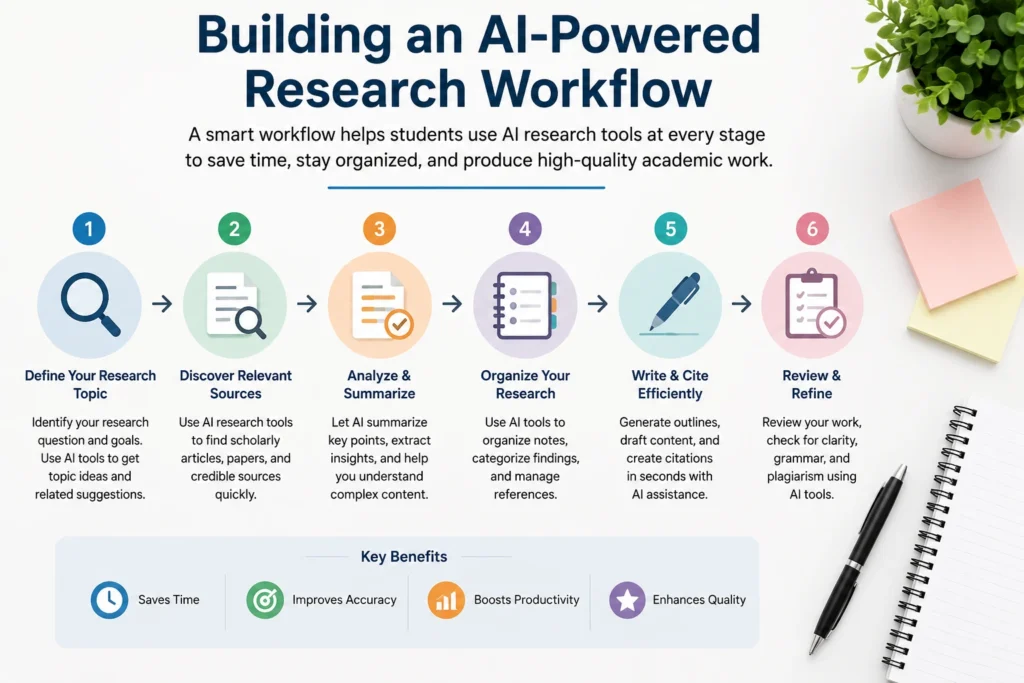
A structured workflow helps students maximize the benefits of AI research tools while maintaining academic rigor. Instead of using AI randomly throughout a project, students should integrate these tools into specific stages of the research process. This includes source discovery, literature evaluation, note organization, and content development. Following a clear workflow ensures that AI enhances productivity without compromising the quality of research. When combined with critical thinking and proper source verification, AI-powered workflows can help students complete projects more efficiently while producing stronger and more reliable academic work.
💚 You might also like: What Is the Samigo App? Complete Features & Benefits Guide
Finding Reliable Sources
The first stage of any research project involves identifying trustworthy academic sources. AI-powered discovery tools can analyze research topics and recommend relevant journal articles, conference papers, and scholarly publications. Students should still verify source credibility, publication quality, and author expertise before using any material. Combining AI recommendations with critical evaluation helps ensure research accuracy and reliability.
Analyzing Research Papers
After collecting sources, students must evaluate their relevance and significance. AI summarization tools simplify this process by highlighting key findings, methodologies, and conclusions. These insights help researchers quickly determine whether a paper supports their objectives. While summaries are useful, reviewing important sections of the original study remains essential for gaining a complete understanding of the research.
Writing and Refining Content
The final stage involves transforming research findings into clear and well-structured academic writing. AI writing assistants can improve grammar, sentence clarity, and overall readability while helping students maintain a professional tone. These tools should be used to enhance communication rather than replace original thinking. Careful editing and fact-checking remain necessary to ensure accuracy and academic integrity.
Free vs Paid AI Research Tools
Many AI research tools offer free plans that provide access to basic features such as academic search, paper discovery, and limited summarization capabilities. These options are often sufficient for students working on regular assignments or introductory research projects. Paid plans typically include advanced features like deeper literature analysis, unlimited AI queries, enhanced writing assistance, and premium research databases. The best choice depends on individual research needs, academic level, and budget. Students who frequently conduct extensive research may find premium features worthwhile, while occasional users can often achieve excellent results with free versions.
| Feature | Free AI Research Tools | Paid AI Research Tools |
| Cost | No subscription required. | Requires a monthly or annual subscription. |
| Search Limits | Often includes limited searches or AI queries. | Usually offers unlimited or higher usage limits. |
| Research Analysis | Basic paper summaries and recommendations. | Advanced literature reviews and deeper research insights. |
| Writing Assistance | Limited writing and editing features. | Comprehensive academic writing and language support. |
| Citation Features | Standard citation generation. | Enhanced reference management and citation accuracy tools. |
| Best For | Students with occasional research needs and tight budgets. | Researchers handling complex projects, theses, or frequent academic work. |
Common Mistakes When you Using AI for Research
While AI research tools offer significant advantages, students can still make mistakes when relying on them too heavily. One of the most common errors is accepting AI-generated summaries or answers without verifying the original source. Some students also overlook citation accuracy or fail to evaluate the credibility of recommended studies. Another issue is using AI-generated content without adding personal analysis or critical thinking. AI should support the research process rather than replace it. By reviewing sources carefully and maintaining academic standards, students can benefit from AI while avoiding inaccuracies, plagiarism risks, and weak research outcomes.
Frequently Asked Questions (FAQs)
Which AI research tool is best suited for students?
Paperpal is great for academic writing, while Elicit excels at literature reviews. The best choice depends on your research needs and workflow.
Can AI research tools replace Google Scholar?
No, AI tools complement Google Scholar rather than replace it. They help analyze and summarize research, while Google Scholar remains a major source for finding papers.
Are AI research tools free?
Many AI research tools offer free plans with basic features. However, advanced research capabilities and unlimited access often require a paid subscription.
Which AI tool is best for literature reviews?
Elicit is one of the most popular tools for literature reviews. It helps students find relevant studies, compare findings, and extract key insights quickly.
Can universities detect AI-assisted research?
Universities primarily evaluate originality and academic integrity. Using AI for research support is generally acceptable if your work remains original and properly cited.
Is using AI for academic research cheating?
No, using AI for research is not cheating when used responsibly. Problems arise only when AI-generated content is submitted as original work without proper review.
What are the benefits of AI research tools?
AI research tools save time, improve source discovery, simplify citations, and help students understand complex research papers more efficiently.
Conclusion
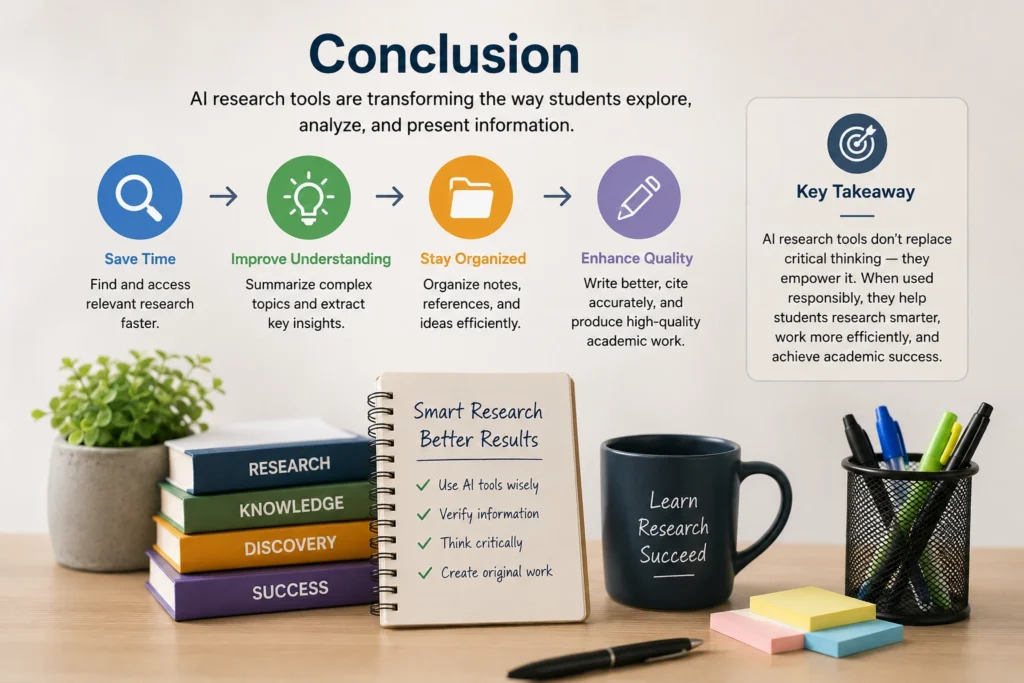
AI research tools have become valuable companions for students navigating today’s increasingly complex academic environment. From discovering scholarly sources and summarizing research papers to improving writing quality and managing citations, these platforms can significantly enhance productivity and research efficiency. However, the most successful students use AI as a support system rather than a replacement for critical thinking and independent analysis. By combining reliable AI research tools with strong academic practices, students can save time, improve the quality of their work, and build stronger research skills that will benefit them throughout their educational and professional careers.
✨ Want bite-sized tech wisdom? Follow Tech Baaz.