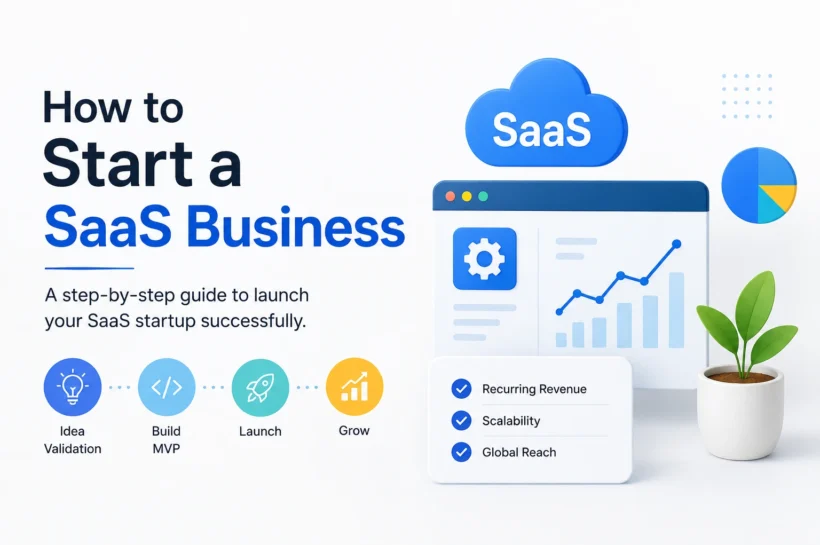

How to Start a SaaS Business: Step-by-Step Guide (2026)
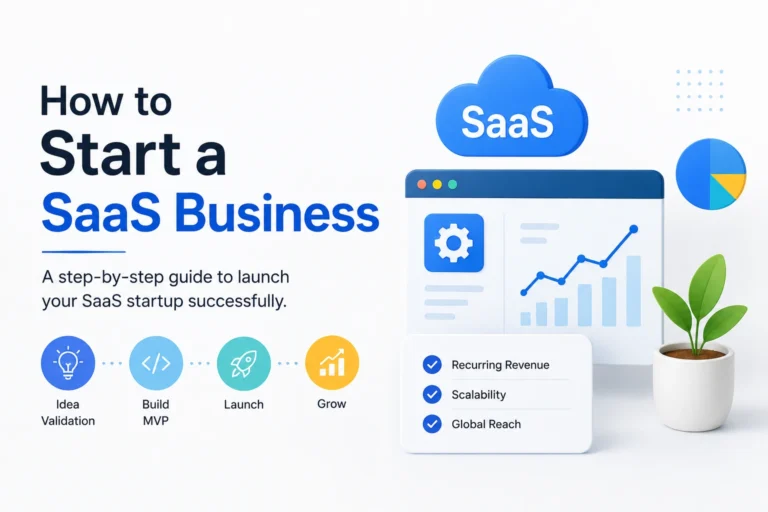
A Software as a Service (SaaS) business delivers software through the internet instead of requiring users to install programs on their devices. Customers typically pay a monthly or annual subscription to access the software from any location with an internet connection. This model allows businesses to provide continuous updates, cloud storage, and customer support without distributing physical software. According to industry research by Gartner, cloud software adoption continues to grow as organizations prioritize flexibility and lower infrastructure costs. For entrepreneurs, SaaS offers recurring revenue, scalability, and the opportunity to build long-term customer relationships through ongoing product improvements.
Why Start a SaaS Business?
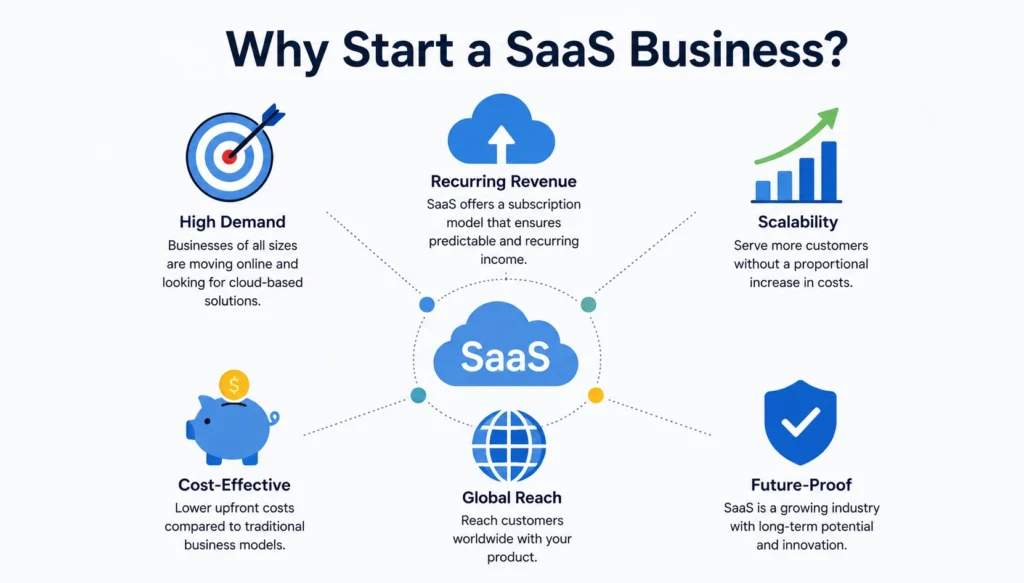
Starting a SaaS business is one of the most attractive opportunities for modern entrepreneurs because it combines recurring revenue with global reach. Unlike traditional businesses that depend on one-time sales, SaaS companies generate predictable income through subscriptions, making financial planning easier. Demand for cloud-based software continues to increase as businesses of every size adopt digital tools to improve productivity and reduce operational costs. Research from Statista projects continued growth in the global SaaS market over the coming years, creating opportunities for innovative startups. With the right strategy, even a small team can compete by solving a specific customer problem better than existing solutions.
💚 You might also like: What Is Topical Authority? The Complete SEO Guide
Validate Your SaaS Idea
Before writing a single line of code, make sure your idea solves a real business problem that customers are willing to pay for. Many SaaS startups fail because founders build products based on assumptions instead of validated demand. Successful entrepreneurs spend time researching customer pain points, interviewing potential users, and analyzing competitors before development begins. This process reduces risk, saves development costs, and helps create a product that fits the market. A well-validated idea also makes it easier to attract investors, early adopters, and future customers because your solution addresses an existing need rather than creating one.
Identify a Market Problem
Every successful SaaS product begins with a clear problem that affects a specific audience. Instead of chasing broad ideas, focus on everyday challenges that businesses or individuals regularly experience. Look for repetitive tasks, inefficient workflows, or expensive manual processes that software can simplify. Customer interviews, online communities, and product reviews often reveal frustrations that existing solutions fail to address. Solving one meaningful problem exceptionally well is usually more valuable than offering dozens of unnecessary features.
Validate Customer Demand
Once you’ve identified a problem, confirm that people are willing to pay for a solution. Create a simple landing page, collect email sign-ups, run surveys, or offer product demos before building the full application. Platforms like Reddit, LinkedIn, and industry forums provide valuable feedback from potential users. Early validation helps confirm product-market fit while reducing the risk of investing significant time and money into an idea with limited commercial potential.
Analyze Your Competitors
Competitor research helps you understand what already exists and where opportunities remain. Study their features, pricing, customer reviews, onboarding process, and marketing strategy. Pay close attention to recurring customer complaints because they often reveal gaps your product can fill. Rather than following your competitors’ approach, focus on building a product that provides a superior user experience, solves customer problems more effectively, and delivers unique value that sets your business apart. Strong competitive analysis builds a clear market position from the beginning.
Define Your Target Market
A successful SaaS business is built for a clearly defined audience rather than for everyone. Identify who benefits most from your solution by considering industry, company size, job role, budget, and common challenges. Creating detailed customer personas helps shape product features, pricing, marketing campaigns, and messaging that resonate with potential buyers. Understanding your audience also improves customer acquisition because your marketing efforts become more focused and efficient. Businesses that solve highly specific problems for a niche market often gain traction faster than products targeting broad audiences with generic solutions.
Build Your SaaS Product
Once your idea is validated, the next step is turning it into a product that customers can actually use. Avoid trying to build every feature at once because it often delays your launch and increases development costs. Instead, focus on creating a product that solves one core problem exceptionally well. This approach allows you to gather real customer feedback, improve faster, and reduce unnecessary risks. According to the Lean Startup methodology developed by Eric Ries, launching early and iterating based on user feedback significantly increases the chances of building a product that fits the market and attracts long-term customers.
Create an MVP
A Minimum Viable Product (MVP) is the simplest version of your software that delivers your core value. Include only the essential features needed to solve your users’ primary problem. Launching an MVP helps you collect real-world feedback, validate demand, and improve your product before investing heavily in advanced functionality. Many successful SaaS companies started with simple MVPs before expanding their feature sets.
Choose the Right Tech Stack
Selecting the right technology stack affects your product’s performance, scalability, and future maintenance. Popular frontend frameworks like React and Vue work well with backend technologies such as Node.js, Laravel, or Django. Cloud platforms including AWS, Google Cloud, and Microsoft Azure, offer reliable infrastructure for growing SaaS businesses. Choose technologies that match your team’s expertise and long-term business goals instead of simply following trends.
Test Before Launch
Testing ensures your SaaS product delivers a smooth and reliable user experience from day one. Check for performance issues, security vulnerabilities, broken workflows, and usability problems before making the product public. Beta testing with a small group of real users can uncover valuable insights that internal testing often misses. Fixing issues before launch improves customer satisfaction and builds trust with early adopters.
Choose a Pricing Model
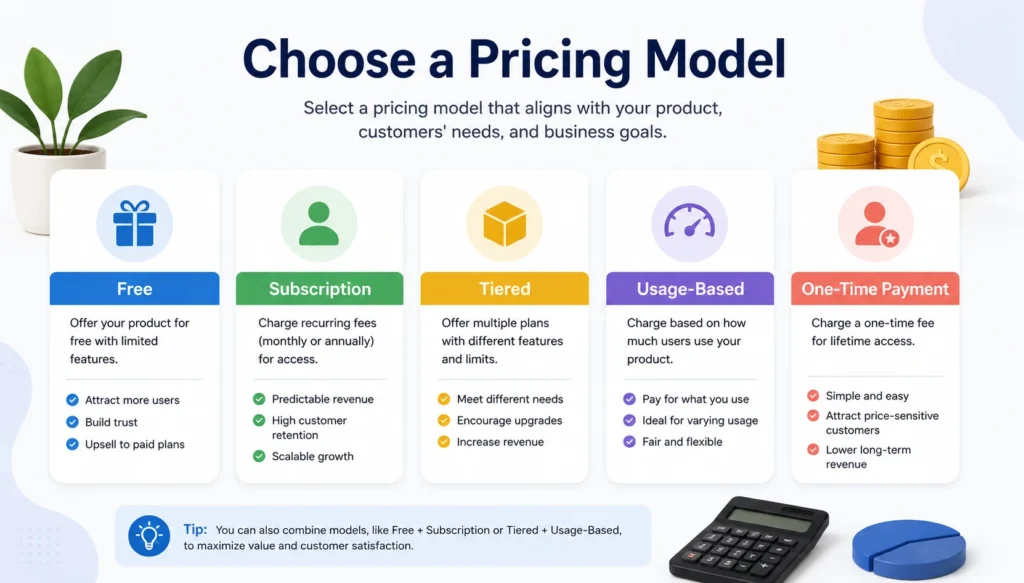
Your pricing strategy directly influences customer acquisition, revenue growth, and long-term profitability. The best pricing model depends on your target audience, product value, and competitive landscape. Many SaaS businesses start with tiered subscription plans because they appeal to different customer segments while encouraging upgrades over time. Consider offering monthly and annual billing options to improve flexibility and cash flow. Regularly review customer feedback, conversion rates, and churn data to refine your pricing as your product evolves and the market changes.
Launch and Market Your SaaS
Launching your SaaS product is only the beginning of your growth journey. A successful launch requires a combination of strong positioning, effective marketing, and continuous customer engagement. Focus on communicating the value your product provides instead of simply listing features. Build trust through educational content, customer testimonials, and product demonstrations. Consistent marketing efforts across multiple channels help attract qualified leads and convert them into paying customers. The earlier you establish a repeatable customer acquisition strategy, the easier it becomes to scale your business sustainably.
💚 You might also like: URLwo: A Complete Guide to Modern Link Management
Build a High-Converting Website
For many potential customers, your website serves as their first impression of your business. Keep the design clean, fast, and easy to navigate while clearly explaining the problem your software solves. Include compelling headlines, product screenshots, pricing information, testimonials, FAQs, and strong call-to-action buttons. A professional website builds credibility and encourages visitors to start a free trial or request a demo.
Grow with SEO
SEO is one of the most effective long-term strategies for driving consistent organic traffic to a SaaS business. Publish high-quality articles that answer customer questions, target relevant keywords, and demonstrate industry expertise. Optimize your pages for search intent, internal linking, page speed, and user experience. Over time, strong SEO can reduce customer acquisition costs while bringing consistent organic traffic to your website.
Use Paid Marketing
Paid advertising helps generate immediate visibility while your organic marketing grows. Platforms like Google Ads, LinkedIn Ads, Facebook Ads, and Microsoft Ads allow you to target specific audiences based on demographics, interests, and business needs. Start with a modest budget, monitor conversion metrics closely, and optimize campaigns regularly. Combining paid advertising with content marketing often produces stronger long-term results than relying on a single acquisition channel.
Scale Your SaaS Business
Growing a SaaS business requires more than acquiring new customers. Sustainable growth comes from improving your product, retaining existing users, and building efficient systems that support expansion. As your customer base increases, invest in automation, customer success, analytics, and infrastructure that can handle higher demand without sacrificing performance. Monitor key SaaS metrics such as Monthly Recurring Revenue (MRR), Customer Acquisition Cost (CAC), Customer Lifetime Value (LTV), and churn rate to make informed decisions. According to industry benchmarks from OpenView Partners, companies that prioritize customer retention alongside acquisition typically achieve stronger long-term growth and profitability.
Avoid Common SaaS Mistakes
Many SaaS startups struggle because they focus on building features instead of solving customer problems. Avoid launching without validating your idea, ignoring user feedback, or targeting an audience that is too broad. Another common mistake is setting prices too low, which can limit growth and reduce perceived value. Neglecting onboarding, customer support, or product updates can also increase churn and slow business growth. Successful founders continuously analyze customer behavior, improve their product, and adapt their strategy based on real data rather than assumptions. Learning from these common mistakes can save both time and resources while increasing your chances of building a successful SaaS company.
Frequently Asked Questions (FAQs)
What is the cost of starting a SaaS business?
The cost depends on your product’s complexity and development method. A basic MVP may cost a few thousand dollars, while a custom SaaS platform can require a significantly larger budget.
Is Coding Required to Start a SaaS Business?
Yes. You can build a SaaS business using no-code tools, hire developers, or partner with a technical co-founder. Business strategy and market validation are often more important than coding skills.
How Long Does SaaS Product Development Take?
A simple MVP usually takes 2–4 months to develop. More advanced SaaS products with complex features may require 6–12 months or longer.
What is an MVP in SaaS?
An MVP (Minimum Viable Product) is the first version of your software with only essential features. It helps you test your idea, collect user feedback, and improve the product before a full-scale launch.
How do SaaS businesses make money?
Most SaaS companies generate revenue through monthly or annual subscription plans. Some also earn from freemium upgrades, usage-based pricing, or enterprise licensing.
What is the best pricing model for a SaaS business?
Tiered subscription pricing is the most common because it serves different customer needs. The right pricing model depends on your target audience and the value your product delivers.
Conclusion
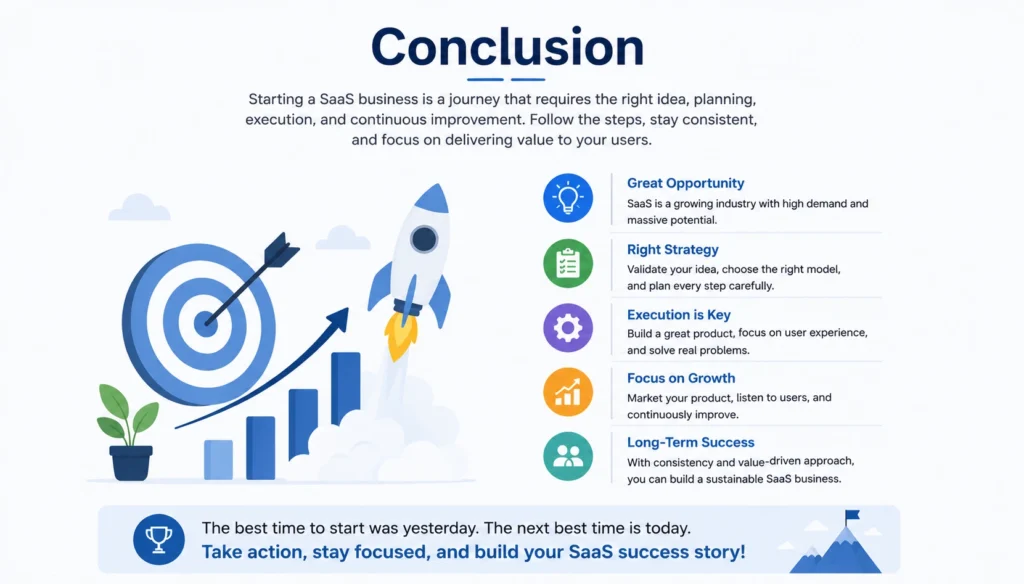
Starting a SaaS business is a challenging but highly rewarding journey when approached with the right strategy. Begin by identifying a genuine market problem, validating your idea, and building an MVP that delivers clear value. From there, focus on creating a scalable product, choosing a profitable pricing model, and implementing effective marketing strategies to attract customers. Long-term success depends on continuously improving your software, listening to user feedback, and tracking key business metrics. By taking a customer-first approach and making data-driven decisions, you can build a SaaS business that generates recurring revenue and remains competitive in an evolving digital marketplace.
✨ Want bite-sized tech wisdom? Follow Tech Baaz.