
How to Become a Web Developer in 2026 | Complete Guide
Web development in 2026 is more dynamic and opportunity-rich than ever before, driven by rapid digital transformation, AI integration, and the global demand for online platforms. According to recent industry insights from sources like the U.S. Bureau of Labor Statistics, web developer roles are expected to continue growing faster than average compared to many other careers. Businesses now prioritize responsive, fast, and scalable web applications, making skilled developers essential. In this evolving landscape, developers are expected not only to code but also to understand user experience, performance optimization, and modern frameworks that power today’s web ecosystem.
Developer Role Overview
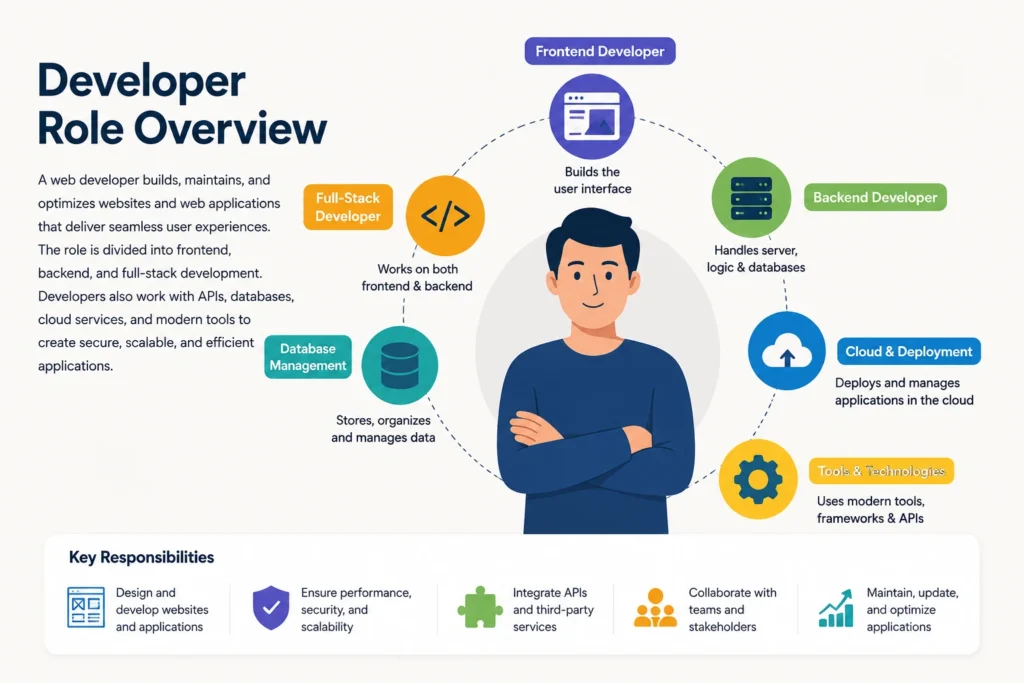
A web developer in 2026 is responsible for building, maintaining, and optimizing websites and web applications that deliver seamless user experiences. The role is broadly divided into frontend, backend, and full-stack development. Frontend developers focus on UI and interactivity, backend developers handle servers and databases, while full-stack developers manage both. Modern developers also work with APIs, cloud services, and AI-powered tools to improve efficiency. Companies today expect developers to be problem-solvers who can adapt quickly to new technologies and collaborate effectively in agile, fast-paced environments.
💚 You might also like: How to Study Effectively at Home in (2026) Smart Tips That Work
Core Skills Required
Becoming a successful web developer requires a strong combination of technical expertise and professional abilities. Core technical skills include HTML, CSS, JavaScript, Git, and familiarity with frameworks like React or Node.js. However, soft skills such as communication, problem-solving, adaptability, and teamwork are equally important in 2026. According to industry hiring trends, employers increasingly value developers who can think critically and work in collaborative environments. Continuous learning is also essential because web technologies evolve rapidly. A strong foundation in both technical and professional skills ensures long-term career growth and adaptability in the ever-changing tech industry.
Technical vs Soft Skills
Technical skills allow developers to build functional and efficient applications, while soft skills help them succeed in real-world work environments. Coding knowledge alone is no longer enough in 2026. Developers must also communicate ideas clearly, understand project requirements, and collaborate with teams. Problem-solving and adaptability are especially important as technologies change frequently. Employers now look for developers who can balance both skill sets effectively, ensuring they can not only build systems but also contribute to strategic decision-making and team productivity in modern development workflows.
Programming Languages in Modern Web Development
Programming languages form the foundation of web development, and choosing the right ones is critical for career success. In 2026, JavaScript remains the most widely used language for both frontend and backend development, supported by its vast ecosystem and frameworks. HTML and CSS are essential for structuring and styling web pages, while Python and PHP are commonly used for backend systems. According to Stack Overflow Developer Survey trends, JavaScript has consistently ranked as the most popular programming language for several years. Understanding these languages helps developers build scalable, interactive, and modern web applications.
Selecting the Optimal Language for Web Development
Choosing the best programming language depends on career goals and project requirements. For beginners, JavaScript is highly recommended because it allows full-stack development and has strong community support. Python is ideal for backend development, especially in data-driven applications, while TypeScript adds structure to large-scale JavaScript projects. Each language has strengths depending on the use case, but JavaScript remains the most versatile option in 2026. Developers should focus on mastering one core language first and then expanding their skill set based on industry demand and specialization areas.
Structured Learning Roadmap for Beginners
A structured roadmap is essential for becoming a successful web developer in 2026. Beginners should start with HTML, CSS, and JavaScript to understand the basics of web structure and functionality. Once comfortable, they should move toward frameworks like React and backend technologies such as Node.js. Building real-world projects is a critical part of learning, as it helps reinforce concepts and develop problem-solving skills. Finally, developers should focus on version control, deployment, and portfolio building. A step-by-step approach ensures steady progress and reduces confusion in the learning journey.
Frontend Development Fundamentals
Frontend development deals with the visual and interactive elements of a website that users directly experience. It includes technologies like HTML for structure, CSS for styling, and JavaScript for dynamic functionality. In 2026, frontend development has evolved significantly with frameworks like React, Next.js, and Vue.js dominating the industry. These tools help create fast, responsive, and scalable user interfaces. According to modern development standards, user experience and performance optimization are key priorities. A strong frontend foundation is essential for any aspiring web developer aiming to build modern, professional-grade web applications.
Backend Development and Database Architecture
Backend development is the backbone of every modern web application, handling server-side logic, authentication, and data management. In 2026, backend systems are increasingly powered by scalable frameworks like Node.js, Django, and Laravel, which allow developers to build fast and secure applications. Databases such as MySQL, PostgreSQL, and MongoDB store and manage data efficiently. According to industry reports from sources like Stack Overflow and GitHub trends, backend development skills remain in high demand due to the rise of SaaS platforms, AI-driven applications, and cloud-based systems that require strong data processing capabilities.
Essential Development Tools and Frameworks
Modern web development heavily relies on tools and frameworks that improve productivity and code quality. Git and GitHub are essential for version control, enabling developers to track changes and collaborate efficiently. Frameworks like React, Next.js, and Vue dominate frontend development, while Express.js and Django are widely used for backend systems. In 2026, development workflows are increasingly automated using CI/CD pipelines and cloud platforms like AWS and Vercel. These tools help developers build, test, and deploy applications faster, making them indispensable for both beginners and professionals in today’s competitive tech industry.
Modern Tooling and Version Control Systems
Version control systems like Git are essential for managing code efficiently in collaborative environments. Platforms such as GitHub and GitLab allow developers to store code, track changes, and work in teams seamlessly. Modern tooling also includes package managers like npm and build tools like Vite, which improve development speed and efficiency. In 2026, employers expect developers to be comfortable with these tools because they streamline workflows, reduce errors, and support scalable software development practices across both small and enterprise-level projects.
Real-World Project Development and Portfolio Building
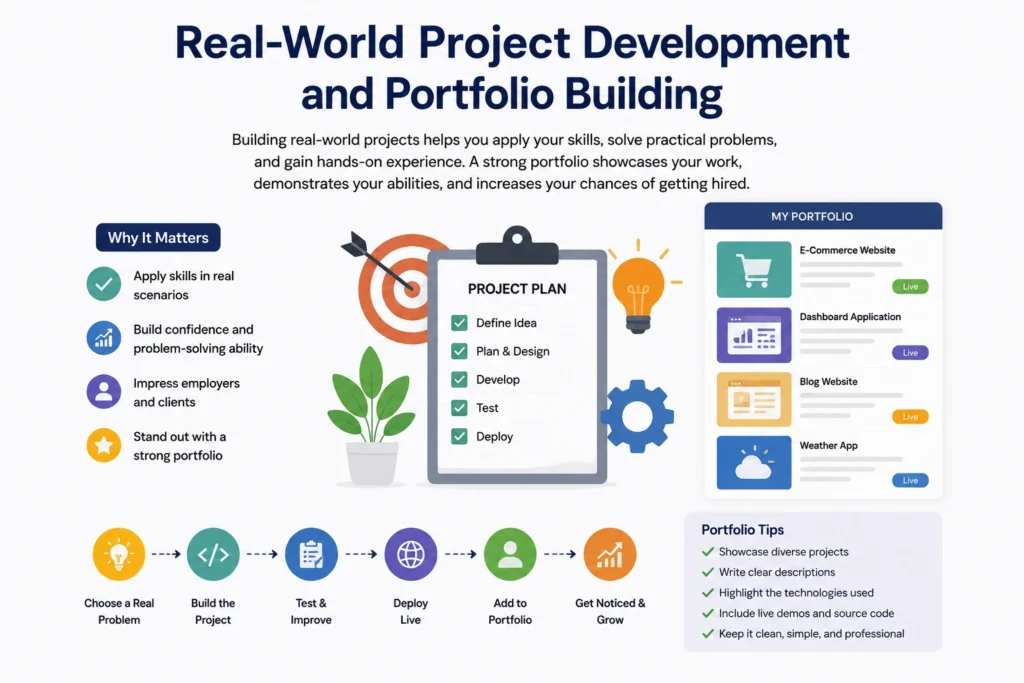
Building real-world projects is one of the most important steps in becoming a web developer. Employers and clients in 2026 prioritize practical experience over theoretical knowledge, making portfolios essential for career growth. Projects such as e-commerce websites, dashboards, blogs, and task management apps demonstrate technical ability and problem-solving skills. According to hiring trends, candidates with strong portfolios are significantly more likely to secure interviews. Working on real projects also helps developers understand debugging, performance optimization, and user experience design, which are critical in professional software development environments.
💚 You might also like: How to Choose the Right Software for Your Business (2026 Guide)
High-Impact Projects for Career Advancement
High-impact projects are those that solve real problems and demonstrate advanced technical skills. Examples include full-stack e-commerce platforms, social media applications, and AI-powered tools. These projects showcase proficiency in frontend, backend, APIs, and database integration. In 2026, recruiters look for developers who can build scalable and responsive applications with clean code architecture. Adding such projects to a portfolio significantly increases job opportunities and helps developers stand out in a competitive global tech market.
Career Opportunities in Web Development
Web development provides diverse career paths, including frontend, backend, full-stack, and UI/UX-focused roles. In 2026, remote work and freelancing have become mainstream, allowing developers to work with global clients. According to labor market insights, web development continues to grow steadily due to increasing demand for digital services, SaaS platforms, and online businesses. Developers can also specialize in high-demand niches like React development, API engineering, or cloud-based application development, which significantly increases earning potential and long-term career stability.
Freelancing vs Full-Time Jobs
Freelancing offers flexibility, independence, and global earning opportunities, while full-time jobs provide stability, structured growth, and benefits. In 2026, many developers combine both paths to maximize income and experience. Freelancing platforms like Upwork and Fiverr allow beginners to start earning quickly, while full-time roles in tech companies offer long-term career development. Choosing between these paths depends on personal goals, lifestyle preferences, and financial priorities. Both options are highly viable in today’s digital economy.
Final Roadmap to Becoming a Job-Ready Developer
Becoming a web developer in 2026 requires a structured and consistent learning path rather than random skill acquisition. A job-ready developer typically follows a clear progression: starting with HTML, CSS, and JavaScript, then moving into frameworks, backend development, and real-world projects. Industry data from platforms like LinkedIn and Stack Overflow shows that employers prioritize practical experience over formal degrees. This means your ability to build, deploy, and maintain real applications is more important than theoretical knowledge. A focused roadmap helps beginners stay consistent, avoid overwhelm, and gradually build the confidence needed to enter the competitive tech industry successfully.
Step-by-Step Learning Timeline for 2026
A realistic timeline for becoming a web developer depends on consistency and practice. On average, beginners can reach a job-ready level in 6 to 12 months with focused learning. The first 2–3 months should focus on frontend basics like HTML, CSS, and JavaScript. The next phase involves learning frameworks, backend development, and databases. The final stage includes building projects, deploying applications, and creating a professional portfolio. According to modern bootcamp structures, project-based learning significantly accelerates skill development. Sticking to a structured timeline ensures steady progress and reduces the risk of learning gaps.
Industry Trends Shaping Web Development in 2026
Web development in 2026 is heavily influenced by AI integration, cloud computing, and performance-focused design. Tools like AI code assistants, automated testing, and no-code platforms are changing how developers work. However, demand for skilled programmers remains strong because businesses still need custom solutions and scalable systems. According to global tech reports, companies are investing more in web applications, SaaS products, and mobile-first platforms. Developers who understand modern trends such as serverless architecture, API-first development, and responsive UI design will have a significant advantage in the job market.
Common Mistakes Beginners Should Avoid
Many beginners struggle in web development due to avoidable mistakes such as learning too many technologies at once, skipping fundamentals, or not building real projects. Another common issue is relying too heavily on tutorials without practicing independently. In 2026, employers expect problem-solving ability, not just copied code. Beginners should focus on mastering core concepts, building projects regularly, and understanding how systems work instead of memorizing syntax. Avoiding these mistakes can significantly shorten the learning curve and improve long-term success in the tech industry.
How to Build a Strong Developer Portfolio
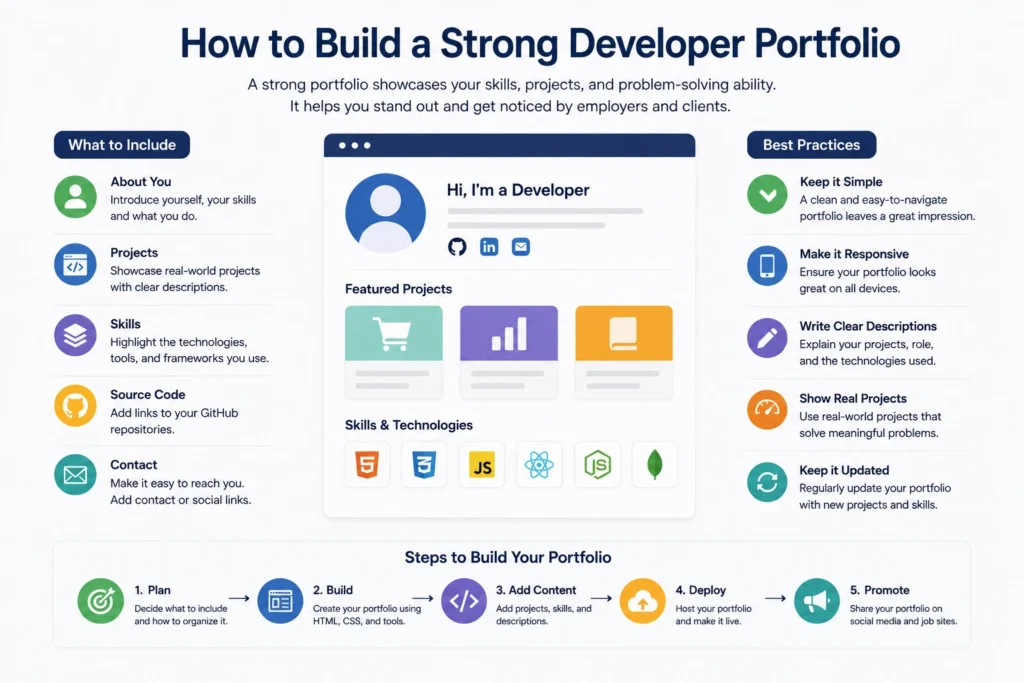
A strong portfolio is one of the most important assets for a web developer in 2026. It showcases your skills, projects, and problem-solving ability to potential employers or clients. A good portfolio should include real-world applications such as e-commerce websites, dashboards, or API-based projects. It should also highlight clean code, responsive design, and deployed live links. According to hiring trends, recruiters often review portfolios before resumes. This makes it essential to present your work professionally on platforms like GitHub and personal portfolio websites.
Conclusion
Becoming a web developer in 2026 is achievable for anyone willing to learn step by step and stay consistent. The key lies in mastering fundamentals, building real projects, and staying updated with industry trends. Whether you choose freelancing or a full-time job, web development offers strong career growth, financial stability, and global opportunities. With the right roadmap and dedication, you can successfully enter and grow in this fast-evolving digital industry.
FAQs
How long does it take to become a web developer in 2026?
Most beginners can become job-ready in 6–12 months with consistent practice.
Do I need a degree to become a web developer?
No, practical skills and a strong portfolio matter more than a formal degree.
Which language should I learn first?
JavaScript is the best starting point for modern web development.
Is web development still in demand in 2026?
Yes, demand continues to grow due to digital transformation and AI integration.
Can I become a web developer without experience?
Yes, beginners can start from scratch using structured learning and projects.
✨ Want bite-sized tech wisdom? Follow Tech Baaz.