
Top AI Tools for Students and Learning in 2026
Artificial intelligence is changing the way students learn, study, and manage schoolwork. What once felt like science fiction is now part of everyday student life. From summarizing long chapters to generating flashcards and organizing assignments, AI tools are becoming digital study partners for millions of learners. A recent global study found that students are adopting AI faster than almost any other education technology, especially for writing support, research, and productivity. The biggest reason is simple: students want smarter ways to learn. Used correctly, AI doesn’t replace learning; it helps make learning faster, clearer, and more personalized.
Why Students Are Using AI Tools More Than Ever
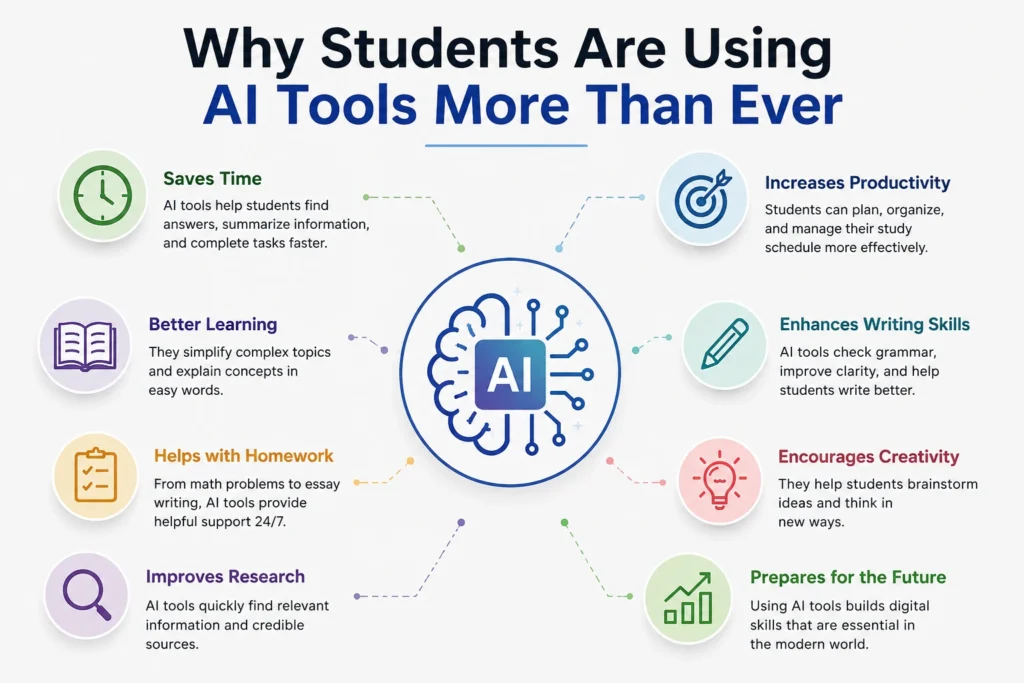
Students today manage more than just homework. They balance lectures, assignments, exams, part-time jobs, and constant deadlines. That pressure is exactly why AI tools have become so useful. Instead of spending hours organizing notes or searching multiple websites for answers, students can now get support in seconds. AI helps simplify complex topics, improve writing, and save time on repetitive tasks. Many students also use it as a study coach to stay organized and focused. The rise of AI in education isn’t only about convenience, it’s about helping students learn more efficiently in a fast-moving academic environment.
💚 You might also like: Oncepik: The Easy Tool for Better Team Productivity in 2026
Benefits of AI Tools for Students
AI tools are popular because they solve real student problems. They can make studying feel less overwhelming, especially during busy semesters. Whether you’re preparing for exams, writing essays, or reviewing lecture notes, the right AI tool can save time and improve results. Many platforms also adapt to different learning styles, which makes studying feel more personal. Some students learn best through summaries, while others prefer quizzes or visual explanations. AI supports both. Instead of replacing effort, it removes friction from the learning process and gives students more time to focus on understanding the material itself.
Faster Studying and Research
AI can speed up the research process by summarizing articles, pulling key ideas from PDFs, and answering topic-based questions instantly. This helps students spend less time searching and more time actually learning. For research-heavy subjects, that time-saving benefit can make a huge difference, especially when deadlines are close.
Better Writing and Note-Taking
Writing essays and taking notes becomes easier with AI support. Tools can rewrite unclear sentences, fix grammar, organize rough ideas, and turn messy notes into structured summaries. Students still do the thinking, but AI helps polish and organize the final result.
Improved Productivity and Time Management
Many students use AI to build study schedules, break large assignments into smaller steps, and stay focused during revision. It acts like a digital productivity assistant, helping reduce procrastination while making workloads feel more manageable.
How We Selected the Best AI Tools for Students
Not every AI tool is actually useful for students. Some are built for business teams or general users and don’t really fit academic needs. For this list, we focused only on tools that genuinely support learning. We compared them based on usability, affordability, study features, writing support, research quality, and how helpful they are in everyday student life. We also reviewed what students commonly recommend across learning communities and education platforms. The goal was simple: find AI tools that help students learn better, not tools that just generate content without real educational value.
Best AI Tools for Students and Learning in 2026
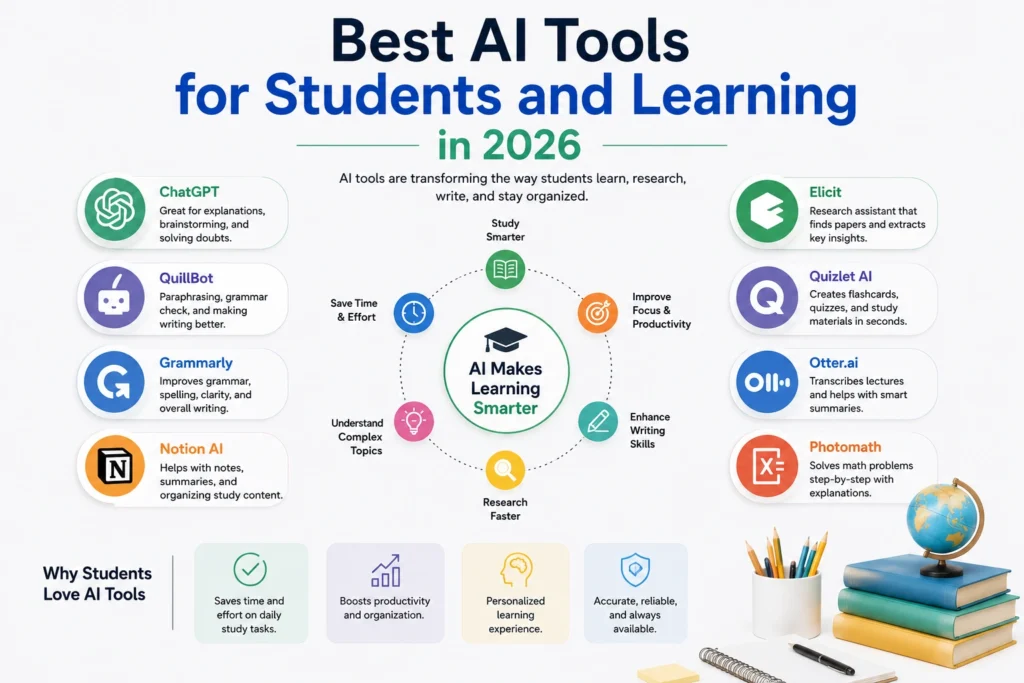
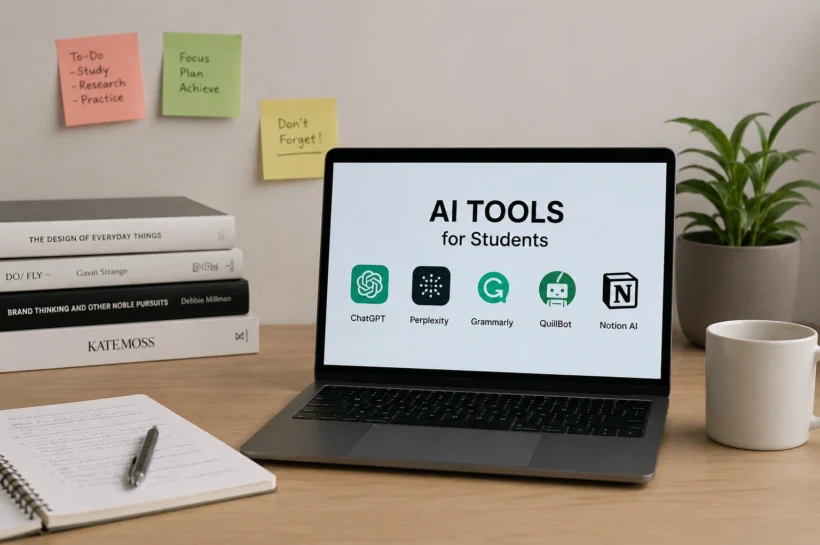
The best AI tools for students do more than answer questions. They help with research, note-taking, writing, revision, organization, and a deeper understanding. Some work like tutors. Others feel more like productivity assistants. The right choice depends on what you need help with most. If you struggle with writing, one tool may be better. If you spend hours reviewing lectures or research papers, another may fit better. Below are the top AI tools students are using in 2026 to study smarter, stay organized, and make learning feel less stressful.
ChatGPT – Best Overall AI Study Assistant
ChatGPT is one of the most widely used AI tools among students today. It’s useful for brainstorming, explaining difficult concepts, summarizing information, and creating study guides. Students often use it like an on-demand tutor that’s available anytime. It’s especially helpful for writing outlines, revising essays, and breaking down difficult topics into simpler language.
Google NotebookLM – Best for Notes and Research
NotebookLM is ideal for students who work with class notes, PDFs, lecture slides, and research materials. It helps organize information in one place and can generate summaries directly from uploaded sources. That makes revision faster and more focused before exams.
Perplexity AI – Best for Research with Sources
Perplexity AI stands out because it provides cited answers. That’s especially useful for students writing reports or academic assignments. Rather than simply generating answers, it includes source references, making research more reliable and easier to fact-check.
QuillBot – Best for Paraphrasing and Rewriting
QuillBot helps students rewrite sentences more clearly while keeping the original meaning. It’s commonly used during essay editing, improving flow, or rewriting awkward paragraphs. It’s especially useful when trying to make writing sound smoother and more natural.
Mindgrasp AI – Best for Summaries and Lecture Understanding
Mindgrasp is useful for students who work with recorded lectures, videos, textbooks, and long reading material. It can summarize information quickly and turn difficult content into easier explanations, making review sessions more efficient before exams.
Free AI Tools for Students on a Budget
The good news is that students don’t need a big budget to benefit from AI. Many of today’s best AI learning tools offer strong free plans that are enough for daily study needs. Whether you need help with writing, research, note summaries, or brainstorming, there are free options available. Tools like ChatGPT, QuillBot, and Perplexity AI give students access to powerful features without requiring payment up front. That makes AI more accessible than ever. For students trying to save money while staying productive, free AI tools can still deliver real academic value.
How to Use AI Tools for Studying Responsibly
AI works best when students use it to support learning, not replace it. That difference matters. The smartest way to use AI is as a study partner. You can ask it to explain difficult concepts, summarize reading material, quiz you before exams, or help organize notes. But copying answers directly into assignments without understanding them can create problems academically and personally. Many schools are also creating clearer AI policies around responsible use. AI should help students think more clearly, not do all the thinking for them. When used responsibly, it becomes a tool for deeper learning rather than a shortcut.
Use AI to Understand, Not Just to Finish Work
The strongest students use AI to improve their understanding. Instead of asking for complete answers, ask it to explain concepts step by step, simplify difficult topics, or create practice questions. This helps build real knowledge while keeping learning active and meaningful.
Always Verify Important Information
AI can sometimes miss context or provide outdated details. That’s why fact-checking matters. For academic work, students should double-check statistics, citations, and key facts using textbooks, peer-reviewed research, or trusted academic websites before submitting anything important.
Tips for Choosing the Right AI Tool Based on Your Study Needs
The best AI tool depends on how you study and what kind of help you need most. Some students need writing support. Others need help reviewing lecture notes or understanding research papers. That’s why there isn’t one perfect tool for everyone. Before choosing one, think about your biggest academic challenge. Are you struggling with organization? Writing? Research? Revision? Start there. The right AI tool should solve a specific problem in your workflow. Choosing based on your actual study habits will always be more useful than choosing the most popular platform online.
For Writing and Essays
If most of your academic work involves writing papers, reports, or assignments, tools like Grammarly and QuillBot are strong choices. They help improve sentence clarity, grammar, tone, and structure without making your writing feel robotic.
For Research and Reading
Students handling research-heavy coursework often need tools that save reading time. Perplexity AI and SciSpace are especially useful for summarizing research papers, explaining academic concepts, and finding source-backed information quickly.
For Productivity and Notes
If your challenge is staying organized, AI note-taking tools can help a lot. Notion AI and Google NotebookLM are useful for managing notes, study plans, tasks, and revision materials in one place.
AI Tools vs Traditional Study Methods: Which Works Better?
AI tools are changing study habits, but traditional learning methods still matter. Reading textbooks, writing notes by hand, solving practice problems, and classroom discussion continue to play an important role in education. AI doesn’t replace those methods it improves them. The most effective students often combine both. They use AI for speed, organization, and quick explanations, while using traditional study techniques for memory, focus, and deeper understanding. Research in learning science consistently shows that active recall and repetition improve retention. AI can support those methods, but it works best alongside them, not instead of them.
Common Mistakes Students Make When Using AI Tools
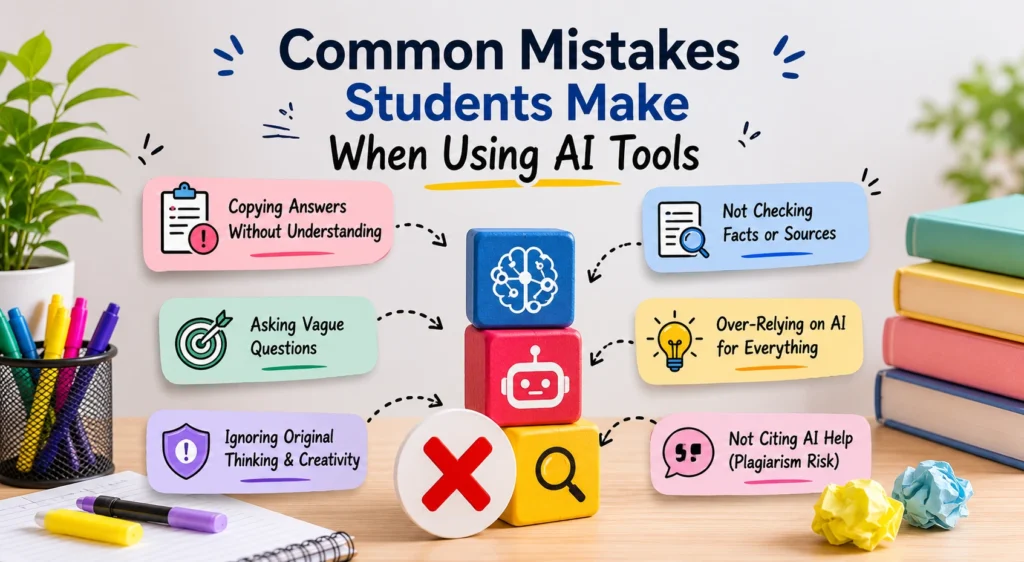
AI is useful, but many students don’t get the best results because they use it the wrong way. One common mistake is depending on AI too much without reviewing the output. Another is copying information without checking its accuracy or understanding it first. Some students also use generic prompts, which leads to weak responses. Better prompts usually create better results. AI should be interactive. Ask follow-up questions. Request examples. Compare explanations. Treat it like a conversation. The more thoughtfully students use AI, the more valuable it becomes as a learning tool instead of just a quick-answer generator.
💚 You might also like: How to Speed Up a Slow Laptop (2026 Guide)
The Future of AI in Education
AI in education is still in its early stages, and it’s already changing how students learn. Over the next few years, AI tools will likely become even more personalized, interactive, and deeply connected to classrooms. Instead of giving every student the same learning experience, AI can adapt explanations based on individual pace, skill level, and learning style. Many educators are also beginning to explore how AI can support teaching, feedback, and lesson planning. According to global education trend reports, AI-powered learning platforms are expected to grow rapidly through the next decade. The future of learning looks more flexible, personalized, and student-centered than ever before.
FAQ About AI Tools for Students
What Is the Best AI Tool for Students?
For many students, ChatGPT remains the best all-around AI tool because it supports writing, brainstorming, note summaries, explanations, and study planning in one place. However, the best tool depends on what kind of academic help you need most.
Which AI Tool Is Best for Homework Help?
ChatGPT and Perplexity AI are commonly used for homework support. They can explain difficult concepts, answer questions, and help students review material step by step rather than just giving direct answers.
Are AI Tools Free for Students?
Yes, many AI tools provide free plans that students can use. Platforms like ChatGPT, QuillBot, and Perplexity AI provide useful free features, while premium plans unlock additional tools for deeper academic support.
Can Students Use AI Tools in School or University?
In most cases, yes, but it depends on the school or university policy. Many institutions allow AI for brainstorming, research support, or note organization, while limiting its use for direct assignment submission. Students should always check their academic guidelines first.
Which AI Tool Is Best for Note-Taking?
Google NotebookLM and Notion AI are excellent for note-taking. They help students organize lecture notes, summarize materials, and keep study resources searchable in one place.
Best AI Tools for Research Papers
Perplexity AI and SciSpace are excellent options for research tasks. They help students find information faster, understand academic papers, and explore sources more efficiently during the research process.
Conclusion
There’s no single AI tool that works perfectly for every student. The best choice depends on what you need help with most. If you want an all-around study assistant, ChatGPT is a strong option. If research is your priority, Perplexity AI may be a better fit. If you spend more time writing essays, QuillBot or Grammarly can be incredibly useful. The key is not finding the most popular tool it’s finding the one that fits naturally into your study routine and genuinely helps you learn more effectively.
✨ Want bite-sized tech wisdom? Follow Tech Baaz.