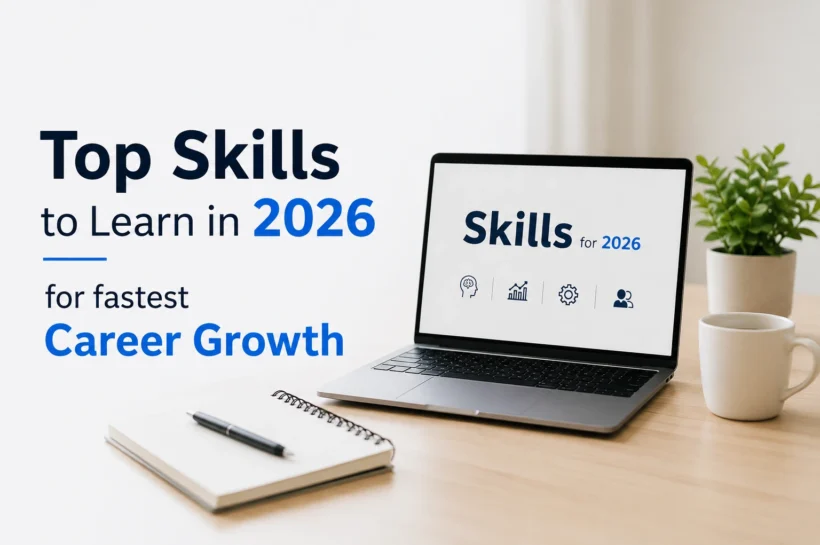

Top Skills to Learn in 2026 for fastest Career Growth
Technology is advancing at an unprecedented pace, reshaping industries, creating new career opportunities, and changing the skills employers value most. While technical expertise remains important, businesses are increasingly seeking professionals who can adapt, solve problems, and work effectively alongside emerging technologies such as artificial intelligence and automation. According to the World Economic Forum’s Future of Jobs Report 2025, analytical thinking, AI literacy, cybersecurity, and technological skills are among the fastest-growing competencies worldwide. Understanding which skills are worth learning can help students, professionals, freelancers, and entrepreneurs stay competitive and build long-term career success.
Why Skills Matter More Than Ever in 2026
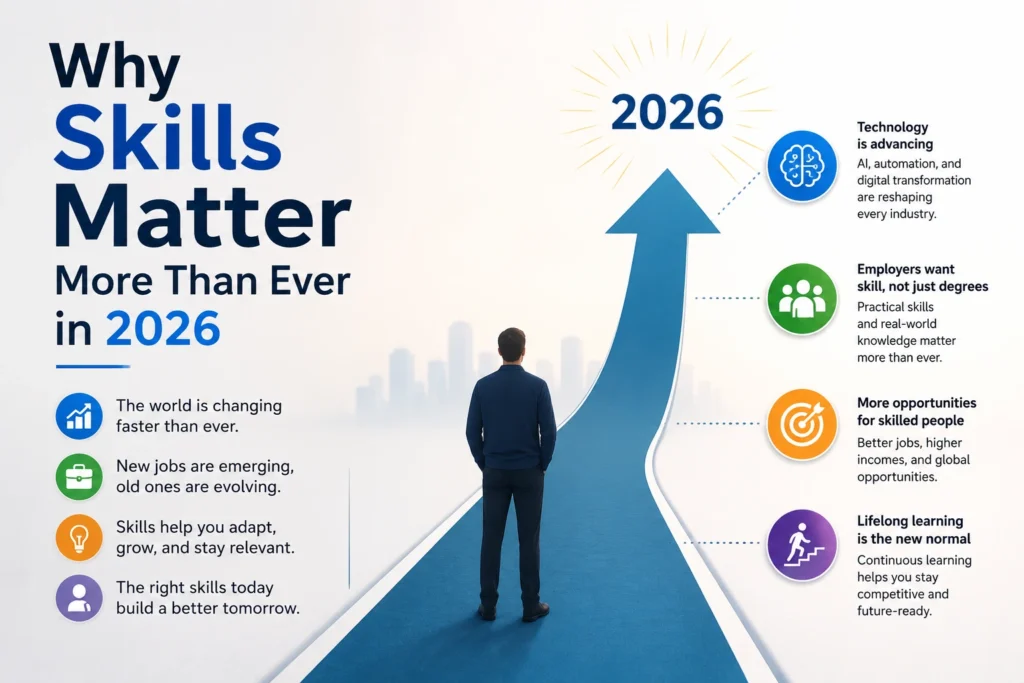
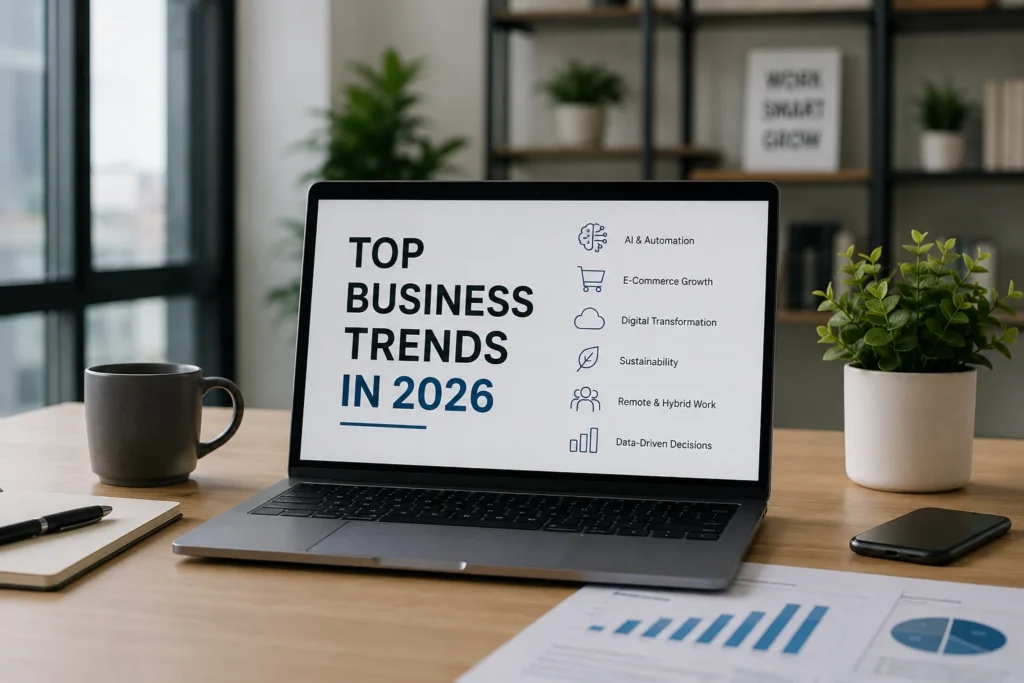
The modern job market rewards people who continuously learn and adapt to change. As automation and artificial intelligence take over repetitive tasks, employers are placing greater value on practical skills that drive business results. A recent World Economic Forum report suggests that nearly 40% of workers’ core skills could change by the end of the decade, highlighting the importance of ongoing development. Whether you want to secure a better job, increase your income, or remain competitive in your industry, investing in valuable skills can create opportunities that traditional qualifications alone may no longer guarantee.
💚 You might also like: Top Social Media Marketing Trends in 2026
What Makes a Skill Worth Learning?
Not every trending skill offers long-term value. The most worthwhile skills solve real-world problems, remain relevant across multiple industries, and continue generating demand as technology evolves. High-value skills often combine technical knowledge with human capabilities such as communication, creativity, and decision-making. When evaluating a skill, factors like job demand, earning potential, learning difficulty, and future relevance should all be considered. The best skills are those that help organizations achieve measurable results while giving professionals flexibility to adapt as industries and workplace requirements continue to evolve.
Top Skills to Master in 2026
Artificial Intelligence (AI)
Artificial intelligence is rapidly becoming a fundamental business tool, helping organizations automate workflows, improve efficiency, and make smarter decisions. From content creation and customer service to healthcare and finance, AI is transforming how work gets done. Learning AI concepts, prompt engineering, and AI-powered tools can provide a significant competitive advantage, making AI literacy one of the most valuable skills professionals can develop in 2026.
Data Analytics
Organizations generate enormous amounts of data every day, but data only becomes valuable when it can be interpreted and applied effectively. Data analytics helps businesses identify trends, understand customer behavior, and make informed decisions. Professionals who can work with tools such as Excel, SQL, Power BI, or Tableau are increasingly sought after because they help transform complex information into actionable business insights.
Cybersecurity
As businesses become more dependent on digital systems, protecting sensitive information has become a top priority. Cybersecurity professionals help prevent data breaches, cyberattacks, and security vulnerabilities that can damage both finances and reputation. With cyber threats growing in complexity every year, organizations across healthcare, finance, government, and technology sectors continue investing heavily in cybersecurity talent, making it one of the most stable career paths available.
Cloud Computing
Cloud computing powers much of today’s digital infrastructure, enabling businesses to store data, run applications, and scale operations efficiently. Platforms such as AWS, Microsoft Azure, and Google Cloud have become essential components of modern business technology. Professionals with cloud computing skills are in demand because organizations need experts who can manage cloud environments, improve system performance, and support ongoing digital transformation initiatives.
Software Development
Software development remains one of the most valuable and versatile skills in the digital economy. Businesses of all sizes rely on software applications, websites, and digital platforms to serve customers and improve operations. Learning programming languages such as Python, JavaScript, or Java can open doors to careers in web development, mobile app development, and software engineering. Beyond technical roles, coding knowledge also helps professionals understand how modern technology works, making it easier to collaborate with development teams and contribute to technology-driven projects.
Digital Marketing and SEO
As more businesses compete online, digital marketing and search engine optimization have become essential skills for driving visibility and growth. Digital marketers use content marketing, social media, email campaigns, and paid advertising to reach target audiences and generate results. SEO focuses on improving a website’s visibility in search engines, helping businesses attract organic traffic. Because companies continue investing heavily in online marketing, professionals with strong digital marketing and SEO skills can find opportunities across industries, whether working for organizations, agencies, or as independent freelancers.
UX/UI Design
User experience and user interface design focus on creating digital products that are both functional and easy to use. A well-designed website or application improves customer satisfaction, engagement, and conversion rates. UX designers research user behavior and optimize experiences, while UI designers create visually appealing interfaces that support usability. As businesses prioritize customer-centric digital experiences, demand for skilled UX/UI professionals continues to grow. These skills blend creativity, analytical thinking, and technical expertise, making them highly relevant in today’s digital-first business environment.
Project Management
Project management is a critical skill that helps organizations plan, execute, and complete initiatives successfully. Project managers coordinate teams, manage resources, monitor timelines, and ensure business objectives are achieved efficiently. With companies handling increasingly complex projects across departments and locations, strong project management capabilities are highly valued. Familiarity with methodologies such as Agile, Scrum, and Kanban can further improve career opportunities. Professionals who can organize work effectively and lead projects to completion often become key contributors to business success and long-term organizational growth.
Communication and Leadership
Technical expertise alone is rarely enough to achieve long-term career success. Communication and leadership skills enable professionals to share ideas clearly, collaborate effectively, and influence positive outcomes within teams. Strong communicators build trust, resolve conflicts, and create productive working relationships. Leadership skills help individuals guide teams, motivate colleagues, and make informed decisions during challenging situations. Even professionals who are not in management positions benefit from developing these abilities because organizations increasingly value employees who can contribute beyond their technical responsibilities.
Critical Thinking
Critical thinking is one of the most important human skills in an era increasingly influenced by automation and artificial intelligence. It involves analyzing information, evaluating evidence, identifying patterns, and making logical decisions. Businesses rely on critical thinkers to solve complex problems, improve processes, and navigate uncertainty. While technology can process large amounts of data, human judgment remains essential for interpreting results and determining the best course of action. Developing critical thinking skills can improve performance in virtually any profession and support long-term career adaptability.
Top Skills are Compared Demand, Salary, and Growth
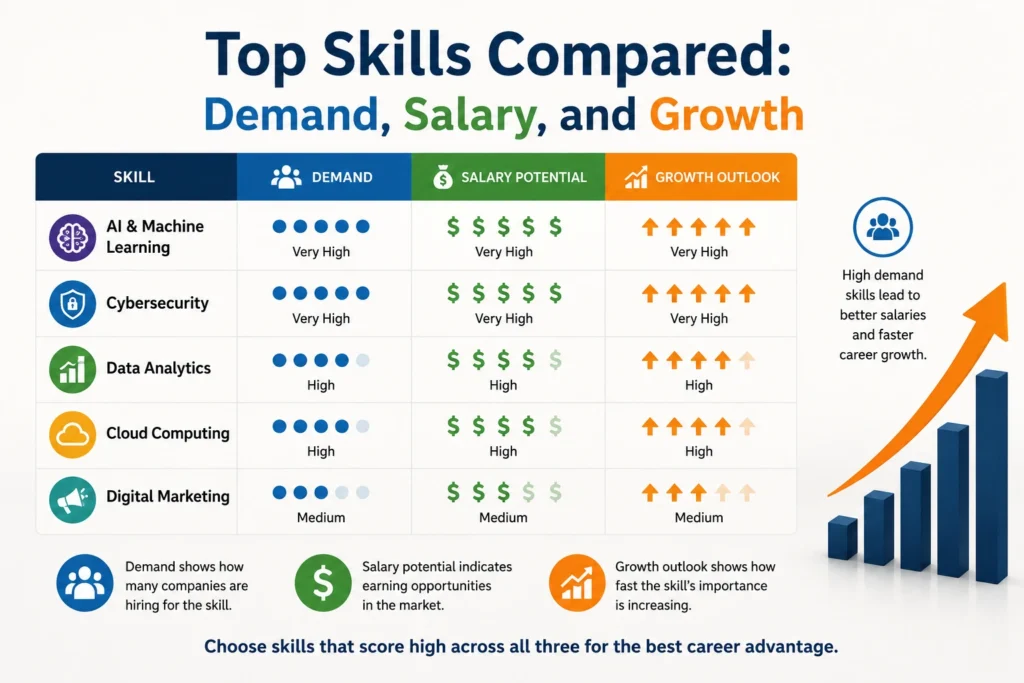
Choosing the right skill often depends on your career goals, interests, and preferred learning path. Some skills offer higher earning potential, while others provide broader career flexibility or faster entry into the job market. Technical skills such as artificial intelligence, cloud computing, and cybersecurity are known for strong demand and competitive salaries, whereas skills like communication, leadership, and critical thinking enhance performance across nearly every profession. The comparison below highlights how today’s most valuable skills differ in terms of demand, growth potential, learning difficulty, and overall career impact.
💚 You might also like: Pasonet: Everything You Need to Know in 2026
| Skill | Market Demand | Growth Potential | Learning Difficulty | Best For |
| Artificial Intelligence | Very High | Very High | High | Technology Professionals |
| Data Analytics | High | High | Medium | Analysts and Business Professionals |
| Cybersecurity | Very High | High | Medium to High | Security and IT Careers |
| Cloud Computing | High | High | Medium | IT and Infrastructure Roles |
| Software Development | High | High | Medium to High | Developers and Engineers |
| Digital Marketing & SEO | High | Medium to High | Medium | Marketers and Freelancers |
| UX/UI Design | High | High | Medium | Creative Professionals |
| Project Management | High | High | Medium | Team Leaders and Managers |
| Communication & Leadership | Universal | High | Low to Medium | All Professionals |
| Critical Thinking | Universal | High | Low to Medium | Every Career Path |
The Highest-Value Skills for Career Growth
While every skill on this list can create valuable opportunities, some offer greater long-term career advantages because of their widespread demand and future relevance. Artificial intelligence, cybersecurity, cloud computing, and data analytics continue to rank among the most sought-after technical skills worldwide. At the same time, communication, leadership, and critical thinking remain essential because they complement technical expertise and are difficult to automate. Professionals who combine high-demand technical skills with strong human capabilities often achieve the best results, positioning themselves for leadership opportunities, higher salaries, and greater career resilience in a rapidly evolving job market.
Choosing the Right Skill Path
Choosing the right skill starts with understanding your career objectives, personal interests, and the opportunities you hope to achieve. While it may be tempting to follow the latest trends, the most effective approach is to choose skills that align with your strengths and long-term objectives.A skill that benefits a software developer may not provide the same value for a freelancer, entrepreneur, or marketing specialist. and personal interests, you can make a more informed decision and invest your time in skills that deliver meaningful long-term value.
Pros and Cons of Today’s Top Skills
Every skill offers unique advantages and challenges, making it important to evaluate both before investing significant time and effort. Technical skills often provide strong earning potential and high demand, but they may require continuous learning to keep pace with technological advancements. Soft skills, on the other hand, are widely transferable and remain valuable across industries, though they can be harder to measure and develop. Understanding these trade-offs helps learners choose a balanced skill set that supports both immediate career goals and long-term professional growth.
Technical Skills
Technical skills often lead to specialized career opportunities, higher salaries, and strong market demand. Skills such as AI, cybersecurity, cloud computing, and software development are sought after by employers worldwide. However, these fields can require significant time, ongoing education, and regular adaptation as technologies evolve. Success often depends on staying current with industry trends and continuously expanding technical knowledge.
Soft Skills
Soft skills remain valuable because they influence how people communicate, collaborate, and solve problems in professional environments. Leadership, communication, adaptability, and critical thinking are useful in virtually every industry and role. Although they may not always appear on job descriptions as prominently as technical skills, they often determine long-term career success and are increasingly important in workplaces influenced by automation.
Common Mistakes in Skill-Learning
Many people struggle to develop valuable skills because they focus too heavily on consuming information rather than applying it. Watching tutorials and reading articles can build knowledge, but real improvement comes through practice and hands-on experience. Another common mistake is attempting to learn too many skills at once, which often leads to frustration and slow progress. Successful learners typically focus on one skill, create practical projects, and remain consistent over time. Avoiding these mistakes can significantly improve learning outcomes and help individuals build expertise more efficiently.
How to Learn Skills More Effectively
Learning a new skill becomes easier when you follow a structured approach. Start by setting clear goals and identifying the specific knowledge required for your chosen field. Focus on high-quality learning resources, complete practical projects, and apply what you learn in real-world situations whenever possible. Consistency is often more important than intensity, making regular practice sessions more effective than occasional bursts of effort. Seeking feedback, joining professional communities, and tracking progress can further accelerate learning and help transform knowledge into practical expertise.
Best Platforms for Skill Development
Online learning platforms have made skill development more accessible than ever. Websites such as Coursera, Udemy, LinkedIn Learning, Skillshare, and edX offer courses across technology, business, marketing, and creative fields. Many of these platforms provide certificates, hands-on projects, and industry-recognized learning paths. While the platform itself is important, success depends more on consistency and practical application. Choosing reputable resources and actively implementing new knowledge can significantly improve learning outcomes and help learners gain skills that employers genuinely value.
Emerging Trends Impacting Skill Demand
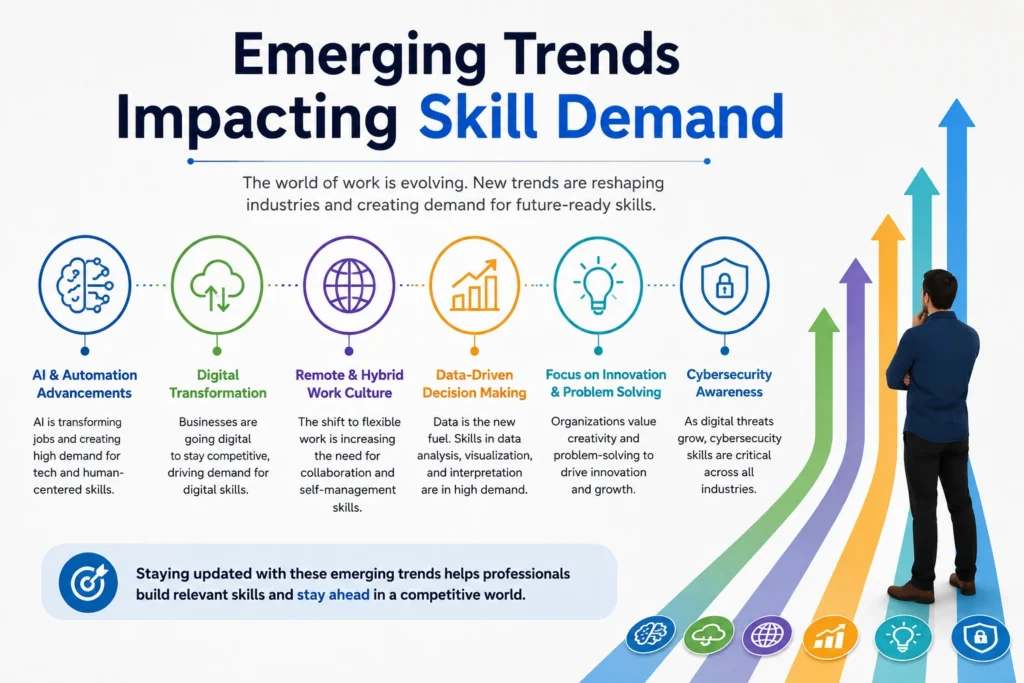
The future of work will continue to be influenced by artificial intelligence, automation, digital transformation, and evolving business models. As organizations adopt new technologies, demand for AI literacy, cybersecurity, cloud computing, and analytical thinking is expected to grow further. At the same time, human-centered skills such as creativity, leadership, communication, and adaptability will remain essential because they complement technology rather than compete with it. Professionals who combine technical expertise with strong interpersonal abilities are likely to enjoy the greatest opportunities in the years ahead.
Frequently Asked Questions
What is the best skill to learn in 2026?
Artificial intelligence (AI) is widely considered one of the most valuable skills due to its growing use across industries.
Which skill has the highest salary potential?
AI, cybersecurity, cloud computing, and software development often offer some of the highest-paying career opportunities.
Are soft skills still important in 2026?
Yes, skills like communication, leadership, and critical thinking remain essential and are difficult to automate.
Which skill is best for freelancing?
Digital marketing, SEO, web development, and UX/UI design are among the most profitable freelance skills.
How long does it take to learn a new skill?
The timeline varies, but consistent practice can help you build job-ready skills within a few months.
Should I learn technical skills or soft skills first?
Start with the skills most relevant to your goals, but combining technical and soft skills provides the best results.
Conclusion
The most valuable skills in 2026 are those that help individuals adapt, solve problems, and create value in a rapidly changing world. Technical capabilities such as artificial intelligence, data analytics, cybersecurity, and cloud computing offer strong career opportunities, while communication, leadership, and critical thinking remain essential for long-term success. Rather than chasing every trend, focus on developing skills that align with your goals and interests. Continuous learning has become one of the most important investments anyone can make, and the skills you choose today can shape your career opportunities for years to come.
✨ Want bite-sized tech wisdom? Follow Tech Baaz.