
What Is Topical Authority? The Complete SEO Guide
If you’ve been doing SEO for a while, you’ve probably noticed that publishing a single optimized article is no longer enough to earn consistent rankings. Google now rewards websites that demonstrate genuine expertise on a subject instead of simply targeting individual keywords. This shift has made topical authority one of the most important concepts in modern SEO.
Instead of asking, “What’s the best way to rank this page?” successful websites ask, “How can I become the best resource for this topic?” That difference changes everything. Whether you run a blog, an eCommerce store, or a business website, building topical authority helps search engines understand what your website specializes in and why it deserves to rank above competitors.
In this guide, you’ll learn what topical authority is, why it matters, how Google evaluates it, and the practical strategies you can use to build long-term organic visibility.
What Is Topical Authority?
Topical authority is the level of expertise and trust your website earns by publishing comprehensive, accurate, and interconnected content about a specific subject. Instead of creating isolated articles on unrelated topics, authoritative websites build an entire knowledge hub that answers beginner, intermediate, and advanced questions within the same niche. This approach helps search engines recognize your site as a reliable resource rather than just another publisher targeting keywords. Over time, consistent topical coverage strengthens your visibility, improves keyword rankings, and increases the likelihood of becoming a trusted source for both users and AI-powered search experiences.
Why Topical Authority Is Important
Search engines want to recommend content that fully satisfies a user’s search intent, not just pages that repeat the right keywords. When your website consistently publishes valuable content around a focused topic, Google gains confidence in your expertise and is more likely to rank multiple pages across related searches. This creates a snowball effect where each new article supports existing content through relevance and internal links. According to Google’s Search Quality Evaluator Guidelines, expertise and trust are key signals for evaluating content quality, making topical authority an essential part of sustainable SEO instead of a short-term ranking tactic.
How Google Understands Topical Authority
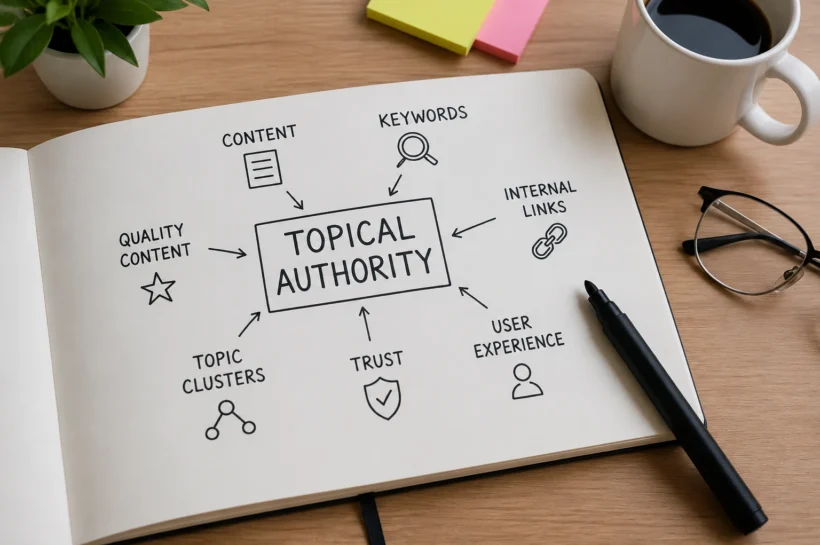
Google doesn’t assign a public “topical authority score.” Instead, it analyzes hundreds of signals that indicate whether your website demonstrates genuine expertise on a subject. These signals include content quality, semantic relevance, internal linking, topical consistency, search intent satisfaction, and the overall usefulness of your pages. Google’s systems are designed to understand relationships between topics rather than individual keywords, allowing it to identify websites that provide complete coverage of a subject. The stronger those relationships become, the easier it is for Google to trust your website as a dependable source of information.
Semantic Search
Modern search engines understand the meaning behind words instead of relying only on exact-match keywords. For example, an article about topical authority should naturally discuss concepts like topic clusters, search intent, internal linking, and content relevance because they are closely connected. This semantic understanding helps Google evaluate whether your content genuinely covers a subject in depth instead of simply optimizing for a single phrase.
Content Quality and Coverage
Publishing dozens of short articles doesn’t automatically build authority. Google favors content that answers important questions clearly, provides practical value, and covers a topic from multiple perspectives. High-quality content is well-structured, accurate, regularly updated, and supported by related articles. When every page contributes meaningful information, your website gradually becomes a complete learning resource instead of a collection of disconnected blog posts.
User Experience Signals
Google’s goal is to deliver results that leave users satisfied. Clear formatting, fast loading speeds, logical navigation, and helpful information encourage visitors to stay longer and explore additional pages. While Google doesn’t rely on one engagement metric alone, positive user interactions often indicate that your content successfully meets search intent. A strong user experience reinforces your topical expertise and supports long-term organic growth.
Topical Authority vs Domain Authority
Topical authority and domain authority are often confused, but they measure different aspects of a website’s SEO strength. Topical authority reflects how deeply your site covers a specific subject, while domain authority is a third-party metric that estimates a site’s overall backlink profile and ranking potential. A website with a lower domain authority can still outrank a larger competitor if it demonstrates stronger expertise on a particular topic. For example, a small website dedicated entirely to home improvement may perform better for renovation-related searches than a broad news website because its content consistently focuses on that niche. This is why successful SEO strategies prioritize becoming the best resource on a topic rather than publishing content across dozens of unrelated categories.
💚 You might also like: URLwo: A Complete Guide to Modern Link Management
Benefits of Topical Authority
Building topical authority delivers long-term SEO benefits that extend beyond higher keyword rankings. As your website covers a subject in greater depth, search engines begin associating your brand with that topic, making it easier for both existing and newly published pages to rank. This focused approach also improves user trust because visitors can find multiple helpful resources without leaving your site. Over time, strong topical authority increases organic traffic, strengthens internal linking opportunities, supports featured snippets, improves visibility in AI-powered search experiences, and creates a sustainable foundation for consistent growth without relying solely on backlinks or short-term SEO tactics.
How to Build Topical Authority
Building topical authority requires a structured content strategy rather than publishing articles randomly. Start by selecting one core topic that aligns with your business or website goals, then identify the questions, problems, and related subjects your audience wants to learn about. Organize these ideas into connected content clusters and publish high-quality articles that naturally support one another. As your content library grows, regularly update older pages, improve internal links, and fill knowledge gaps. This ongoing process helps search engines recognize your website as a trusted source while giving readers a complete learning experience.
Create a Topical Map
A topical map is a blueprint that organizes your main topic into smaller categories and supporting subtopics. Instead of brainstorming content one article at a time, you create a structured roadmap showing how every page connects. This approach prevents duplicate content, improves topical coverage, and ensures your website answers the full range of user questions within your niche.
Build Topic Clusters
Topic clusters group related articles around a central pillar page. The pillar covers the broad subject, while supporting articles explore individual subtopics in greater detail. This structure helps users navigate your content more easily and allows search engines to understand the relationship between pages. Well-planned clusters strengthen semantic relevance and improve the ranking potential of the entire content hub.
Use Internal Links Effectively
Internal links are more than navigation they help distribute authority throughout your website and provide context for search engines. Every relevant article should naturally connect to related pages using descriptive anchor text. This creates a clear content hierarchy, encourages visitors to explore additional resources, and helps Google crawl your website more efficiently. A thoughtful internal linking strategy also reinforces the relationships between your topic clusters.
Common Topical Authority Mistakes
Many websites struggle to build topical authority because they focus on publishing more content instead of publishing the right content. One common mistake is targeting unrelated keywords simply because they have high search volume, which weakens your site’s overall topical focus. Other issues include creating thin articles, neglecting internal linking, ignoring search intent, and failing to update outdated content. Publishing duplicate or overlapping pages can also confuse search engines about which page should rank. By maintaining a clear niche, producing original content, and continuously improving existing pages, you create a stronger and more trustworthy website over time.
Top Tips to Improve Topical Authority
Improving topical authority is an ongoing process that requires consistency and quality. Focus on solving real user problems instead of chasing every trending keyword. Publish content based on a well-planned editorial calendar, update important articles regularly, and support your claims with reliable sources whenever possible. Strengthen your internal linking structure, optimize pages for search intent, and monitor performance to identify content gaps. Most importantly, stay within your niche and continue expanding your knowledge base with fresh, valuable information. Small improvements made consistently often produce stronger long-term results than publishing large amounts of low-quality content.
How to Measure Topical Authority
Unlike traditional SEO metrics, topical authority doesn’t have a single score that you can check in a tool. Instead, it is reflected through your website’s overall performance across an entire subject area. As your authority grows, you’ll notice improvements in keyword rankings, organic visibility, search impressions, and user engagement. Monitoring these indicators regularly helps you identify strengths, uncover content gaps, and refine your SEO strategy. Rather than focusing on one metric, evaluate multiple performance signals together to understand whether your website is becoming a trusted source within its niche.
Track Keyword Rankings
One of the easiest ways to measure topical authority is by tracking how many related keywords your website ranks for over time. Instead of monitoring a single primary keyword, analyze your visibility across an entire topic cluster. If multiple pages begin ranking for long-tail, informational, and commercial search terms, it’s a strong sign that search engines recognize your growing expertise in that subject.
Check Topic Coverage
Review your content library to determine whether you’ve answered the most important questions within your niche. Strong topical authority comes from complete coverage rather than a handful of articles. Identify missing subtopics, outdated pages, and opportunities to expand existing content. Regular content audits ensure your website continues to provide comprehensive value while staying relevant to changing search trends.
Monitor Organic Traffic
Organic traffic trends provide valuable insight into the effectiveness of your topical authority strategy. As your content ecosystem grows, you should see more visitors arriving through a wider range of search queries instead of relying on a few high-performing pages. Consistent growth in impressions, clicks, and returning visitors indicates that your website is becoming more visible and trustworthy in search results.
The Future of Topical Authority
Topical authority will become even more important as search engines and AI-powered platforms continue evolving. Modern search systems no longer rely solely on keywords they evaluate expertise, context, and content relationships to deliver the most helpful results. As AI-generated content becomes more common, websites that demonstrate genuine experience, publish original insights, and maintain a well-organized knowledge base will stand out from the competition. Businesses that invest in quality over quantity, regularly update their content, and stay focused on their niche will be better positioned to earn lasting visibility in both traditional search engines and AI-driven search experiences.
Frequently Asked Questions
What Is Topical Authority in SEO?
Topical authority is your website’s expertise on a specific subject. It is built by publishing comprehensive, high-quality, and interconnected content that fully covers a topic.
How Long Does It Take to Build Topical Authority?
Most websites start seeing results within 3 to 12 months, depending on content quality, competition, consistency, and your overall SEO strategy.
Do Backlinks Help Build Topical Authority?
Yes, relevant backlinks strengthen trust and credibility. However, comprehensive content and strong internal linking are the foundation of topical authority.
Can a New Website Build Topical Authority?
Absolutely. A new website can build topical authority by focusing on one niche, publishing consistent content, and covering related topics in depth.
How Many Articles Are Needed to Build Topical Authority?
There is no fixed number. Most successful websites publish 20–50+ high-quality, connected articles around a topic to establish strong authority.
Does Internal Linking Improve Topical Authority?
Yes. Internal links connect related pages, help search engines understand your content structure, and distribute authority across your website more effectively.
Conclusion
Topical authority is no longer just another SEO buzzword; it’s a practical strategy for building long-term organic success. By creating comprehensive content around a focused subject, organizing it into logical topic clusters, and continuously improving your website, you make it easier for both users and search engines to recognize your expertise. While results don’t happen overnight, a consistent approach can lead to stronger rankings, increased organic traffic, and greater trust over time. Instead of chasing individual keywords, focus on becoming the most valuable resource in your niche, and your SEO efforts will have a much stronger foundation for sustainable growth.
✨ Want bite-sized tech wisdom? Follow Tech Baaz.