
Xiaomi vs Honor vs Vivo: Which Is Better?
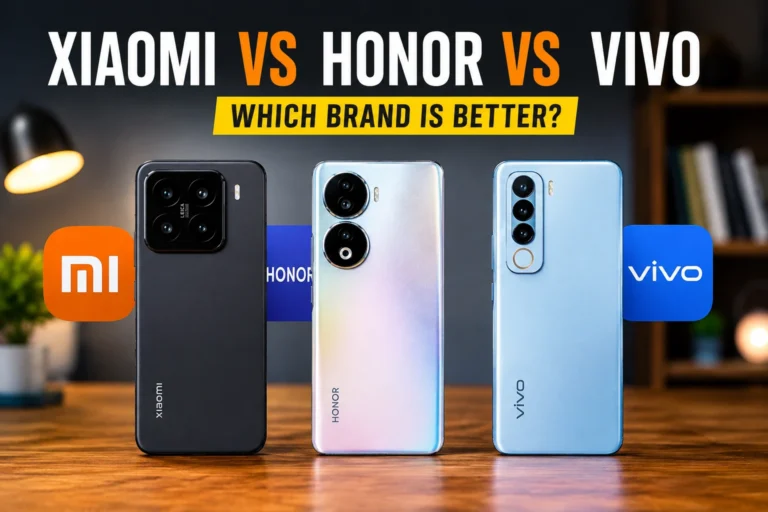
When you compare Xiaomi, Honor, and Vivo, there is no single winner for every buyer. Each brand takes a different approach to smartphones, from Xiaomi’s strong hardware value to Honor’s polished designs and Vivo’s camera-focused experience. The right choice depends on your budget and what matters most in daily use. In this guide, we’ll compare these three brands across performance, cameras, battery life, software, features, and pricing. We’ll also look at which brand makes the most sense for gamers, photographers, and everyday users, helping you choose confidently rather than simply following popularity. In the end, the best phone should fit your needs.
Which Brand Is Better Overall?
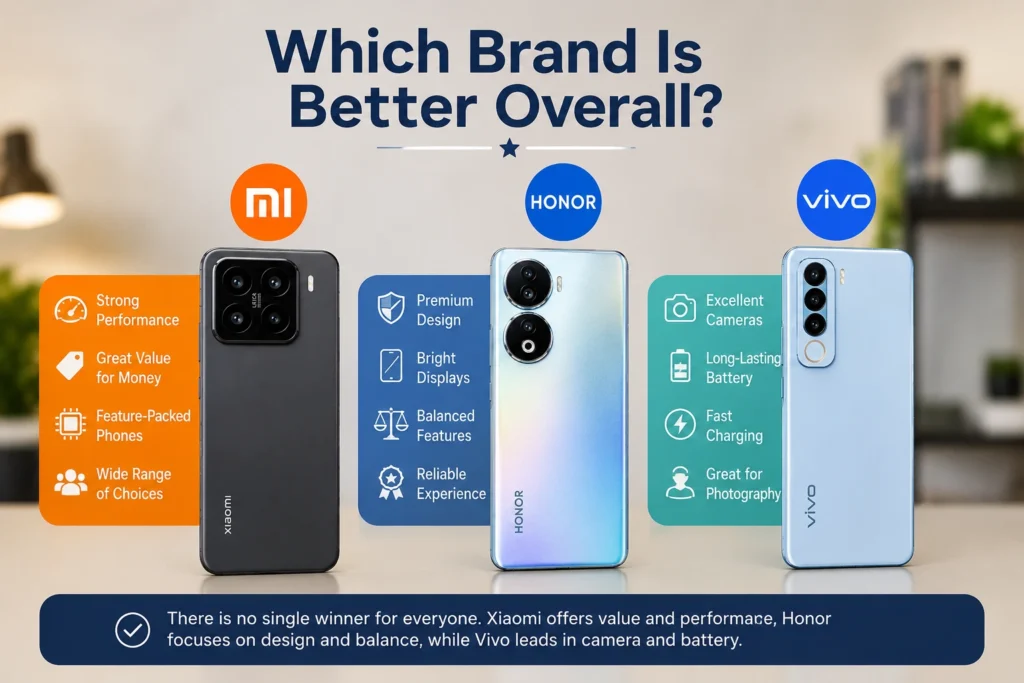
Xiaomi, Honor, and Vivo are all major smartphone brands, but they appeal to slightly different types of buyers. Xiaomi is widely associated with competitive hardware and strong value, Honor focuses on balanced phones with attractive designs, while Vivo puts considerable attention on cameras, battery features, and charging. Their positions can also change depending on the market and price range. For context, IDC reported that Xiaomi held an 11.5% global smartphone shipment share in Q1 2026, while Vivo held 7.2%. So, instead of asking which logo is best, it makes more sense to compare what each brand does well.
💚 You might also like: Browser Fingerprinting Explained: How It Works
Xiaomi
Xiaomi stands out for strong hardware at competitive prices. Its Redmi and POCO lines give budget and performance-focused buyers plenty of options, while premium Xiaomi models add better cameras, displays, and materials. The brand also uses HyperOS across its modern ecosystem. If performance and specifications matter more than a minimalist software experience, Xiaomi is often a strong choice across budgets. Xiaomi’s official HyperOS 3 information also shows support across a wide range of Xiaomi, Redmi, and POCO devices, although features and availability can vary by model and region.
Honor
Honor focuses on balance, combining attractive designs, bright displays, capable cameras, and dependable everyday performance. Its Magic series also gives the brand a stronger premium presence. Honor may suit buyers who want a polished phone without paying top-tier flagship prices. Still, model availability, features, and software support can vary between regions, so checking local specifications matters before making your decision.
Vivo
Vivo is particularly strong in photography, portraits, battery features, and fast charging. Its Y series targets everyday buyers, while X series phones compete in the premium segment. Vivo also has iQOO for performance-focused users. IDC ranked Vivo fifth globally in Q1 2026 with a 7.2% shipment share. For camera-focused users, Vivo deserves serious consideration when choosing between these three brands.
The important takeaway is that brand reputation alone should not decide your purchase. Even user discussions on Zhihu point out that durability and quality can depend heavily on the specific model, processor, price range, and how the phone is used.
Xiaomi vs Honor vs Vivo: Features and Price
Comparing Xiaomi, Honor, and Vivo by brand alone can be misleading because each company has phones at several price levels. A budget Vivo is not directly comparable with a premium Xiaomi, just as an entry-level Honor cannot represent the brand’s flagship range. The better approach is to compare similar phones based on display, processor, cameras, battery, charging, software, and price. Current models show how different their priorities can be: Vivo’s X300 Pro, for example, combines a Dimensity 9500 processor with a 200MP ZEISS telephoto camera, while Honor offers models ranging from the premium Magic series to large-battery X-series phones.
| Feature | Xiaomi | Honor | Vivo |
| Main strength | Performance and value | Design and balanced features | Camera and battery |
| Display | AMOLED on many mid-range and flagship models | AMOLED on many higher-end models | AMOLED on many mid-range and flagship models |
| Performance | Strong chipset choices across price ranges | Balanced performance | Strong performance, especially in premium models |
| Cameras | Strong flagship and value-focused cameras | Good all-around camera systems | Particularly strong imaging focus |
| Battery | Large batteries on many models | Large batteries on selected models | Strong battery and charging options |
| Charging | Fast charging on many models | Fast charging on selected models | Fast charging is a major focus |
| Software | HyperOS | MagicOS | Funtouch OS / OriginOS |
| Best suited for | Value and performance | Balanced everyday experience | Photography and battery-focused users |
Prices vary significantly by country, storage configuration, promotions, and model. For example, Vivo Pakistan currently lists the X300 FE at Rs. 269,999 and the V70 at Rs. 159,999, showing how much pricing can differ even within one brand.
What Does Each Brand Do Best?
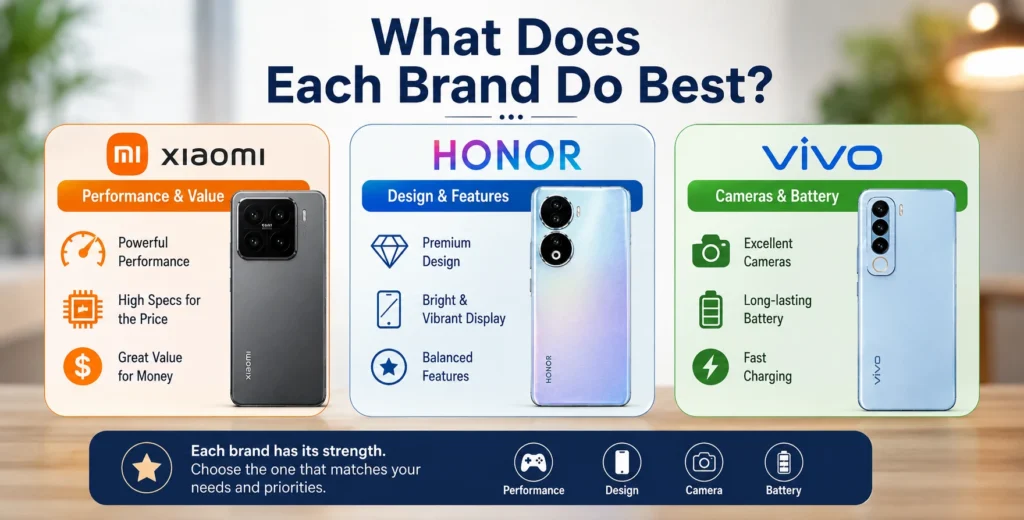
Looking beyond the specifications makes the comparison easier. Xiaomi tends to attract buyers who want powerful hardware without immediately moving into the highest price bracket. Honor puts more emphasis on design, displays, and an overall polished experience, while Vivo has built a strong identity around mobile photography and charging technology. None of these strengths means one brand wins every category. Instead, they give each company a slightly different appeal. That distinction matters when you are choosing a phone for several years rather than simply comparing numbers on a specification sheet.
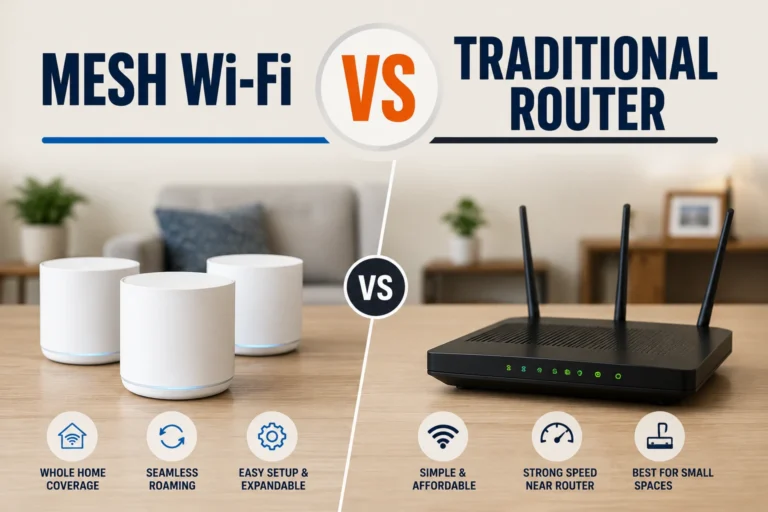
💚 You might also like: Mesh Wi-Fi vs Traditional Router: Which Is Better?
Xiaomi for Performance and Value
Xiaomi is a strong option when you want high specifications for your money. Its lineup covers affordable Redmi and POCO phones as well as premium Xiaomi models, giving buyers plenty of performance-focused choices. HyperOS also adds features such as AI tools, improved animations, device connectivity, and cross-device functions on supported models.
Honor for Design and Features
Honor is a good fit for buyers who care about a premium-looking phone without focusing only on raw performance. Its lineup includes flagship Magic models alongside more affordable X-series devices. Some current Honor phones also emphasize large batteries, while the Magic range targets higher-end buyers with more advanced hardware and features.
Vivo for Cameras and Battery
Vivo makes the most sense for people who put photography, battery life, and charging high on their list. Its current X300 Pro is a clear example, pairing a Dimensity 9500 chipset with a 200MP ZEISS APO telephoto camera. Even its mid-range lineup includes models built around large batteries and AMOLED displays, showing that these priorities extend beyond flagship phones.
Which One Is Best for You?
Choosing between Xiaomi, Honor, and Vivo becomes much easier when you focus on how you actually use your phone. A gamer may care more about sustained performance and cooling, while a photography fan may prioritize camera sensors, stabilization, and image processing. Someone who simply wants a dependable daily phone may care more about battery life, software, display quality, and charging speed. There is no universal winner across every category. Even current flagship comparisons separate price, cameras, software, battery, and overall experience rather than treating specifications as the only measure of quality.
Best for Gaming and Performance
Xiaomi is a strong choice for performance-focused buyers because its lineup includes phones built around powerful chipsets and high-refresh-rate displays. Honor also offers capable flagship hardware, while Vivo provides strong performance in its premium models. For gaming, however, processor performance is only part of the equation. Cooling, sustained performance, display response, battery capacity, and charging also matter during longer sessions.
Best for Photography
Vivo is particularly attractive for photography because imaging is a major focus of its premium lineup. Its V70 5G, for example, combines ZEISS-branded cameras, optical stabilization, a telephoto system, and a 6,500mAh battery. Xiaomi and Honor also offer advanced camera hardware, so the exact model should be compared before deciding. For serious photographers, look beyond megapixel counts and check sensor size, telephoto capability, stabilization, and real-world image processing.
Best for Everyday Use
For everyday users, all three brands can be good choices, but the best option depends on budget and priorities. Xiaomi is appealing when you want more hardware for your money, Honor works well for buyers who value design and a balanced experience, and Vivo is attractive for people who want dependable battery life and camera features. A good everyday phone should feel smooth, last comfortably through the day, offer a quality display, and receive useful software support.
Camera and Photography Comparison
Xiaomi, Honor, and Vivo all offer capable camera phones, but their strengths are slightly different. Vivo puts a strong focus on photography, especially portraits and zoom, while Xiaomi often combines strong camera hardware with good overall performance. Honor also offers impressive cameras, particularly on its higher-end models.
| Camera Feature | Xiaomi | Honor | Vivo |
| Main Camera | Excellent | Very Good | Excellent |
| Portraits | Very Good | Excellent | Excellent |
| Night Photos | Very Good | Very Good | Excellent |
| Zoom | Excellent | Very Good | Excellent |
| Video | Very Good | Very Good | Excellent |
Battery and Charging Comparison
Battery life is another area where all three brands perform well. Xiaomi offers large batteries and fast charging on many models, while Honor has increasingly focused on high-capacity batteries. Vivo also stands out with large batteries and fast charging, making it a strong option for people who spend a lot of time away from a charger.
| Battery Feature | Xiaomi | Honor | Vivo |
| Battery Life | Very Good | Excellent | Excellent |
| Battery Capacity | Large | Large | Large |
| Fast Charging | Excellent | Very Good | Excellent |
| Wireless Charging | Selected models | Selected models | Selected models |
| Heavy Use | Very Good | Excellent | Excellent |
Software and Long-Term Use
Software can make a bigger difference over several years than a small difference in processor speed. Xiaomi uses HyperOS, Honor uses MagicOS, and Vivo uses its own Android-based software experience, with the exact version depending on the market and model. Buyers should check update policies, security support, pre-installed apps, interface preferences, and regional features before purchasing. This is particularly important because software support can differ between individual phones. A recent Honor-Xiaomi flagship comparison, for example, found different long-term update commitments despite both phones running Android 16.
Frequently Asked Questions

Which is better, Xiaomi or Honor?
Neither is automatically better. Xiaomi is often a strong choice for performance and value, while Honor can be more appealing for design, displays, durability, and balanced features. The specific models being compared matter more than the brand name.
Is Vivo better than Xiaomi?
Vivo may be the better choice if cameras, portraits, battery life, and charging are your main priorities. Xiaomi can be more attractive when you want strong specifications and performance at a competitive price.
Which brand has the best camera?
Vivo is a strong contender for camera-focused buyers, especially in its premium X and V-series phones. However, Xiaomi and Honor also have excellent camera phones, so the best choice depends on the exact models, sensors, zoom systems, and software processing.
Which brand is best for gaming?
Xiaomi is generally a strong option for gaming because of its performance-focused devices and competitive hardware. However, Honor and Vivo also offer powerful phones, so chipset, cooling, display refresh rate, and sustained performance should be checked for the specific model.
Which brand offers the best value?
Xiaomi often stands out for price-to-performance, particularly in budget and mid-range categories. Honor can offer strong value when its premium features are discounted, while Vivo can justify its price for buyers who prioritize cameras and battery features.
Conclusion
Xiaomi, Honor, and Vivo each have a clear reason to be considered. Xiaomi is a strong all-round choice for buyers who want performance and value, Honor is well suited to people who care about design and a balanced feature set, and Vivo stands out for camera technology, battery life, and charging. The important point is that there is no permanent winner. Smartphone lineups change every year, and even phones within the same brand can have very different strengths. Before buying, compare the exact models, local prices, camera hardware, battery, software support, and warranty. That approach will help you choose the phone that fits your needs rather than simply choosing the most popular brand.
✨ Want bite-sized tech wisdom? Follow Tech Baaz.