

Keyword Research Made Easy – Step-by-Step SEO Tutorial
Keyword research is the foundation of every successful SEO strategy. Whether you run a blog, affiliate website, online store, or business site, choosing the right keywords helps your content appear in front of the right audience. According to a study by Ahrefs, over 90% of web pages receive no organic traffic from Google, often because they target the wrong keywords or ignore search intent. That is why learning keyword research is one of the most valuable SEO skills for beginners. In this guide, you will learn how to discover profitable keywords, analyze competition, and create a smarter content strategy.
Keyword Research Fundamentals

Keyword research is the process of finding words and phrases people type into search engines like Google. These keywords help search engines understand your content and decide when to show it in search results. A well-researched keyword can drive targeted traffic, improve rankings, and increase conversions. Modern SEO is no longer about stuffing exact-match phrases into content. Instead, Google focuses on relevance, topical authority, and user satisfaction. This means your keyword strategy should align with what users genuinely want to learn or buy. Understanding this foundation makes it easier to build content that performs consistently in competitive search results.
💚 You might also like: Will AI Coding Tools Replace Software Developers?
Why Keyword Research Matters
Without keyword research, creating SEO content becomes guesswork. You may write high-quality articles, but they will struggle to rank if nobody searches for the topic. Keyword research helps identify topics with real search demand and achievable ranking opportunities. It also reveals how competitive a niche is before investing time into content creation. Research from Moz shows that search intent and relevance are among the strongest ranking factors in modern SEO. By targeting the right keywords, beginners can attract more organic traffic, understand audience behavior, and create content that answers real search queries effectively.
Understanding Search Intent
Search intent explains the reason behind a user’s query. Google’s algorithm has become highly advanced at identifying whether someone wants information, comparisons, or direct purchases. If your content does not match that intent, rankings become difficult regardless of backlinks or optimization. Understanding intent allows you to create more targeted pages that satisfy user expectations. For example, someone searching “best keyword research tools” expects comparisons and recommendations, while a query like “what is keyword research” requires educational content. Matching the correct intent improves engagement, lowers bounce rates, and increases the likelihood of ranking higher in search results.
Informational vs Transactional Intent
Informational keywords focus on learning, while transactional keywords indicate buying intent. Searches like “how to find keywords” are informational, whereas “buy SEO tools” is transactional. Understanding this difference helps you create the right type of content for each stage of the customer journey and improves your chances of attracting highly targeted traffic.
Matching Content With User Intent
Google prioritizes pages that closely match what users expect to see. Before targeting any keyword, analyze the top-ranking pages to understand content style, format, and depth. If search results mostly contain guides, publishing a product page may not rank well. Aligning your content with user expectations increases relevance and improves SEO performance.
Types of SEO Keywords
Different keywords play different roles in SEO. Some keywords generate massive traffic, while others bring highly targeted visitors who are more likely to convert. Understanding keyword categories helps beginners build a balanced SEO strategy. Broad keywords usually have high competition, whereas specific long-tail phrases are easier to rank for. Search engines also use semantic relationships between terms to understand content context better. This is why modern SEO strategies focus on keyword relevance instead of repeating the same phrase excessively. Learning different keyword types helps create stronger topical authority and more natural content optimization.
Short-Tail vs Long-Tail Keywords
Short-tail keywords are broad terms with high search volume and strong competition. Long-tail keywords are more specific and usually easier to rank for. For example, “SEO tools” is highly competitive, while “best free SEO tools for beginners” targets a more focused audience with clearer search intent and conversion potential.
Branded and Non-Branded Keywords
Branded keywords include company or product names, while non-branded keywords target general searches. For instance, “Ahrefs keyword tool” is branded, while “keyword research tool” is non-branded. Non-branded searches often attract new audiences, making them valuable for websites trying to increase organic visibility and reach broader markets.
Question-Based Keywords
Question keywords are extremely valuable because they align naturally with voice search and featured snippets. Searches beginning with “how,” “what,” or “why” usually indicate strong informational intent. Creating detailed answers for these queries improves topical authority and increases the chance of appearing in Google’s featured snippet section.
Finding Keyword Opportunities
Finding strong keyword opportunities starts with understanding your audience and their search behavior. Instead of targeting random high-volume keywords, focus on phrases your audience actually uses while searching for solutions online. One of the easiest ways to discover opportunities is by analyzing Google Autocomplete, “People Also Ask” sections, forums, and competitor websites. According to Google Search Central, useful content should primarily satisfy user needs rather than search engines alone. This means your keyword strategy should revolve around relevance and practical value. Smart keyword opportunities often come from underserved topics with lower competition and clear search intent.
Best Keyword Research Tools
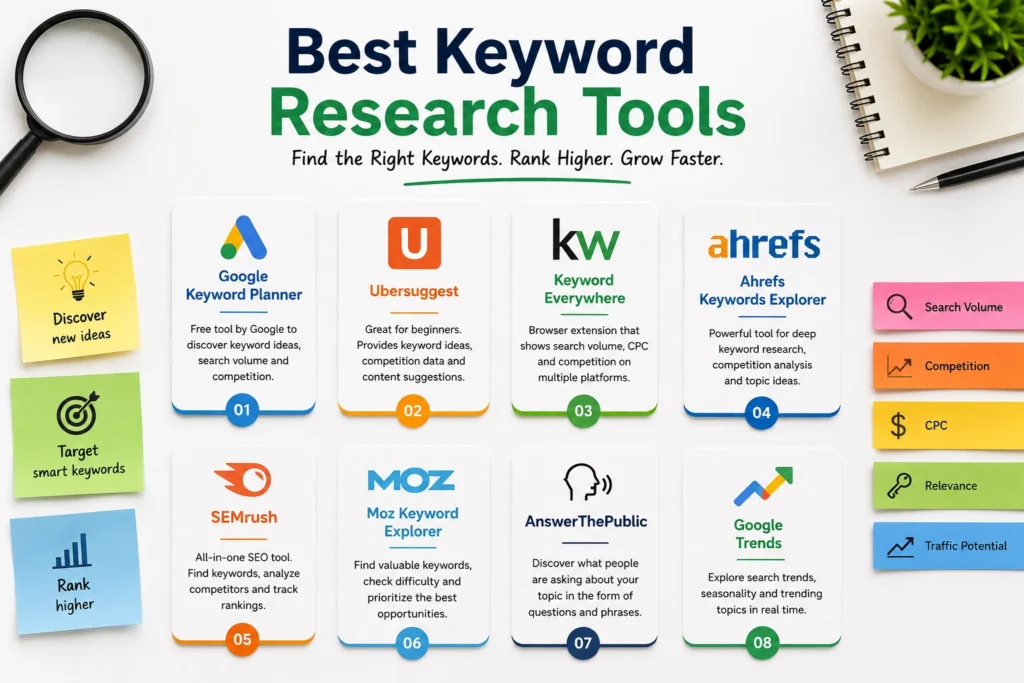
Keyword research tools simplify the process of discovering search terms, analyzing competition, and estimating traffic potential. While beginners can start with free tools, advanced platforms provide deeper insights into ranking difficulty and competitor data. The best SEO tools help identify trends, related keywords, and content gaps faster than manual research. Platforms like SEMrush and Ahrefs are widely trusted by SEO professionals because they offer detailed keyword databases and SERP analysis. Choosing the right tool depends on your budget, content goals, and the level of keyword data you need for optimization.
💚 You might also like: Frontend vs Backend Development: Career Guide(2026)
Free Keyword Research Tools
Free keyword tools are ideal for beginners learning SEO fundamentals. Google Keyword Planner, Google Trends, and Ubersuggest provide useful insights into search volume and keyword trends without requiring large investments. These tools help identify beginner-friendly opportunities and understand how people search for topics related to your niche or industry online.
Paid SEO Tools
Paid SEO platforms provide advanced features like keyword difficulty scores, competitor tracking, backlink analysis, and traffic estimation. Tools such as Ahrefs, SEMrush, and Mangools help marketers build data-driven SEO strategies more efficiently. They are especially useful for scaling content strategies and uncovering profitable keyword opportunities faster than manual methods.
Analyzing Keyword Metrics
Keyword metrics help determine whether a search term is worth targeting. Search volume shows how many people search for a keyword monthly, while keyword difficulty estimates how hard it may be to rank. However, numbers alone should not guide your strategy. A keyword with moderate volume and low competition often performs better for beginners than a highly competitive term. Metrics such as click-through rate, traffic potential, and cost per click provide important insights for SEO performance and keyword value. Understanding these indicators helps prioritize keywords that can realistically generate traffic, rankings, and conversions for your website over time.
Finding Low-Competition Keywords
Low-competition keywords are one of the best opportunities for new websites because they are easier to rank for with fewer backlinks and lower domain authority. These keywords often target specific problems, questions, or niche topics with clear search intent. Instead of chasing broad terms dominated by established websites, beginners should focus on realistic ranking opportunities. Many SEO experts recommend long-tail keywords because they attract targeted visitors and convert better. Analyzing weak search results, outdated articles, and low-authority ranking pages can also reveal valuable opportunities. A smart low-competition strategy creates faster SEO growth and builds topical authority gradually.
Easy Keywords for New Websites
New websites should prioritize keywords with lower competition and highly specific intent. Long-tail phrases often have smaller search volumes, but they attract visitors looking for precise answers or solutions. Ranking for several easy keywords consistently can build organic traffic faster than targeting broad, highly competitive keywords dominated by large authority websites.
Common Keyword Research Mistakes
Many beginners struggle with SEO because they focus on the wrong keywords or ignore search intent completely. One common mistake is targeting highly competitive keywords too early, which makes ranking difficult for newer websites. Another issue is choosing keywords only because they have high search volume without analyzing relevance or competition. According to search intent, alignment plays a major role in modern rankings. Keyword stuffing is another outdated tactic that can harm readability and user experience. Successful keyword research requires balance, relevance, and a clear understanding of what users actually expect from search results.
Keyword Research Workflow for Beginners
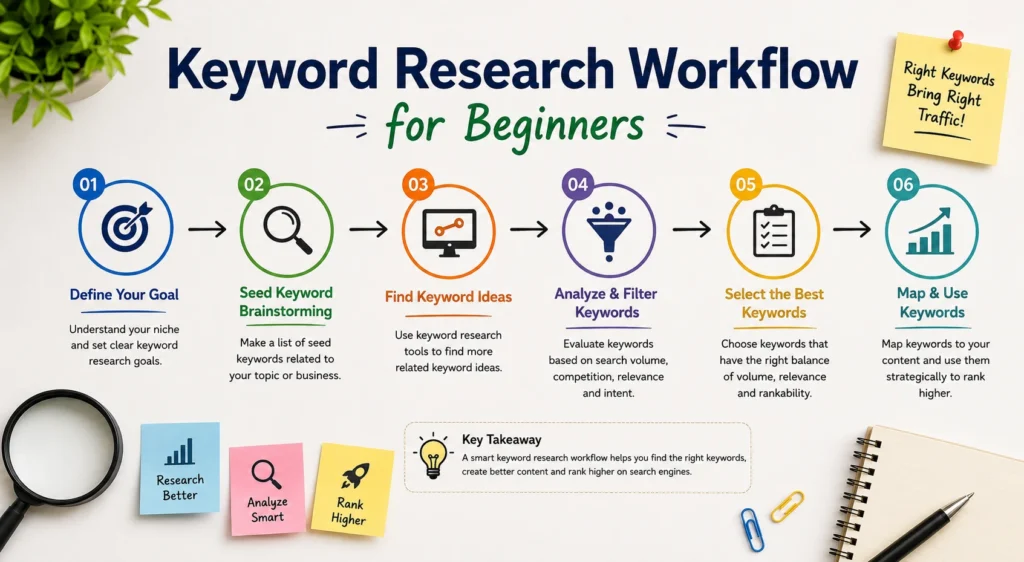
A structured keyword research workflow helps beginners avoid confusion and create content strategically. The process usually starts with identifying a broad topic related to your niche or audience. After that, you expand seed keywords using SEO tools, search suggestions, and competitor analysis. The next step is filtering keywords based on search intent, competition, and traffic potential. Organizing related keywords into clusters also improves topical authority and internal linking opportunities. Many successful SEO campaigns follow this exact process because it creates scalable content strategies. A consistent workflow saves time, improves targeting, and helps websites build sustainable organic traffic over time.
Conclusion
Keyword research is the backbone of successful SEO because it connects your content with real user searches. Instead of randomly publishing articles, a strong keyword strategy helps you focus on topics that generate traffic, engagement, and long-term growth. Beginners should prioritize understanding search intent, targeting low-competition keywords, and using reliable SEO tools for better decisions. As Google continues evolving, relevance and user satisfaction remain critical ranking factors. Consistently applying proper keyword research techniques can improve visibility and build topical authority gradually. With patience and practice, even new websites can compete effectively and attract meaningful organic traffic from search engines.
Frequently Asked Questions
What is keyword research in SEO?
Keyword research is the process of finding search terms people use on Google to discover information, products, or services. It helps SEO professionals create content that matches user intent and improves search visibility.
What is the most suitable keyword research tool for beginners?
Google Keyword Planner, Ubersuggest, and Google Trends are beginner-friendly tools because they are simple to use and provide useful keyword insights without requiring advanced SEO knowledge.
Why are long-tail keywords important?
Long-tail keywords are more specific and usually less competitive than broad keywords. They often attract highly targeted visitors who are more likely to engage or convert.
How do I find low-competition keywords?
You can find low-competition keywords by analyzing keyword difficulty, checking weak search results, and targeting long-tail phrases with clear search intent using SEO tools.
How often should keyword research be updated?
Keyword research should be updated regularly because search trends, competition, and user behavior change over time. Reviewing keywords every few months helps maintain SEO performance.
✨ Want bite-sized tech wisdom? Follow Tech Baaz.