
Frontend vs Backend Development: Career Guide(2026)
Frontend vs Backend Development represents the two core pillars of modern web development. Frontend focuses on everything users see and interact with in a browser, including design, layout, and user experience. Backend handles server-side logic, databases, and application performance behind the scenes. Together, both ensure a website or application functions smoothly, securely, and efficiently. Understanding this difference is essential for developers, businesses, and students entering tech. According to industry surveys like Stack Overflow Developer Survey, full-stack roles combining both skills are increasingly in demand across global software companies and startups today across the world.
Frontend Development
Frontend Development is the client-side part of web development that focuses on creating the visual and interactive elements of a website or application. It ensures users can easily navigate, read content, and interact with features smoothly across different devices. Frontend developers use design principles, performance optimization techniques, and responsive layouts to improve user experience. With frameworks like React and Angular, modern frontend development has become more dynamic and efficient. Businesses prioritize frontend quality because it directly impacts user engagement, retention rates, and overall digital brand perception in competitive online markets today across global industries today.
Responsibilities of a Frontend Developer
Frontend developers are responsible for transforming design mockups into functional, responsive, and user-friendly interfaces. They work closely with UI/UX designers and backend developers to ensure seamless integration. Their tasks include optimizing website performance, improving accessibility, debugging interface issues, and ensuring cross-browser compatibility. They focus on creating smooth navigation and engaging user experiences that keep visitors interacting with the application effectively.
Core Objectives of Frontend Development
Core objectives of frontend development revolve around delivering a seamless, fast, and visually appealing user experience. It focuses on usability, performance, and accessibility across all devices and browsers. Frontend developers aim to reduce load times, ensure responsive layouts, and maintain consistent design systems. The ultimate goal is to enhance user satisfaction, increase engagement, and support business growth through interaction quality.
Backend Development
Backend Development is the server-side part of web development that powers applications behind the scenes. It manages databases, servers, authentication, APIs, and application logic that users do not see directly. Backend developers ensure data flows securely and efficiently between systems and frontend interfaces. They work with programming languages like Python, Java, PHP, Node.js, and frameworks such as Express or Django. According to industry practices, strong backend architecture is critical for scalability, performance, and security of modern web applications used by companies like Amazon, Google, and Netflix across global digital platforms today in today’s world widely.
Responsibilities of a Backend Developer
Backend developers are responsible for building and maintaining server-side logic, APIs, and database systems that power web applications. They ensure secure data storage, user authentication, and smooth communication between frontend and backend systems. Their role includes optimizing performance, fixing server issues, and handling scalability challenges. Backend developers also collaborate with frontend teams to integrate features and maintain the stability and reliability of systems.
Core Objectives of Backend Development
Core objectives of backend development focus on building secure, scalable, and efficient systems that support frontend applications. It ensures reliable data management, fast server response times, and seamless API communication. Backend development aims to protect user data, reduce system downtime, and improve overall application performance. It also supports business growth by enabling a stable infrastructure for handling increasing user traffic and business operations efficiently and very reliably.
Key Differences Between Frontend and Backend Development
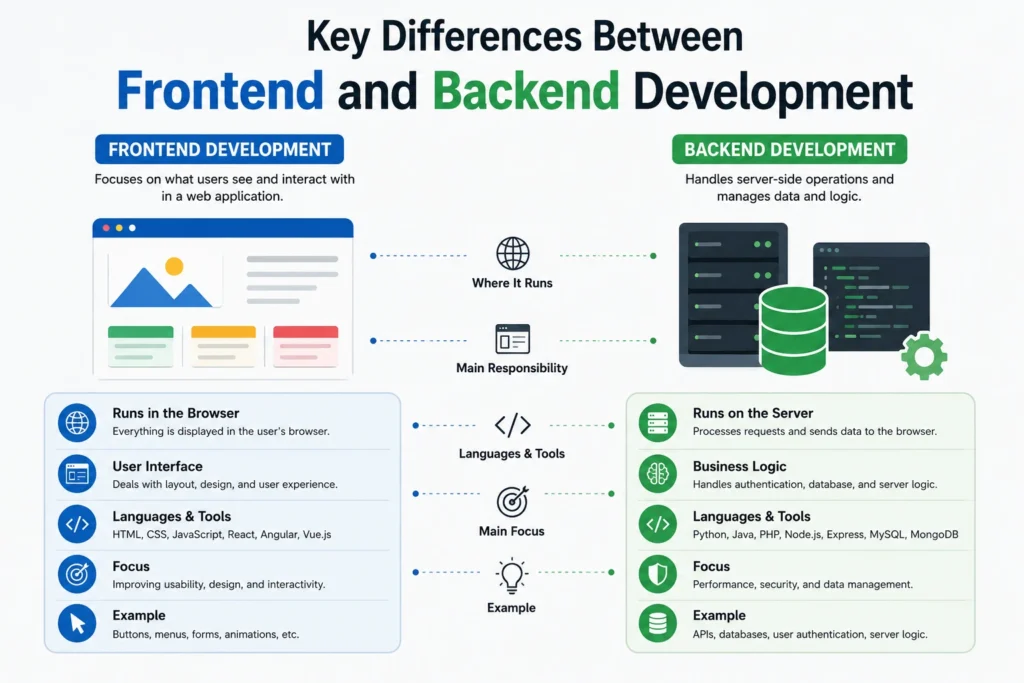
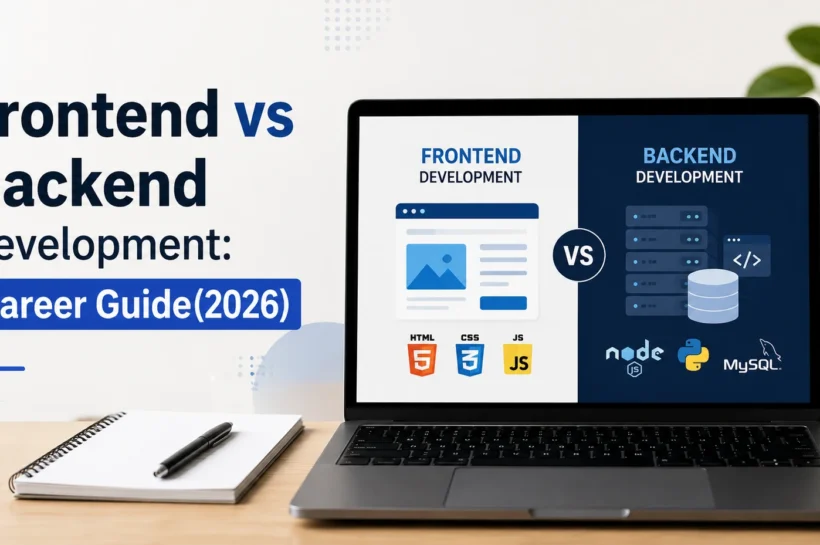
Frontend and Backend Development differ significantly in terms of functionality, tools, and purpose within web applications. Frontend focuses on user interface design, responsiveness, and user experience, while backend handles server-side logic, databases, and application security. Frontend runs in the browser, whereas backend operates on servers. Technologies also differ, with frontend using HTML, CSS, JavaScript, and frameworks, while backend uses languages like Python, Java, and Node.js. Understanding these differences helps developers choose the right career path and enables businesses to build efficient, scalable, and user-friendly digital products across modern web ecosystems today globally around the world.
💚 You might also like: How to Build a Website Step-by-Step (2026 Beginner Guide)
Frontend Development Technologies and Tools
Frontend development relies on core technologies like HTML, CSS, and JavaScript to build the structure, styling, and interactivity of web pages. Modern development also uses frameworks such as React, Angular, and Vue.js to create scalable and dynamic user interfaces. Developers also depend on tools like Webpack, Vite, and browser developer tools for optimization and debugging. These technologies help ensure responsive design, fast loading speed, and smooth user experience across all devices. As reported in industry trends, React remains one of the most widely used frontend libraries in global web development ecosystems today.
Languages, Frameworks, and Libraries
Frontend developers primarily use HTML for structure, CSS for styling, and JavaScript for interactivity. On top of these, frameworks like React, Angular, and Vue.js help build advanced single-page applications. Libraries such as jQuery and Tailwind CSS simplify development and styling processes. These tools work together to create fast, responsive, and visually appealing web applications that meet modern user expectations across different devices and browsers efficiently.
Backend Development Technologies and Systems
Backend development uses powerful programming languages such as Python, Java, PHP, Ruby, and Node.js to manage server-side logic. It also relies heavily on databases like MySQL, PostgreSQL, and MongoDB for storing and managing data. Frameworks such as Django, Express.js, and Laravel help streamline development processes. These technologies ensure secure authentication, efficient data processing, and high-performance server operations that support large-scale applications used by millions of users globally every day in real-world production environments.
Programming Languages, Frameworks, and Databases
Backend developers use languages like Python, Java, and Node.js to build server logic. Frameworks such as Django, Express.js, and Spring Boot help speed up development and improve structure. Databases like MySQL and MongoDB store and manage application data efficiently. Together, these tools ensure reliable performance, security, and scalability for modern web applications handling large amounts of user data.
Integration Between Frontend and Backend Systems
Frontend and backend systems communicate through APIs (Application Programming Interfaces), which act as a bridge between the user interface and server logic. When a user interacts with a website, the frontend sends requests to the backend, which processes data and returns responses. This continuous data exchange ensures dynamic content rendering and real-time functionality. RESTful APIs and GraphQL are commonly used for efficient communication. According to modern web architecture standards, this separation improves scalability, flexibility, and maintainability of applications across enterprise-level systems and cloud-based platforms today in the tech industry globally.
API Communication and Data Exchange Process
APIs allow the frontend to request data from the backend and display it to users in real time. The backend processes these requests, interacts with databases, and sends responses back in formats like JSON. This process ensures smooth communication between both layers, enabling dynamic features such as login systems, dashboards, and live updates in modern web applications efficiently.
Essential Skills for Frontend and Backend Developers
Frontend developers need skills in UI/UX design, responsive layouts, JavaScript frameworks, and performance optimization. Backend developers require knowledge of databases, server management, APIs, security practices, and programming logic. Both roles demand problem-solving, debugging, and collaboration skills. Additionally, understanding version control systems like Git is essential for both domains. As per industry expectations, developers who combine technical expertise with strong communication skills are more likely to succeed in modern software teams and agile development environments across global tech companies today in competitive markets.
Career Opportunities in Frontend vs Backend Development
Frontend developers can work as UI developers, web designers, or React/Angular specialists, while backend developers can pursue roles like API developers, database administrators, or system engineers. Both fields offer strong career growth, remote job opportunities, and freelance potential. According to global tech reports, software development roles are expected to grow significantly in the coming years due to increasing digital transformation. Companies like Google, Microsoft, and Amazon continue to hire skilled developers in both areas, making it a stable and high-demand career path in the global IT industry today.
Choosing the Right Development Path: Frontend, Backend, or Full Stack
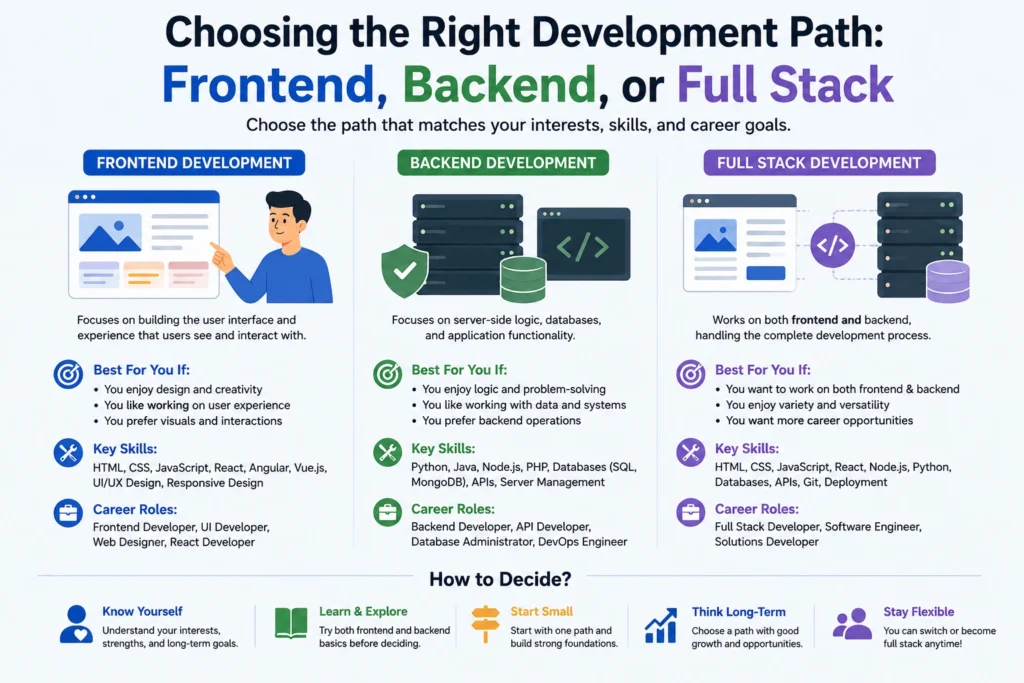
Choosing between frontend and backend development depends on your interests and skills. If you enjoy creativity, design, and visual elements, frontend is a better choice. If you prefer logic, problem-solving, and system architecture, backend suits you more. Full stack development combines both and is highly valued in the industry. Beginners often start with the frontend due to its visual learning curve. However, mastering both can significantly increase job opportunities and salary potential. Ultimately, the right path depends on whether you want to focus on user experience, system logic, or a combination of both in modern web development careers.
💚 You might also like: Notion vs Evernote (2026): Ultimate Productivity Comparison Guide
Conclusion
Frontend and backend development are both essential parts of modern web applications, each serving a unique purpose in building complete digital experiences. Frontend focuses on user interaction and design, while backend ensures functionality, data processing, and system performance. Together, they create scalable, secure, and user-friendly applications. Understanding both helps developers choose the right career path and allows businesses to build better products. Whether you choose frontend, backend, or full stack, consistent learning and practical experience are key to success in today’s competitive tech industry.
Frequently Asked Questions (FAQs)
Is frontend easier than backend development?
Frontend is often easier for beginners due to its visual and interactive nature.
Can I learn both frontend and backend together?
Yes, learning both together leads to becoming a full-stack developer.
Which pays more, frontend or backend?
Both pay well, but backend roles sometimes offer slightly higher salaries.
What is full-stack development?
Full-stack means working on both the frontend and backend of applications.
Which is better for beginners?
Frontend is usually better for beginners because it is more visual and simpler to start.
Tech made simple, follow Tech Baaz for more.