
Online Business vs Offline Business: Which Is Better in 2026?
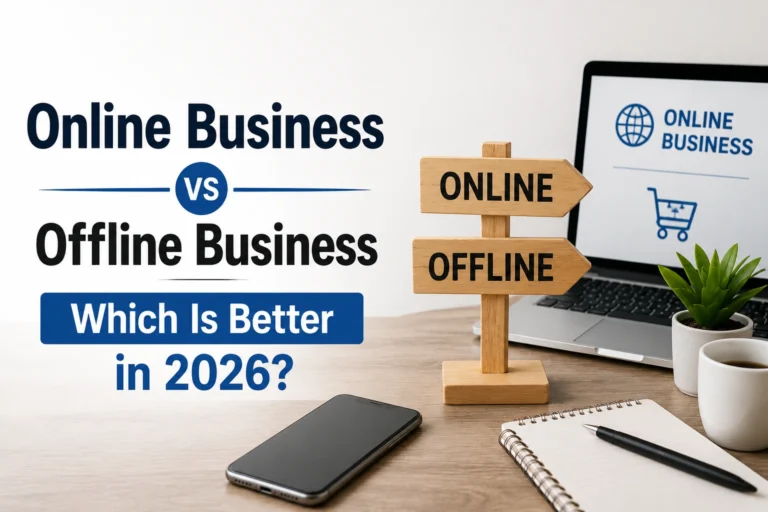
Starting a business today offers more flexibility than ever before, especially with the rise of digital platforms and evolving customer behavior. Entrepreneurs can now choose between launching an online business, opening a traditional offline business, or combining both models into a hybrid approach. Each option comes with its own cost structure, scalability potential, and customer engagement style. The decision is no longer about which model is universally better, but which one aligns with your goals, budget, and skills. This guide explores online vs offline business in detail to help you make a smart, informed, and profitable business decision.
Understanding Online and Offline Business
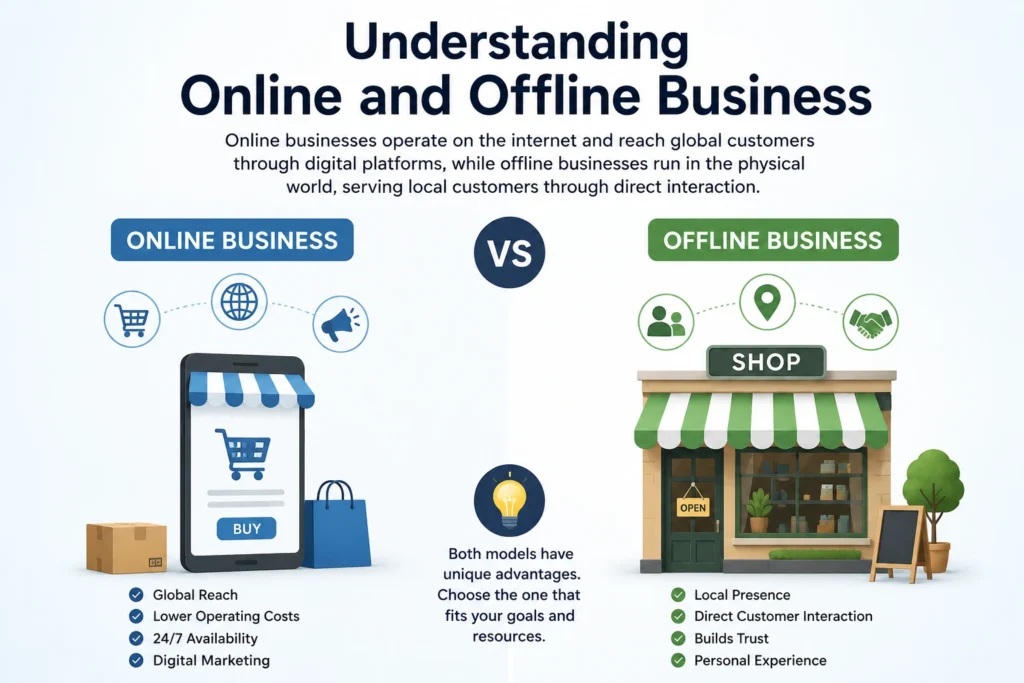
Online and offline businesses both aim to deliver value through products or services, but they operate in very different environments. An online business uses the internet as its primary platform, relying on websites, apps, and digital marketplaces to reach customers globally. In contrast, an offline business operates through a physical location where customers interact directly with products or services. Both business models can be profitable, but they vary in terms of market reach, operating costs, and customer experience. Understanding these differences is essential for choosing a business model that fits your long-term vision and operational preferences.
💚 You might also like: Acamento: Modern Workflow & Team Management Platform (2026)
What Is an Online Business?
An online business is any commercial activity that is conducted primarily through digital platforms such as websites, social media, or e-commerce marketplaces. It allows entrepreneurs to sell products or services without needing a physical storefront, making it highly flexible and scalable. Examples include dropshipping stores, SaaS platforms, digital agencies, and online coaching businesses. One of the key advantages is global reach, as businesses can serve customers across different regions without geographic limitations. According to OECD digital economy reports, online businesses continue to grow rapidly due to increased internet adoption and changing consumer buying habits worldwide.
What Is an Offline Business?
An offline business operates through a physical presence where customers visit in person to purchase goods or services. This includes retail shops, restaurants, salons, clinics, and local service providers. Unlike online businesses, offline models rely heavily on location, foot traffic, and face-to-face interaction. They often require higher startup costs due to rent, utilities, and staffing, but they build stronger trust through direct customer experience. Many industries still depend on offline operations because customers prefer immediate access, personalized service, and tangible product evaluation before making a purchase decision.
Key Features of Online and Offline Businesses
Online and offline businesses have distinct features that shape how they operate, grow, and interact with customers. Online businesses are driven by digital tools, automation, and global accessibility, allowing entrepreneurs to scale quickly with relatively low overhead costs. Offline businesses, on the other hand, focus on physical presence, in-person customer service, and local market dominance. Both models can be successful depending on execution, but their operational structures are fundamentally different. Understanding these core features helps business owners choose the right model based on their resources, goals, and target audience.
Core Characteristics of an Online Business
An online business relies on digital platforms and uses technology to manage marketing, sales, and customer interactions. It typically requires a website, a payment gateway, and a digital marketing strategy instead of a physical store. One of its strongest features is scalability, as businesses can reach global audiences without expanding physical infrastructure. It also offers automation opportunities, allowing tasks like order processing and customer support to be streamlined. This makes online businesses highly efficient and cost-effective, especially for entrepreneurs looking to start with limited capital but high growth potential.
Defining Traits of an Offline Business
An offline business is built around a physical location where customers directly interact with products or services. It relies on factors like store location, customer service quality, and in-person experience to drive sales. While startup costs are generally higher due to rent, inventory, and staffing, offline businesses often benefit from stronger customer trust and loyalty. They also allow customers to physically inspect products before purchasing, which increases confidence in buying decisions. Despite the rise of digital commerce, offline businesses remain essential in industries where hands-on experience is important.
Online vs Offline Business: Comparison Table
| Factor | Online Business | Offline Business |
| Startup Cost | Low initial investment with minimal setup requirements | High investment due to rent, setup, and utilities |
| Market Reach | Global audience through digital platforms | Limited to local or regional customers |
| Operating Hours | 24/7 availability with automation systems | Fixed working hours based on physical location |
| Scalability | Fast and flexible scaling using online tools | Slower growth due to physical limitations |
| Customer Interaction | Digital communication via chat, email, and calls | Direct face-to-face interaction |
| Marketing Methods | SEO, social media, paid ads, influencer marketing | Traditional advertising like flyers, banners, and word of mouth |
| Expansion Potential | Can expand globally without physical presence | Requires new physical branches for expansion |
| Operational Costs | Generally, lower ongoing expenses | Higher recurring costs like rent, staff, and utilities |
Pros and Cons of Each Business Model
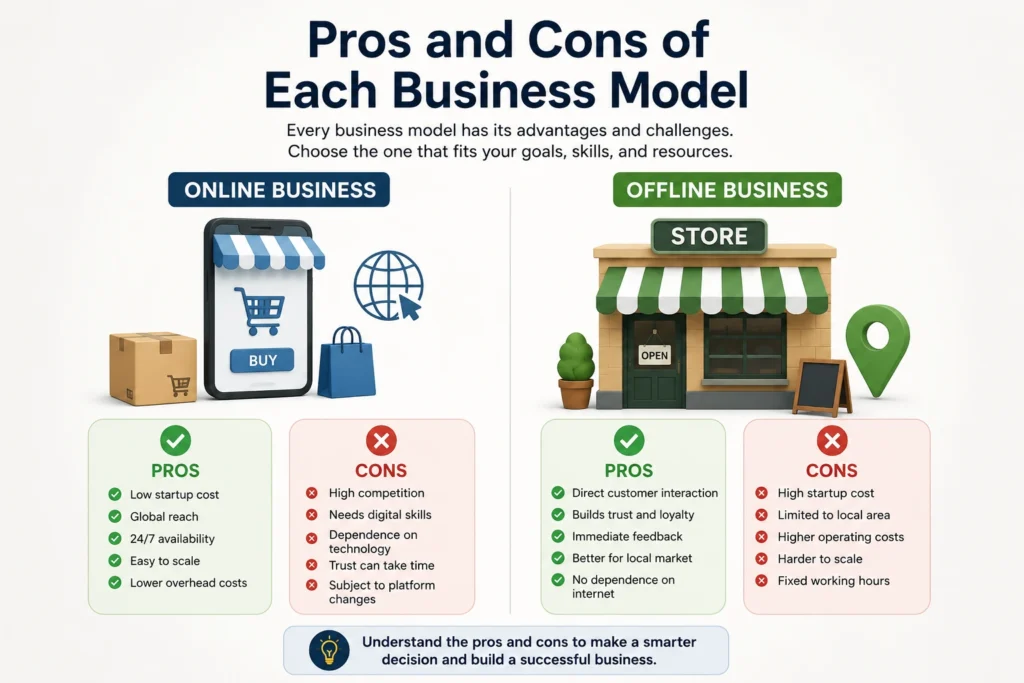
Online and offline business models both come with unique advantages and limitations that directly impact growth, profitability, and long-term sustainability. Online businesses offer flexibility, lower startup costs, and global accessibility, but they also face challenges such as high competition, reliance on digital platforms, and the need for strong online marketing skills. Offline businesses provide strong customer trust, physical presence, and immediate sales opportunities, but they require higher investment and are limited by location-based growth constraints.
💚 You might also like: Windows vs macOS: Which Should You Choose? (2026 Guide)
Online Business: Benefits and Limitations
Online businesses are attractive because they allow entrepreneurs to start with low investment and reach a global audience. They also support automation, which helps reduce manual work and improve efficiency. However, success in online business requires strong digital marketing knowledge and consistent effort to stand out in a highly competitive environment. Trust-building can also take time since customers cannot physically see or touch products before purchasing.
Offline Business: Strengths and Drawbacks
Offline businesses offer direct interaction with customers, which builds trust and improves customer satisfaction. They are especially effective in industries like retail, food, healthcare, and personal services. However, they involve higher operational costs such as rent, utilities, and staff salaries. Growth is also limited to physical location and foot traffic, making expansion slower compared to online models.
Which Business Model Fits You Best?
The best business model depends on your goals, available budget, skills, and willingness to take risks. Online businesses are ideal for individuals who want flexibility, global reach, and low startup costs. Offline businesses are better for those who prefer hands-on operations, direct customer interaction, and local market focus. Some entrepreneurs may also benefit from combining both models into a hybrid strategy for better stability and growth opportunities.
Ideal for Digital-First Entrepreneurs
An online business is best suited for individuals who are comfortable using digital tools, social media platforms, and online marketing strategies. It allows you to work from anywhere and scale your business quickly without geographical limits. However, it requires consistency, patience, and strong marketing skills to succeed in a competitive online environment.
Ideal for Traditional Business Owners
An offline business is ideal for entrepreneurs who prefer physical interaction and want to build strong relationships within a local community. It works best in industries where customers value in-person service and product experience. Although it requires higher investment, it offers stable income potential and strong local brand recognition when managed effectively.
When a Hybrid Model Makes Sense
A hybrid business model combines online and offline strategies to maximize reach and profitability. For example, a retail store can sell products both in-store and online, or a service business can attract clients through digital marketing while delivering services physically. This approach reduces dependency on a single channel and creates multiple revenue streams, making it one of the most sustainable modern business strategies.
Which Business Model Is More Profitable?
Profitability depends on the business type, execution strategy, and market demand rather than the model itself. Online businesses often scale faster and generate higher margins due to lower overhead costs. Offline businesses, however, can achieve stable and consistent income through loyal customer bases and repeat sales. In many industries, combining both models leads to the highest profitability because it balances reach, trust, and revenue stability.
Key Differences Between Online and Offline Business
Online businesses operate in a digital environment where scalability, automation, and global reach are key advantages. Offline businesses operate in a physical environment where personal interaction, trust, and location-based demand play a major role. The key differences include cost structure, customer engagement style, marketing approach, and expansion potential, all of which influence how each model performs in different industries.
Real-World Examples of Online and Offline Businesses
Online businesses include e-commerce stores, SaaS platforms, freelance services, digital agencies, and online coaching platforms. These businesses rely on internet connectivity and digital tools to reach customers worldwide. Offline businesses include restaurants, retail shops, salons, clinics, and local service providers that depend on physical presence and face-to-face interaction. Both models can succeed when aligned with the right market and execution strategy.
Frequently Asked Questions (FAQs)
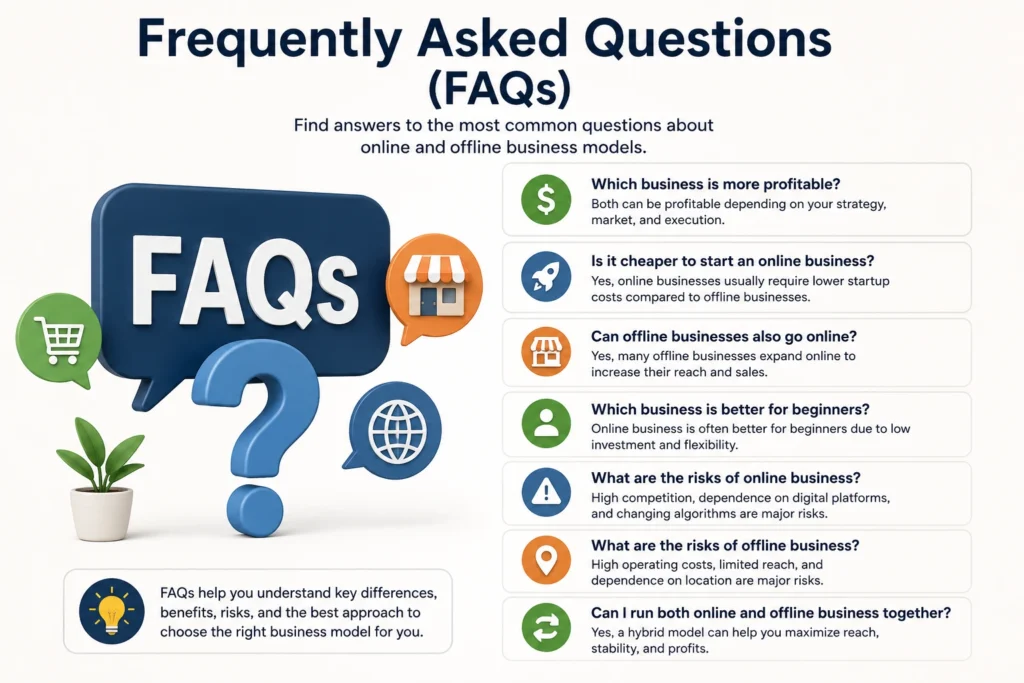
What is the main difference between online and offline business?
An online business operates through the internet, while an offline business runs from a physical location. Both differ in reach, cost, and customer interaction.
Which business is more profitable?
Both can be profitable depending on execution, but online businesses often scale faster with lower costs. Offline businesses provide stable, local income.
Is it cheaper to start an online business?
Yes, online businesses usually require lower startup costs as there is no need for rent or physical setup. You mainly invest in tools and marketing.
Can offline businesses also go online?
Yes, many offline businesses expand online to increase reach and sales. This creates a hybrid model for better growth.
Which business is better for beginners?
An online business is often better for beginners due to low investment and flexibility. Offline business suits those who prefer local, physical operations.
Conclusion
Choosing between an online and offline business is not about finding a universally better option, but about identifying what works best for your goals, skills, and available resources. Both models offer strong opportunities for success when executed properly. The key is to understand your target audience, evaluate your budget, and select a model that aligns with your long-term vision for sustainable growth.
✨ Want bite-sized tech wisdom? Follow Tech Baaz.