

Guide to Building an Online Brand: Proven Strategies
An online brand is the complete digital identity of a business, personal brand, or organization. It represents how people perceive you through your website, social media profiles, search engine presence, content, customer reviews, and every online interaction. A strong online brand goes beyond a professional logo or attractive visuals it reflects your values, expertise, personality, and the experience you consistently deliver. Research from Edelman’s 2024 Trust Barometer shows that trust is a major factor in consumer decision-making, making credibility an essential part of modern branding. When your messaging, design, and customer experience remain consistent across platforms, your brand becomes more recognizable, memorable, and trustworthy.
Why Online Branding Matters
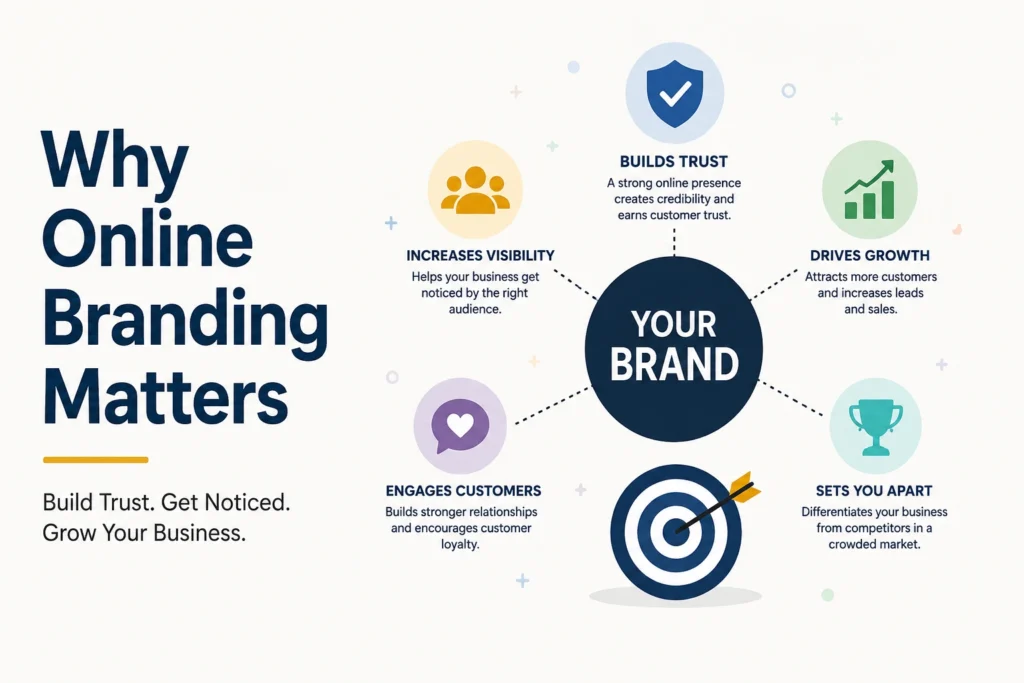
Online branding plays a critical role in attracting customers, building trust, and creating long-term business growth. Before making a purchase, most consumers research companies online, compare competitors, and read reviews to evaluate credibility. A well-established brand makes this decision easier by demonstrating professionalism, consistency, and expertise. According to Lucidpress, brands that maintain consistent messaging across all channels can increase revenue by up to 33%. Strong online branding also improves search visibility, increases customer loyalty, strengthens brand recognition, and encourages referrals, helping businesses stand out in crowded markets while building meaningful relationships with their target audience.
💚 You might also like: Best Project Management Tools in 2026 (Expert Guide)
Build Your Brand Strategy
A successful online brand begins with a clear strategy rather than attractive visuals or marketing campaigns alone. Your brand strategy defines your mission, target audience, market position, and the unique value you deliver to customers. It acts as a roadmap that guides every business decision, ensuring consistency across your website, content, social media, and customer communication. Without a solid strategy, branding efforts often become scattered and ineffective. Taking time to establish a strong foundation helps create a recognizable identity, build customer trust, and position your brand for sustainable growth in an increasingly competitive digital landscape.
Define Your Brand Purpose
Your brand purpose defines the reason your business exists beyond simply making a profit. It should communicate the positive impact you want to make and the values that influence every decision. A meaningful purpose helps customers connect with your brand emotionally while giving your business a clear direction for future growth.
Identify Your Target Audience
Understanding your ideal audience enables you to create products, content, and marketing campaigns that solve real problems. Analyze customer demographics, interests, online behavior, and buying habits to build detailed buyer personas that improve engagement, strengthen relationships, and increase conversion rates.
Create a Unique Value Proposition
Your unique value proposition clearly explains why customers should choose your brand instead of competitors. Focus on the value you provide, the problems you solve, and the results customers can expect. A compelling UVP strengthens brand positioning and makes your marketing messages more persuasive.
Create a Strong Brand Identity
A strong brand identity gives your business a recognizable and professional image that customers can easily remember. It includes your logo, color palette, typography, imagery, messaging, and overall visual style, all working together to communicate your brand’s personality. Consistency is the key to building recognition and trust across every digital touchpoint. According to Marq’s (formerly Lucidpress) State of Brand Consistency Report, consistent brand presentation can increase revenue by up to 33%. When your brand identity aligns with your values and stays consistent across all platforms, it builds customer trust and makes your business more recognizable in a competitive digital landscape.
Establish Your Online Presence
Your online presence is the foundation of how customers discover, evaluate, and interact with your brand. It should include a professional website, active social media profiles, optimized business listings, and valuable content that reflects your expertise. Every platform should deliver a consistent experience while making it easy for visitors to learn about your products or services. Google reports that users often interact with multiple digital touchpoints before making a purchase, highlighting the importance of maintaining a cohesive presence. A well-established online presence increases visibility, strengthens credibility, and creates more opportunities to attract qualified leads and loyal customers.
Develop a Content & SEO Strategy
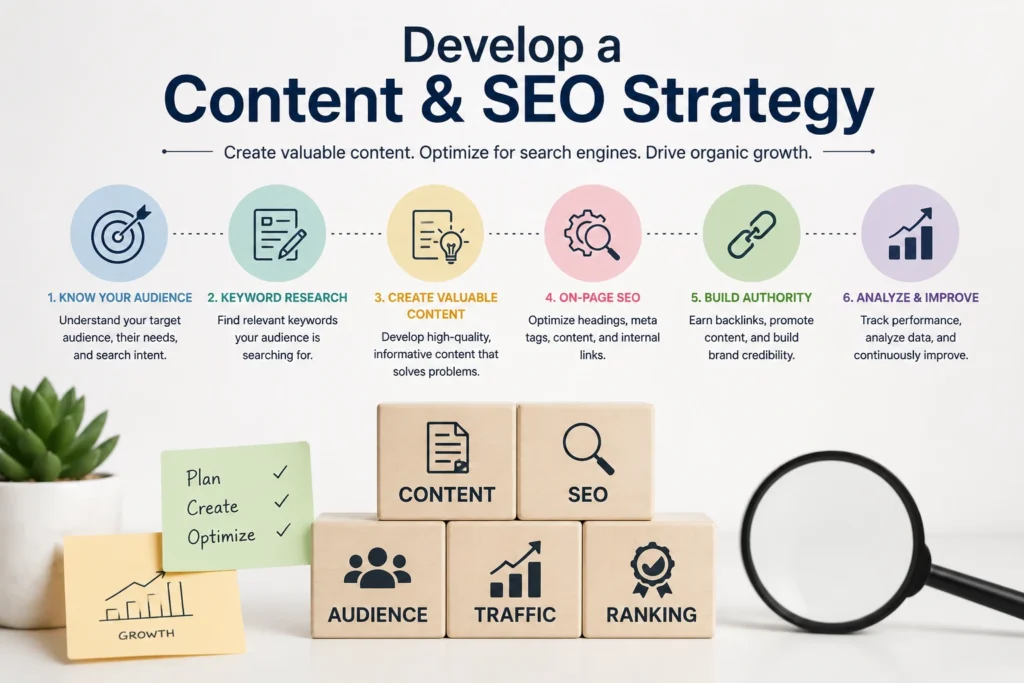
Content and SEO work together to increase your brand’s visibility, authority, and long-term organic growth. Publishing valuable content that answers your audience’s questions helps establish trust while improving your search engine rankings. Rather than creating random blog posts, focus on a structured content strategy built around user intent, relevant keywords, and topical authority. According to HubSpot’s State of Marketing Report, businesses that prioritize blogging are more likely to generate positive marketing results than those that publish inconsistently. Combining high-quality content with SEO best practices allows your brand to attract qualified traffic and remain competitive over time.
💚 You might also like: Online Business vs Offline Business: Which Is Better in 2026?
Create Authority-Driven Content
Focus on creating content that educates, solves problems, and answers your audience’s most important questions. Publish comprehensive guides, case studies, tutorials, and industry insights that demonstrate your expertise. Valuable content positions your brand as a trusted resource and encourages visitors to return for reliable information.
Optimize for Search Intent
Successful SEO starts with understanding what users actually want to find. Create content that matches informational, navigational, commercial, or transactional search intent while naturally incorporating relevant keywords. Meeting user expectations improves engagement, increases search rankings, and drives more qualified organic traffic.
Build a Consistent Content Plan
Consistency helps build audience trust and signals reliability to search engines. Develop a content calendar that includes blog articles, social media posts, newsletters, and other valuable resources. Publishing on a regular schedule keeps your brand visible, strengthens topical authority, and supports sustainable long-term growth.
Grow Your Brand Online
Growing an online brand requires more than simply publishing content or creating social media accounts. It involves consistently reaching the right audience through multiple digital marketing channels while delivering value at every stage of the customer journey. A combination of search engine optimization (SEO), content marketing, social media engagement, email marketing, and strategic partnerships can significantly expand your reach. According to HubSpot’s State of Marketing Report, businesses that invest in inbound marketing generate higher-quality leads at a lower cost than traditional outbound methods. A diversified marketing strategy helps your brand remain visible, attract qualified prospects, and support sustainable long-term growth.
Build Trust and Brand Authority
Trust is one of the most valuable assets an online brand can earn. Customers are more likely to buy from businesses that consistently demonstrate expertise, transparency, and reliability. Share educational content, publish customer success stories, respond professionally to feedback, and maintain consistent communication across every platform. According to Edelman’s 2024 Trust Barometer, trust strongly influences consumer purchasing decisions and long-term loyalty. Establishing authority also involves showcasing industry knowledge through case studies, original research, and thought leadership. When people recognize your brand as a credible resource, they are more likely to become loyal customers and recommend your business to others.
Measure and Optimize Brand Growth
Building an online brand is an ongoing process that requires continuous evaluation and improvement. Tracking the right performance metrics helps you understand what resonates with your audience and where your strategy needs refinement. Monitor website traffic, keyword rankings, conversion rates, engagement metrics, email performance, and customer retention to measure overall brand health. Tools like Google Analytics, Google Search Console, and social media insights provide valuable data for informed decision-making. Regularly analyzing these metrics enables you to optimize campaigns, strengthen customer relationships, improve marketing performance, and achieve sustainable brand growth over time.
Track Key Brand Metrics
Measure indicators such as organic traffic, branded search volume, customer acquisition cost, conversion rates, and customer lifetime value. Monitoring these key performance indicators helps evaluate brand awareness, marketing effectiveness, and overall business growth while identifying opportunities for continuous improvement.
Analyze Audience Engagement
Understanding how users interact with your content provides valuable insights into customer preferences and behavior. Evaluate metrics such as click-through rates, average engagement time, social media interactions, comments, and email open rates to identify which content builds the strongest audience relationships.
Improve With Data Insights
Use performance data to refine your content strategy, optimize marketing campaigns, and enhance the customer experience. Regular testing, audience analysis, and performance reviews help identify successful tactics while eliminating underperforming efforts. Data-driven decisions ensure your online brand continues to grow efficiently in an evolving digital landscape.
Frequently Asked Questions (FAQs)
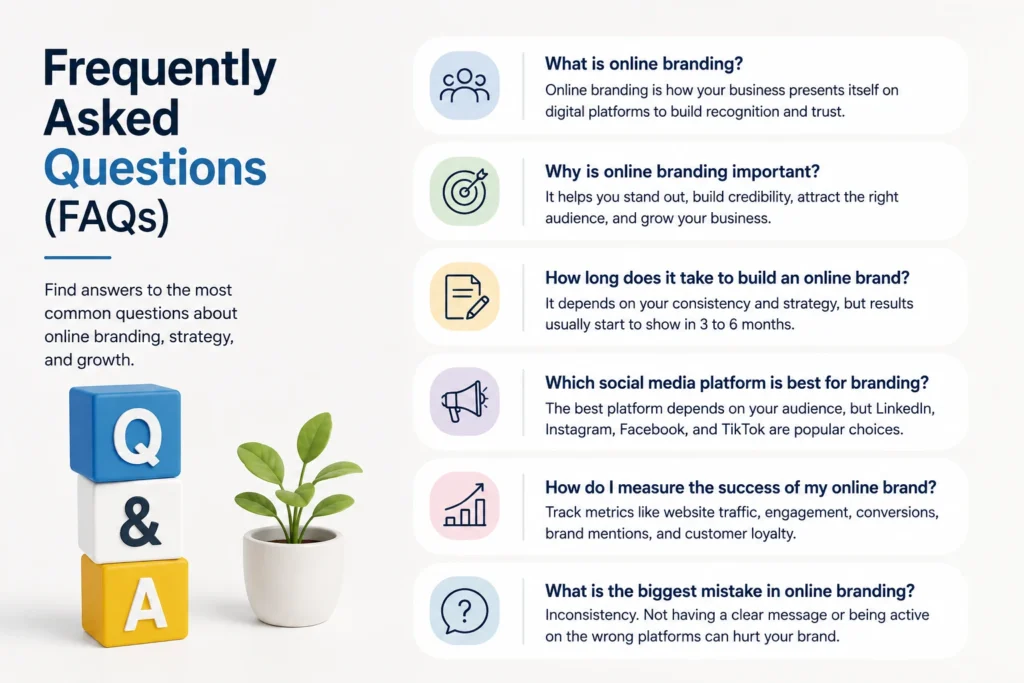
What is an online brand?
An online brand is the overall perception of your business across your website, social media, content, and customer interactions.
Why is online branding important?
It builds trust, increases visibility, attracts customers, and helps your business stand out from competitors.
How much time does it take to build an online brand?
Most brands see meaningful results within 6–12 months with consistent branding and marketing efforts.
Do I need a website to build an online brand?
Yes, a professional website strengthens credibility and serves as the central hub for your online presence.
What is the most common mistake in online branding?
Inconsistent messaging and visual identity can confuse customers and weaken brand recognition.
How can SEO help build an online brand?
SEO improves your search visibility, drives organic traffic, and positions your brand as an industry authority.
Which social media platform works best for online branding?
The ideal platform depends on your target audience, but LinkedIn, Instagram, Facebook, and TikTok are among the most effective options.
How can I measure the success of my online brand?
Track website traffic, branded searches, engagement, conversions, and customer retention to evaluate growth.
Conclusion
Building a successful online brand is a long-term investment that combines strategy, consistency, and continuous improvement. From defining your brand purpose and creating a memorable identity to developing valuable content and measuring performance, every step contributes to stronger brand recognition and customer trust. The most successful brands focus on delivering genuine value rather than chasing short-term trends. By maintaining a consistent presence, understanding your audience, and adapting your strategy based on data, you can create an online brand that stands out in competitive markets, earns customer loyalty, and supports sustainable business growth for years to come.
✨ Want bite-sized tech wisdom? Follow Tech Baaz.