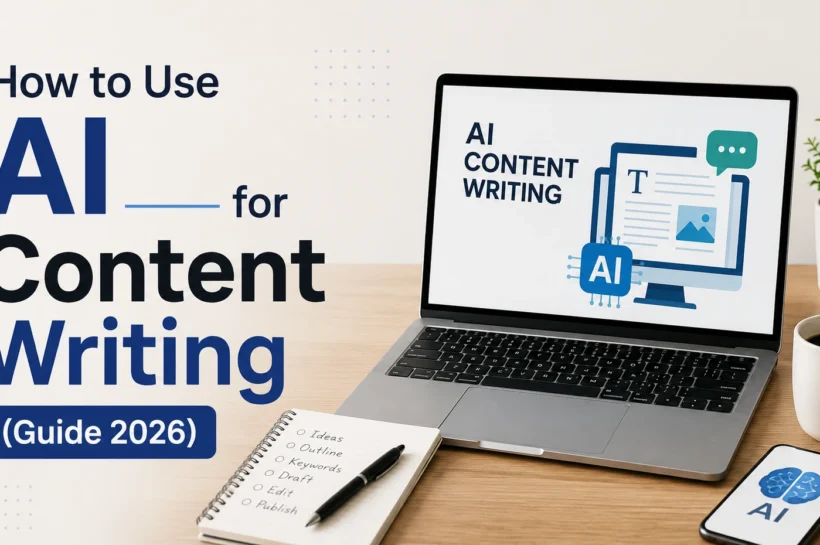

How to Use AI for Content Writing (Guide 2026)
AI content writing is the process of using artificial intelligence tools to help create blogs, articles, website copy, emails, and marketing content faster. Modern AI tools analyze massive amounts of online data, language patterns, and search trends to generate human-like text in seconds. Businesses now use AI to improve productivity, scale content marketing, and reduce writing time without sacrificing quality. According to a 2025 HubSpot marketing report, more than 70% of marketers use AI tools for content brainstorming and drafting. However, successful AI content still depends on human creativity, editing, and strategic SEO optimization for strong rankings.
Key Benefits of AI Content Creation
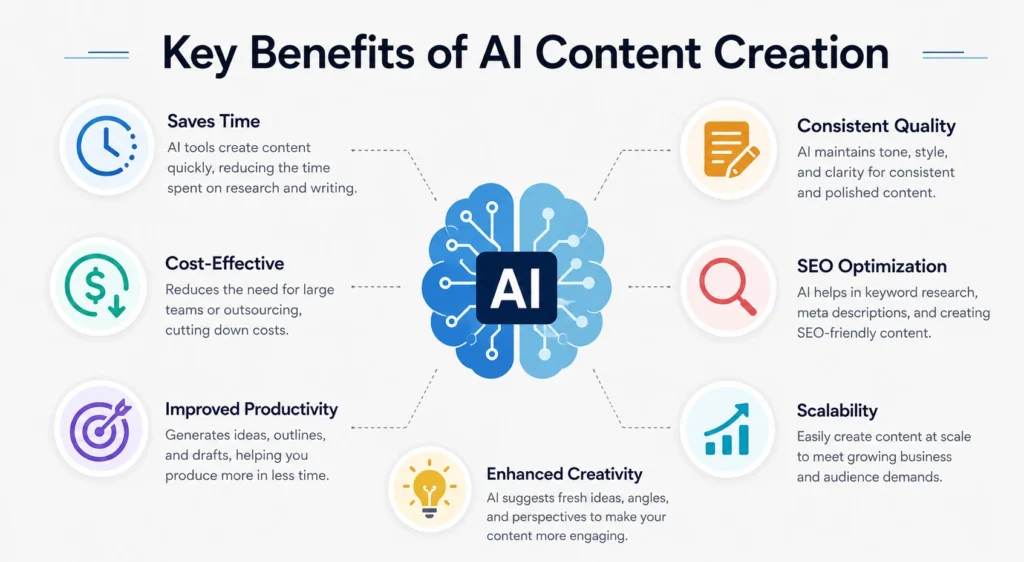
AI content creation helps writers produce more content in less time while maintaining consistency across multiple platforms. Instead of spending hours researching topics or organizing ideas, marketers can use AI tools to speed up the workflow. AI also improves keyword targeting, headline creation, and topic clustering for SEO campaigns. Many brands use AI to publish blog posts regularly without expanding their content teams. Another major advantage is scalability because businesses can create articles, product descriptions, emails, and social posts simultaneously. When combined with human editing, AI becomes a powerful assistant for improving efficiency, creativity, and overall content performance.
💚 You might also like: Top 10 Laptops for Students & Freelancers (2026 Guide)
How AI Improves Content Production and SEO
AI tools simplify difficult parts of content marketing, especially keyword research and content structuring. They can analyze search intent, suggest semantic keywords, and identify trending topics quickly. SEO professionals also use AI to optimize readability, headings, and internal linking opportunities. This process saves time while helping content align better with Google’s ranking systems and user expectations.
Step 1 – AI-Based Keyword and Intent Research
Before writing content with AI, it is important to understand what users are actually searching for. Keyword and intent research helps you discover the exact phrases, questions, and problems your audience wants solved. AI tools like ChatGPT, Surfer SEO, and Semrush can quickly generate keyword ideas, semantic terms, and trending topics based on search behavior. Instead of targeting a single keyword, modern SEO focuses on topical relevance and search intent. For example, someone searching “how to use AI for content writing” usually wants practical steps, recommended tools, and SEO tips rather than a technical explanation of artificial intelligence systems.
Step 2 – Creating an SEO Content Outline
A strong outline is the foundation of every high-ranking article because it improves structure, readability, and topical depth. AI tools can help organize headings based on competitor analysis, search intent, and related search queries. Instead of creating random sections, build a logical content flow that guides readers naturally from one topic to another. Well-structured outlines also increase the chances of ranking for multiple keywords and featured snippets. According to SEO studies by Backlinko, content with organized heading structures often performs better in search results because Google understands the topic hierarchy more clearly and efficiently.
Structuring H2s and H3s for Topical Coverage
H2 and H3 headings should cover every important subtopic connected to the main keyword. This strategy improves semantic SEO and helps search engines understand your article completely. Use H2s for major sections and H3s for supporting details or examples. Clear headings also improve readability, especially for mobile users who prefer scanning content quickly before reading in detail.
Step 3 – Writing Content with AI Tools
Once your outline is ready, AI tools can help generate the first draft much faster than manual writing alone. Instead of asking AI to write an entire article in one prompt, experienced content writers create content section by section for better quality control. This method improves accuracy, tone, and readability while reducing repetitive phrasing. AI tools are especially useful for introductions, transitions, summaries, and brainstorming fresh ideas. However, raw AI content should never be published immediately. Every paragraph should be reviewed carefully to ensure originality, factual accuracy, and alignment with your brand voice and audience expectations.
Step 4 – Humanizing AI-Generated Content
AI-generated content often sounds repetitive, robotic, or emotionally flat if it is published without editing. Humanizing the content makes it more engaging, trustworthy, and easier to connect with emotionally. Readers prefer articles that sound natural and conversational instead of overly automated. To improve quality, add real examples, industry insights, opinions, and practical experiences throughout the article. Many professional writers also rewrite AI-generated introductions and conclusions manually because these sections strongly influence engagement. Google’s helpful content systems prioritize content created for people, not just search engines. That is why human editing remains one of the most important steps in AI-assisted content writing workflows today.
Improving Tone, Clarity, and Engagement
Good content should sound authentic and easy to understand for the target audience. Shorter sentences, conversational wording, and natural transitions improve readability significantly. Adding storytelling elements or relatable examples also increases engagement. The goal is to make AI-assisted content feel like it was written by a real expert rather than generated entirely by software.
Step 5 – SEO Optimization for AI Content
SEO optimization helps AI-generated articles rank better in search engines and attract consistent organic traffic. After completing the first draft, focus on improving keyword placement, semantic relevance, readability, and user experience. Modern SEO is no longer about keyword stuffing because Google now evaluates content quality, expertise, and helpfulness more carefully. Add related keywords naturally throughout the article while maintaining a smooth reading flow. Internal links, optimized meta descriptions, and structured headings also improve crawling and indexing. According to Search Engine Journal, content that satisfies user intent and demonstrates topical authority generally performs better than content written purely for algorithms or automation.
Advanced On-Page SEO Techniques
Advanced SEO techniques help strengthen the visibility and authority of AI-generated content. These strategies include adding schema markup, optimizing image alt text, improving page speed, and targeting featured snippets. Many SEO experts also use NLP keywords and entity optimization to improve semantic relevance. These methods help search engines understand content context more accurately and improve ranking opportunities.
Best AI Tools for Content Writers
The AI content writing industry has grown rapidly, and many tools now specialize in different parts of the writing process. ChatGPT is widely used for brainstorming, outlining, and drafting articles because of its flexibility and conversational capabilities. Jasper AI focuses heavily on marketing copy and branded content creation, while Surfer SEO helps optimize articles for search rankings. Grammarly AI improves grammar, clarity, and sentence flow during editing. Some businesses also combine multiple AI tools together to create a more efficient workflow. Choosing the right platform depends on your content goals, budget, SEO strategy, and preferred writing style for long-term scalability.
Common AI Writing Mistakes to Avoid
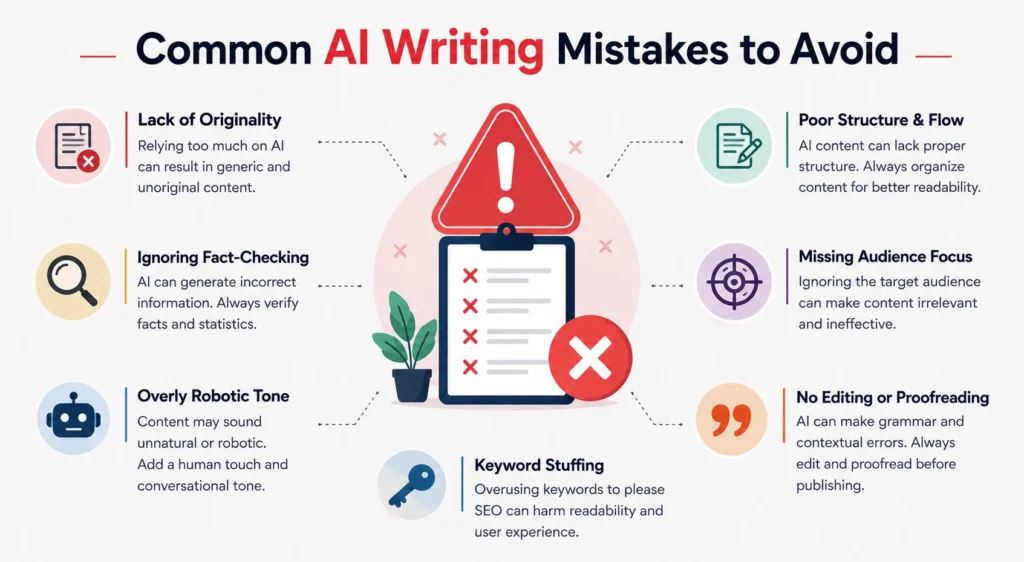
One of the biggest mistakes in AI content writing is publishing raw AI-generated text without proper editing or verification. AI can sometimes produce outdated information, weak explanations, or repetitive wording that lowers content quality. Another common issue is over-optimizing articles with excessive keywords, which can negatively affect readability and user experience. Many beginners also rely too heavily on generic prompts, leading to shallow or predictable content. To create authoritative articles, writers should combine AI efficiency with human creativity, expertise, and strategic editing. High-quality content requires research, originality, and audience understanding rather than depending entirely on automated text generation systems.
💚 You might also like: How to Build a Website Step-by-Step (2026 Beginner Guide)
The Importance of Editing and Fact-Checking
Editing and fact-checking help maintain accuracy, credibility, and trustworthiness in AI-assisted content. Writers should verify statistics, research findings, and technical claims before publishing any article. Even advanced AI tools can generate misleading information occasionally. Careful proofreading also improves readability, eliminates repetition, and ensures the content aligns with your brand voice and audience expectations.
The Future of AI in Content Marketing
AI is expected to become a permanent part of modern content marketing as search engines and automation technologies continue evolving. Businesses are already using AI to personalize content, analyze audience behavior, and automate repetitive marketing tasks. However, human creativity, strategic thinking, and emotional storytelling still remain essential for producing truly valuable content. Future AI systems will likely become more accurate, context-aware, and integrated with SEO workflows. Content creators who learn how to combine AI efficiency with authentic expertise will have a major competitive advantage. The future of content marketing is not human versus AI, but humans and AI working together effectively.
Conclusion
AI content writing has transformed how businesses, bloggers, and marketers create content online. From keyword research and outlining to drafting and SEO optimization, AI tools help speed up the entire workflow while improving productivity. However, high-quality content still requires human creativity, editing, and strategic thinking to perform well in search results. The best approach is to use AI as a writing assistant rather than a complete replacement for human expertise. When combined correctly, AI and human input can create engaging, optimized, and valuable content that both readers and search engines appreciate.
Frequently Asked Questions (FAQs)
What is AI content writing?
AI content writing is the process of using artificial intelligence tools to create blogs, articles, and marketing content faster.
Is AI-generated content good for SEO?
Yes, AI content can rank well if it is properly edited, optimized, and focused on user intent.
Which AI tool is best for content writing?
ChatGPT, Jasper AI, and Surfer SEO are among the most popular tools for content creation and optimization.
Can Google detect AI-written content?
Google focuses more on content quality and usefulness than whether the content was written by AI.
Should I publish AI content without editing?
No, AI-generated content should always be edited for accuracy, originality, and readability before publishing.
How do I make AI content sound human?
Add personal insights, conversational wording, and real examples to improve authenticity and engagement.
Does AI replace professional content writers?
AI helps writers work faster, but human creativity and expertise are still essential for quality content.
Why is keyword research important in AI writing?
Keyword research helps AI-generated content match search intent and improve visibility in search engines.
Tech made simple, follow Tech Baaz for more.