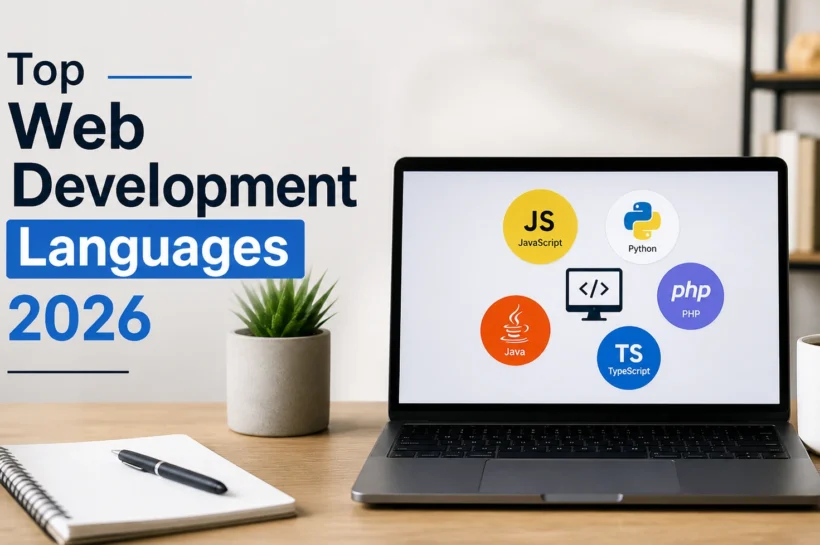

Top Web Development Languages 2026 | Complete Guide
Web Development Languages Overview
Web development depends heavily on choosing the right programming language because every website or web application needs a strong technical foundation. Some languages are better for frontend design, while others are ideal for backend functionality and database handling. In 2026, developers focus more on speed, scalability, security, and user experience than ever before. The best programming languages for web development help businesses build reliable, fast, and user-friendly platforms. Whether you are creating a startup website, an eCommerce store, or an enterprise system, selecting the right language directly impacts performance, maintenance, and long-term business growth.
Frontend vs Backend Development
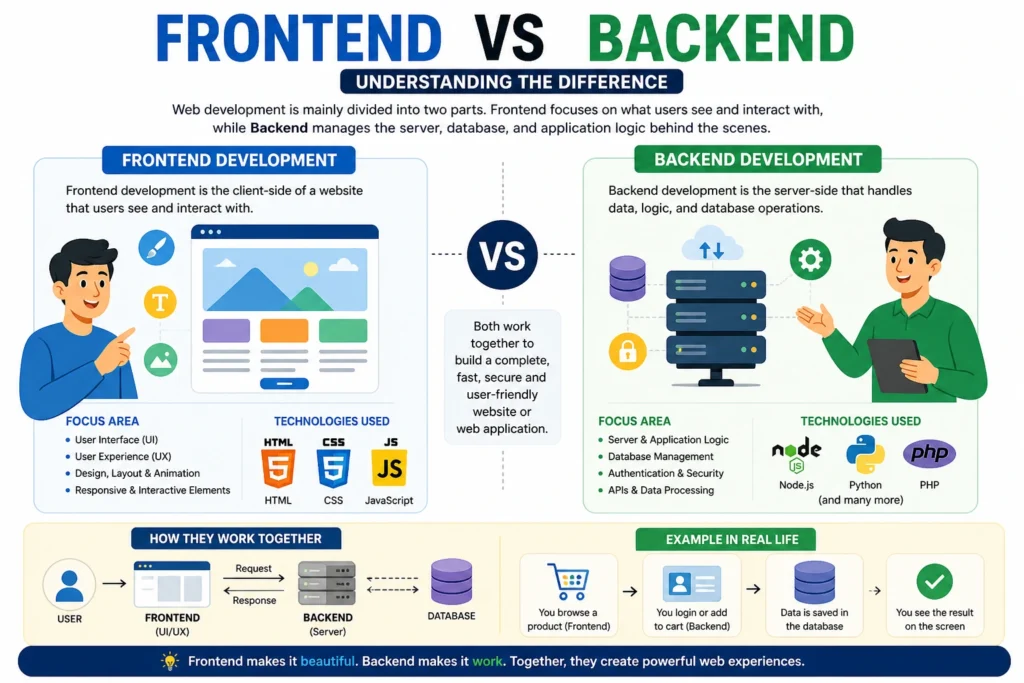
Web development is mainly divided into frontend and backend development. Frontend focuses on everything users see and interact with, such as layouts, buttons, animations, and responsive design. Backend development handles server logic, databases, authentication, and application performance behind the scenes. Full-stack development combines both areas, allowing developers to manage complete web projects. Understanding this difference helps businesses and developers choose the right tools and technologies. Each section requires different programming languages, frameworks, and technical skills depending on project complexity, performance goals, and long-term maintenance requirements.
You might also like: Best Online Learning Platforms 2026 | Top Picks
Frontend Development Basics
Frontend development creates the visual side of a website that users directly interact with. It includes structure, design, responsiveness, and user experience. Languages like HTML, CSS, and JavaScript are essential for building modern interfaces. Strong frontend development improves engagement, navigation, and mobile compatibility, which directly affects user satisfaction and search engine rankings.
Backend Development Basics
Backend development manages the server-side operations of a website or web application. It handles databases, user authentication, APIs, and business logic. Popular backend languages include Python, PHP, Java, and Node.js. A strong backend ensures speed, security, stability, and smooth performance for websites handling large traffic and complex user actions.
JavaScript for Modern Web Development
JavaScript remains the most important programming language for web development because it powers interactive and dynamic websites. It works on both frontend and backend through technologies like Node.js, making it highly valuable for full-stack development. JavaScript supports modern frameworks such as React, Vue, and Angular, which improve development speed and user experience. Its huge community, regular updates, and strong job market demand make it a smart choice for beginners and professionals alike. In 2026, JavaScript continues to dominate because flexibility and performance are essential for modern digital platforms.
Python for Backend Development
Python is one of the most popular backend programming languages because of its clean syntax, fast development speed, and powerful frameworks. It is beginner-friendly while also being strong enough for enterprise-level applications. Developers use Python to build secure, scalable, and data-driven web applications efficiently. Frameworks like Django and Flask simplify backend development and reduce coding time significantly. Python is also widely used in AI, automation, and machine learning projects, making it a highly future-proof skill for developers who want broader career opportunities in the modern tech industry.
Top Python Web Frameworks
Python frameworks make web development faster, safer, and more organized for developers. Django is known for security, scalability, and enterprise-level applications, while Flask offers flexibility for lightweight projects. FastAPI is also gaining popularity for high-performance APIs. These frameworks help reduce development time while improving application quality and maintainability.
PHP for Dynamic Websites
PHP remains one of the most trusted programming languages for web development, especially for dynamic websites and content-driven platforms. It powers major systems like WordPress, making it highly valuable for blogs, business websites, and e-commerce stores. PHP is easy to deploy, cost-effective, and supported by almost every hosting provider. Frameworks like Laravel improve security, code structure, and development speed for modern applications. In 2026, PHP continues to be a practical choice for businesses that need stable, scalable, and budget-friendly web solutions with strong long-term support and flexibility.
Java for Enterprise Web Apps
Java is widely used for enterprise-level web applications because of its stability, security, and high-performance architecture. Large organizations prefer Java for banking systems, healthcare platforms, and business management software, where reliability is critical. Frameworks like Spring Boot make development faster and more structured for complex applications. Java supports strong scalability and handles high traffic efficiently, making it ideal for large digital systems. Although the learning curve is higher than that of some languages, its long-term reliability and professional demand make Java a powerful investment for serious developers and businesses.
TypeScript for Scalable Projects
TypeScript has become a preferred choice for large-scale web applications because it improves JavaScript with static typing and better code management. It helps developers catch errors early, making projects more secure and easier to maintain over time. Companies building complex platforms often prefer TypeScript because it improves teamwork and reduces development risks. It works perfectly with frameworks like Angular, React, and Node.js for modern application development. In 2026, TypeScript is especially valuable for businesses that need scalable, professional-grade software with strong long-term development efficiency and cleaner code architecture.
Best Languages for Beginners
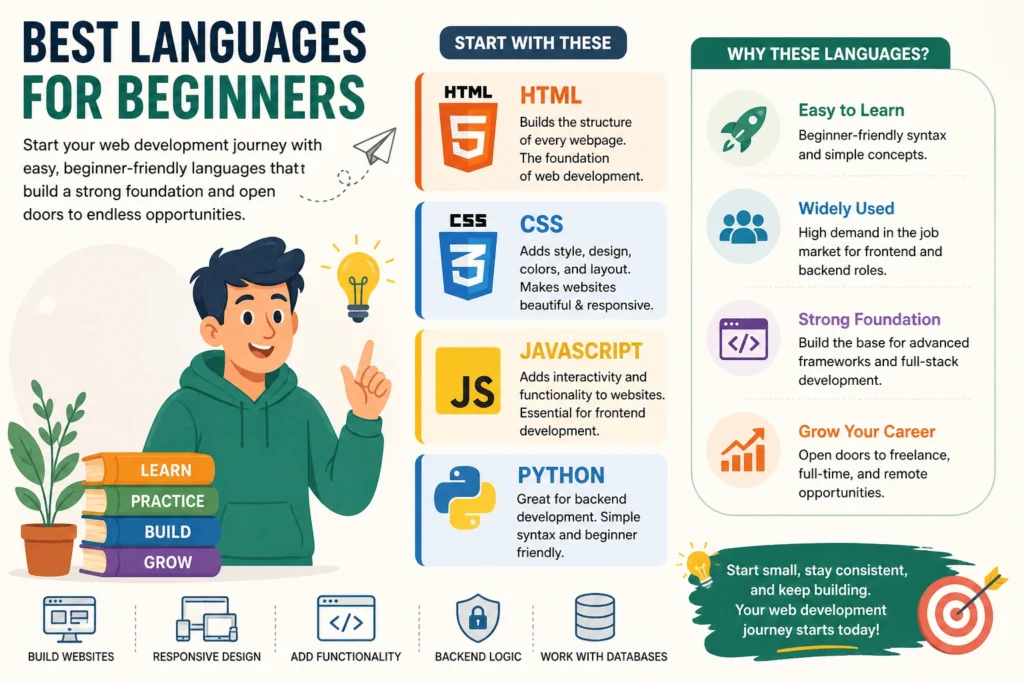
Beginners entering web development should focus on languages that are easy to learn, widely used, and offer strong community support. HTML, CSS, and JavaScript are the best starting points because they build the foundation of frontend development. Python is also highly recommended for backend learning because of its simple syntax and beginner-friendly structure. These languages provide fast learning opportunities and strong career potential in both freelance and full-time roles. Starting with beginner-friendly languages helps new developers gain confidence before moving toward advanced frameworks and full-stack development paths.
You might also like: How to Start a Blog in 2026 | Step-by-Step Guide
Choosing the Right Language
Choosing the right programming language depends on your project goals, budget, scalability needs, and long-term maintenance plans. A startup may prefer JavaScript or Python for faster development, while large enterprises often choose Java or TypeScript for stability and scalability. If your focus is on content management, PHP can be highly effective. Developers should also consider job market demand, learning curve, and framework support before making a decision. The best language is not always the most popular one, but the one that fits your business requirements most effectively.
Conclusion
Choosing the best programming language for web development depends on your goals, project type, and long-term vision. There is no single “perfect” language because each one serves a different purpose. JavaScript remains essential for frontend and full-stack development, while Python, Java, and PHP dominate the backend space with strong industry demand. TypeScript is becoming the standard for scalable modern applications, and beginners can still start confidently with HTML, CSS, and JavaScript.
In 2026, the most successful developers are not those who learn one language deeply, but those who understand how multiple technologies work together. Focus on learning the fundamentals first, then gradually move toward frameworks and real-world projects. This approach will help you build strong, scalable, and career-ready web development skills.
FAQs About Web Development Languages
Which programming language should I learn first for web development?
Start with HTML, CSS, and JavaScript because they build the core foundation of every website and are easy to learn.
Is JavaScript enough for full-stack development?
Yes, JavaScript can handle both frontend and backend using Node.js, making it a complete full-stack solution for many projects.
Which backend language is most in demand in 2026?
Python, Java, and Node.js are highly in demand due to their performance, scalability, and strong industry adoption.
Is Python good for web development?
Yes, Python is excellent for web development because it is simple, fast to build with, and supported by powerful frameworks.
Should beginners learn PHP in 2026?
Yes, PHP is still useful, especially for WordPress and small to medium websites, but it’s less modern than newer languages.
What is the easiest web development language?
HTML and CSS are the easiest to start with, followed by JavaScript, which adds functionality and interactivity to websites.
✨ We’re just getting started. Stay tuned with Tech Baaz for more tech gems.